Africa-Press – Namibia. ACCESS to accurate and quality information is arguably the paramount resource for any person to live a meaningful life.
Access to information shapes every aspect of our lives in the most profound ways.
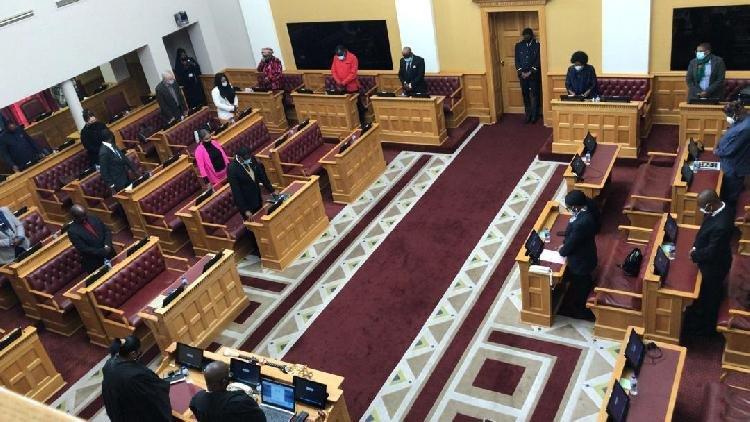
The passing of the access to information bill in the National Assembly on Tuesday therefore ranks among the most important milestones reached by Namibian lawmakers.
Access to information, or the lack thereof, is a prime determinant of how some become richer than others or get ahead in life while many lag behind.
The Namibian joins other advocates of the free flow of public information in appreciating lawmakers and the Namibian government for clearing one more hurdle in the process of ensuring that basic measures are in place for the public to access information.
Kudos to president Hage Geingob for publicly supporting a law that promotes access to information amid thinly veiled opposition (and at times sabotage) from among his own Cabinet and state bureaucrats.
We are under no illusion that it would be an easy feat to turn the access to information bill into a smooth-functioning law.
It’s taken more than 30 years since Namibia pioneered the global signature principles of independent journalism under the Windhoek Declaration for a free, independent and pluralistic press.
The Windhoek Declaration underpins the drum Namibia beats annually when ranked as the country with the freest press in Africa.
We can thus only urge other state entities to swiftly clear the remaining hurdles once the bill is passed by the parliament.
The bill provides for the appointment of an impartial information commissioner to “promote, monitor and protect the right of access to information in Namibia”.
We similarly hope the appointment of the person and the character of the individual would be above reproach, and would not be influenced by political interests.
All too often government agents drag their feet when required to implement instruments that buttress our democratic Constitution and basic human rights.
It took more than a decade of lip service before anti-corruption measures were passed into law.
Even then, the Anti-Corruption Commission, under its first and long-serving director general Paulus Noa, has done little to stop top state officials and the wealthy from stealing public resources.
Similarly, the government has found every excuse in the book not to protect whistleblowers despite passing the law several years ago.
Excuse those who may thus be sceptical that officials are likely to try and hobble a powerful instrument aimed at forcing them to proactively share information of public interest.
Nevertheless, we celebrate clearing a crucial hurdle in the promotion of genuine access to information. Better late than never. Forward we should march.
What Have We Become?
NUMEROUS buildings in the central business district of the Namibian capital Windhoek stand empty.
Yet, within a one-kilometre radius, 40-year-old Albertus //Guruseb is reported to have frozen to death while sleeping on the pavement along Robert Mugabe Avenue.
The death of //Guruseb and another loss of life reported in southern Namibia within a week, as well as similar but unreported incidents, are an indictment of what level of empathy and care runs through the veins of our body politic.
A caring society would have put in place measures to accommodate the homeless, at least on a temporary basis or overnight, in office buildings that have stand empty for several years.
While bidding farewell to Pele Pele, as //Guruseb was known among his fellow homeless cohorts, owners of empty buildings should be urged to open their doors to protect street dwellers from the harshest of nature’s elements.
Namibia is simply too young to degenerate into a careless and soulless nation.
For More News And Analysis About Namibia Follow Africa-Press