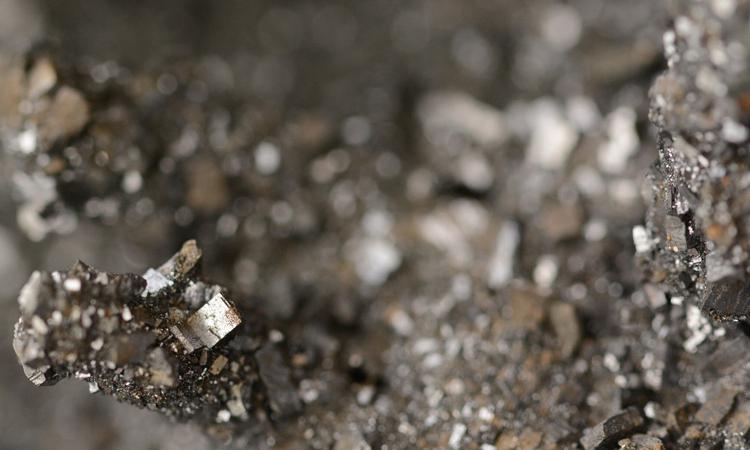
Africa-Press – Namibia. NAMIBIA exported close to one million kilogrammes of cobalt last year, worth N$97 million and mainly destined for China and Korea.
NAMIBIA exported close to one million kilogrammes of cobalt last year, worth N$97 million and mainly destined for China and Korea.
Cobalt, mostly known to come out of the rich Democratic Republic of Congo (DRC) and mired in allegations of child labour, is a lucrative raw material used in the building of lithium-ion batteries used in smartphones, laptops, and electric vehicles.
Data from the Namibia Statistics Agency (NSA) shows that some 952 000 kilogrammes worth of cobalt were exported from the country.
Registered under the universal code; 81059000, these would include all cobalt mattes and other intermediate products of cobalt metallurgy.
Cobalt was reportedly first discovered in 2012 in the northwestern Kunene region.
Data from the mining cadastre shows that there are no active mining operations of cobalt in the country, however, there are two exploration licences issued to Gecko Cobalt Mining (Pty) Ltd.
Gecko Cobalt mining is owned by Australian company Celsius Resources Limited.
In 2018, Celsius managing director Brendan Borg told Reuters that the company had found cobalt in Namibia and “a lot of it”. “Everywhere we drill a hole along this prospective horizon we find cobalt,” he said at the time.
Borg also indicated that the company was looking at late 2020 for first production. The company’s Opuwo Cobalt Project is its flagship in the country.
Pine van Wyk is now the country manager of Celsius’ operations in Namibia. Van Wyk is also in the employ of Toronto-listed Namibia Critical Metals Inc.
It appears the project is now held by the Australian subsidiary, which in turns owns the Namibia company which operates the licence.
This way of licence holding was the same method used by Paladin Energy Limited when it sold part of its mining licence in Langer Heirich, and avoided paying taxes of over N$200 million.
In its 2020 annual report, Celsius reported that its Opuwo Cobalt Project is a globally significant deposit of cobalt-copper mineralisation containing over 126 000 tonnes of cobalt.
According to Statista, in 2021, the average spot price of cobalt in the US stood at US$23 per pound.
For the 952 000 kilogrammes exported last year, that would have been some US$56 million if taken at face value, and if it was in its refined state.
Cobalt is not the only critical mineral found in Namibia, but according to the Chamber of Mines of Namibia, the country has known deposits of lithium, graphite, tantalum, and other rare earth minerals.
Many of these projects are in varying stages of development, from early exploration to pre-feasibility and feasibility stages.
In August, Reuters reported that the global markets of nickel, lithium and cobalt – three of the key metals used in electric vehicle batteries – are expected to be in surplus in 2022.
Data from the NSA shows that no cobalt products were exported this year.
Reuters had also reported that the global cobalt market could see a surplus of 8 000 tonnes in 2022, compared to a 2 000-tonne overhang in 2021.
The DRC was the world’s largest cobalt producer in 2021, responsible for over 70% of global cobalt supplies. Mine cobalt production in the DRC increased by 22,4% to 120,000 tonnes.
According to preliminary data released by the USA Geological Survey, estimated global mine cobalt production in 2021 was at a record high of 170 000 tonnes, a 20% increase over 2020 (142 000 tonnes).
In 2021, China was the world’s leading producer of refined cobalt, most of which it produced from partially refined cobalt imported from the DRC.
China was also the world’s leading consumer of cobalt, with more than 80% of its consumption being used by the rechargeable battery industry.
Email: [email protected]
Twitter: @Lasarus_A
Cobalt, mostly known to come out of the rich Democratic Republic of Congo (DRC) and mired in allegations of child labour, is a lucrative raw material used in the building of lithium-ion batteries used in smartphones, laptops, and electric vehicles.
Data from the Namibia Statistics Agency (NSA) shows that some 952 000 kilogrammes worth of cobalt were exported from the country.
Registered under the universal code; 81059000, these would include all cobalt mattes and other intermediate products of cobalt metallurgy.
Cobalt was reportedly first discovered in 2012 in the northwestern Kunene region.
Data from the mining cadastre shows that there are no active mining operations of cobalt in the country, however, there are two exploration licences issued to Gecko Cobalt Mining (Pty) Ltd.
Gecko Cobalt mining is owned by Australian company Celsius Resources Limited.
In 2018, Celsius managing director Brendan Borg told Reuters that the company had found cobalt in Namibia and “a lot of it”. “Everywhere we drill a hole along this prospective horizon we find cobalt,” he said at the time.
Borg also indicated that the company was looking at late 2020 for first production. The company’s Opuwo Cobalt Project is its flagship in the country.
Pine van Wyk is now the country manager of Celsius’ operations in Namibia. Van Wyk is also in the employ of Toronto-listed Namibia Critical Metals Inc.
It appears the project is now held by the Australian subsidiary, which in turns owns the Namibia company which operates the licence.
This way of licence holding was the same method used by Paladin Energy Limited when it sold part of its mining licence in Langer Heirich, and avoided paying taxes of over N$200 million.
In its 2020 annual report, Celsius reported that its Opuwo Cobalt Project is a globally significant deposit of cobalt-copper mineralisation containing over 126 000 tonnes of cobalt.
According to Statista, in 2021, the average spot price of cobalt in the US stood at US$23 per pound.
For the 952 000 kilogrammes exported last year, that would have been some US$56 million if taken at face value, and if it was in its refined state.
Cobalt is not the only critical mineral found in Namibia, but according to the Chamber of Mines of Namibia, the country has known deposits of lithium, graphite, tantalum, and other rare earth minerals.
Many of these projects are in varying stages of development, from early exploration to pre-feasibility and feasibility stages.
In August, Reuters reported that the global markets of nickel, lithium and cobalt – three of the key metals used in electric vehicle batteries – are expected to be in surplus in 2022.
Data from the NSA shows that no cobalt products were exported this year.
Reuters had also reported that the global cobalt market could see a surplus of 8 000 tonnes in 2022, compared to a 2 000-tonne overhang in 2021.
The DRC was the world’s largest cobalt producer in 2021, responsible for over 70% of global cobalt supplies. Mine cobalt production in the DRC increased by 22,4% to 120,000 tonnes.
According to preliminary data released by the USA Geological Survey, estimated global mine cobalt production in 2021 was at a record high of 170 000 tonnes, a 20% increase over 2020 (142 000 tonnes).
In 2021, China was the world’s leading producer of refined cobalt, most of which it produced from partially refined cobalt imported from the DRC.
China was also the world’s leading consumer of cobalt, with more than 80% of its consumption being used by the rechargeable battery industry.
For More News And Analysis About Namibia Follow Africa-Press