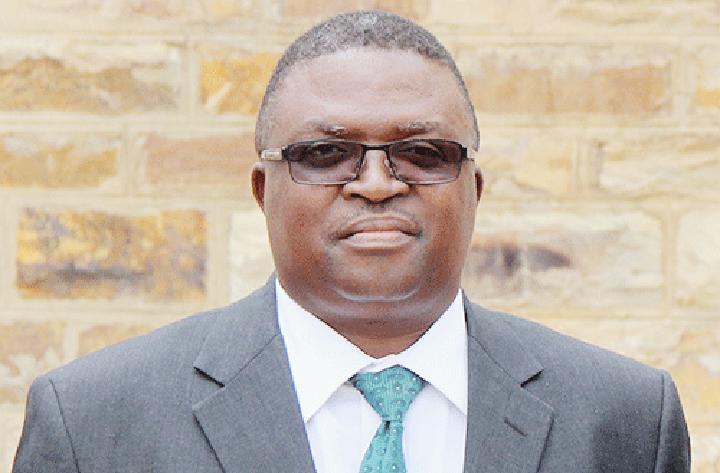
Africa-Press – Namibia. The City of Windhoek has received a disclaimer of opinion from Auditor General Junias Kandjeke, after failing to provide sufficient and appropriate audit evidence to support key figures in its financial statements.
This is according to the latest audit report for the financial year 2024/2025.
A disclaimer opinion indicates that auditors were unable to form an opinion on the municipality’s financial statements due to limitations in the information provided for audit.
Kandjeke’s report was tabled in Parliament last week.
In the report, Kandjeke said the absence of adequate supporting documentation and reliable accounting records made it impossible to verify material amounts disclosed in the financial statements.
“I have not been able to obtain sufficient appropriate audit evidence to provide a basis for an audit opinion,” Kandjeke is quoted as saying.
The report states that the disclaimer resulted from the municipality’s lack of proper accounting records and supporting documentation for material balances in the financial statements.
“The financial statements do not disclose the accounting policy for private partnership (PPP) transactions and related balances. Secondly, the municipality did not account for transactions and related balances of the PPP partners. Thus auditors could not obtain sufficient appropriate audit evidence regarding the transactions and balances related to PPP arrangements,” he said.
The report highlights that several account balances and transactions could not be substantiated.
Kandjeke said in some cases, records were either incomplete, inconsistent or entirely unavailable for examination.
As a result, he could not confirm the accuracy, completeness or validity of those amounts.
Kandjeke further noted that proper accounting records were not adequately maintained as required by law. This failure directly affected the audit process and led to the disclaimer.
A disclaimer of opinion differs from a qualified opinion.
While a qualified opinion points to specific areas of concern, a disclaimer indicates that the auditor could not obtain enough evidence to express any opinion at all on the financial statements.
The City of Windhoek is the country’s largest local authority, responsible for managing significant public funds and delivering essential services such as water, electricity, sanitation, housing and infrastructure development. The report also identifies weaknesses in internal control systems, including inadequate oversight and ineffective review processes.
“These weaknesses increase the risk that material misstatements in the financial statements may not be prevented or detected in time,” said Kandjeke.
In addition, the auditor general pointed to non-compliance with applicable legislation governing public financial management.
“The employees’ costs incurred are overstated by N$19 852 000 and N$240 532 274 for 2024 and 2022, respectively, since the municipality implemented a 5% salary increment agreed with the labour union, Napwu, instead of the ministerial approval of 3 per cent; consequently, auditors were not satisfied with the occurrence of the expenditure incurred,” said Kandjeke.
Kandjeke furthermore emphasised the seriousness of the situation in the report, stating that the lack of reliable records limited the scope of the audit procedures that could be performed.
“The municipality did not maintain proper accounting records to support the amounts disclosed in the financial statements,” he continued.
Without sufficient documentation, auditors are unable to confirm whether reported revenues were correctly recorded, whether assets and liabilities are accurately stated, or whether public funds were properly accounted for.
The findings suggest systemic weaknesses rather than isolated errors, he noted.
When proper reconciliations are not performed and documentation is not readily available, confidence in financial reporting is significantly weakened, he continued.
The report recommends urgent corrective action, including strengthening internal controls, improving record management systems and ensuring full compliance with financial regulations.
It further calls on management and those charged with governance to ensure that adequate supporting documents are maintained and made available during future audits.
For More News And Analysis About Namibia Follow Africa-Press