Africa-Press – Namibia. THE Swakopmund municipality on Wednesday issued its residents a warning that water supply in the holiday hotspot could be under severe pressure for the next two months.
This is due to sulphur outbreaks and power supply challenges.
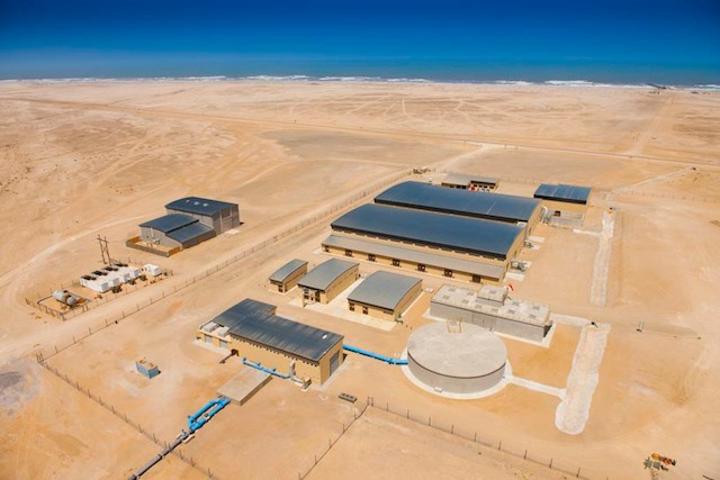
According to the notice, NamWater’s potable water production and supply capacity is under “severe pressure” at its two main sources, namely the Omdel borehole scheme east of Henties Bay, and Orano’s Erongo desalination plant north of Wlotzkasbaken – both crucial to Swakopmund’s water supply.
“The operations at the desalination plant has been receiving and experiencing an overload of sulphur outbreaks and has significantly affected the potable water supply to the water utility’s base reservoir at Swakopmund,” the notice reads.
NamWater is currently also rehabilitating crucial electricity infrastructure and replacing pumping equipment at the borehole scheme to restore the required satisfactory production capacity.
“The municipality cautions everyone to use water sparingly to avoid any water shortages during this time,” the notice reads.
NamWater issued the Walvis Bay municipality a similar warning a week ago, saying its storage reservoir levels in the Swartbank and Rooibank schemes have only recovered to 65% capacity.
A satisfactory recovery is 95% to ensure secure water supply to the harbour town.
“Due to ongoing power supply challenges caused by recent winds and theft of electric cables, the schemes are currently operating below 30% capacity,” stated NamWater’s coastal chief, Frans Ihuhua.
He urged residents and businesses to use water sparingly to avoid any water shortages caused by the current supply challenges for the next two months.
Orano’s communications consultant, Christine de Klerk, this week told The Namibian from Paris that the impact of sulphur outbreaks in the ocean is potentially very damaging to the desalination plant’s infrastructure, and therefore the plant’s operations are stopped as a preventive measure.
Although the plant’s robust design does allow for some management of sulphur, it ultimately needs to shut down when certain levels are reached.
De Klerk said the damage to the delicate membranes used in the reverse osmosis process would cause extensive shutdowns and increase repair costs, so it is better to prevent the damage by shutting down the plant for these periods.
The plant has nine reverse osmosis trains – each filled with 522 membranes.
The cost to replace one train is about N$4,4 million, with a lead time of a minimum of three months.
Once a membrane is damaged, it is beyond repair, she said.
“These outbreaks are natural occurrences and cannot be predicted, nor is there any current technology available to manage the sulphur-rich water through the process. There is no way to filter it out in the current process,” De Klerk said, noting that this occurs more frequently from December to April.
“We continue to monitor seawater conditions around the clock and stand ready to start the plant as soon as they improve. The plant is capable of restarting quickly and ramp up water production, restoring supply to NamWater quickly,” she said.
For More News And Analysis About Namibia Follow Africa-Press