Africa-Press – Namibia. National Assembly Speaker Saara Kuugongelwa-Amadhila says the Namibian Constitution stands head and shoulders above all else as a proud testament of Namibians’ collective resolve to build an inclusive, democratic and just society.
Kuugongelwa-Amadhila said this as Namibia marked Constitution Day on Monday.
“It [the constitution] is widely respected, both nationally and internationally, as one of the most progressive constitutions in the world, firmly safeguarding fundamental rights and freedoms, the rule of law and the separation of powers,” Kuugongelwa-Amadhila, the first woman to head the legislative arm of the State, said.
She then paused to pay homage to former president Hage Geingob, whose astute political abilities and impeccable negotiating skills are credited for having traversed stormy waters in a room filled with former warring factions as Namibia’s constitution was being charted.
“We also pause to honour the legacy of His Excellency Hage G Geingob, the chairperson of the Constituent Assembly and third president of the Republic of Namibia, whose passing on 4 February 2024 remains a profound loss to our nation. Geingob played a pivotal role in shaping the Constitution during Namibia’s transition from apartheid to democracy, anchoring on principles of reconciliation, inclusivity and respect for human rights,” said Kuugongelwa-Amadhila.
She then turned to the visionary leadership of Founding President Sam Nujoma.
“The unwavering commitment to constructionism and lifelong dedication to nation-building and the values championed, democratic governance, social justice, and national unity remain deeply embedded in the constitutional framework that governs our republic to date.”
Rule of law
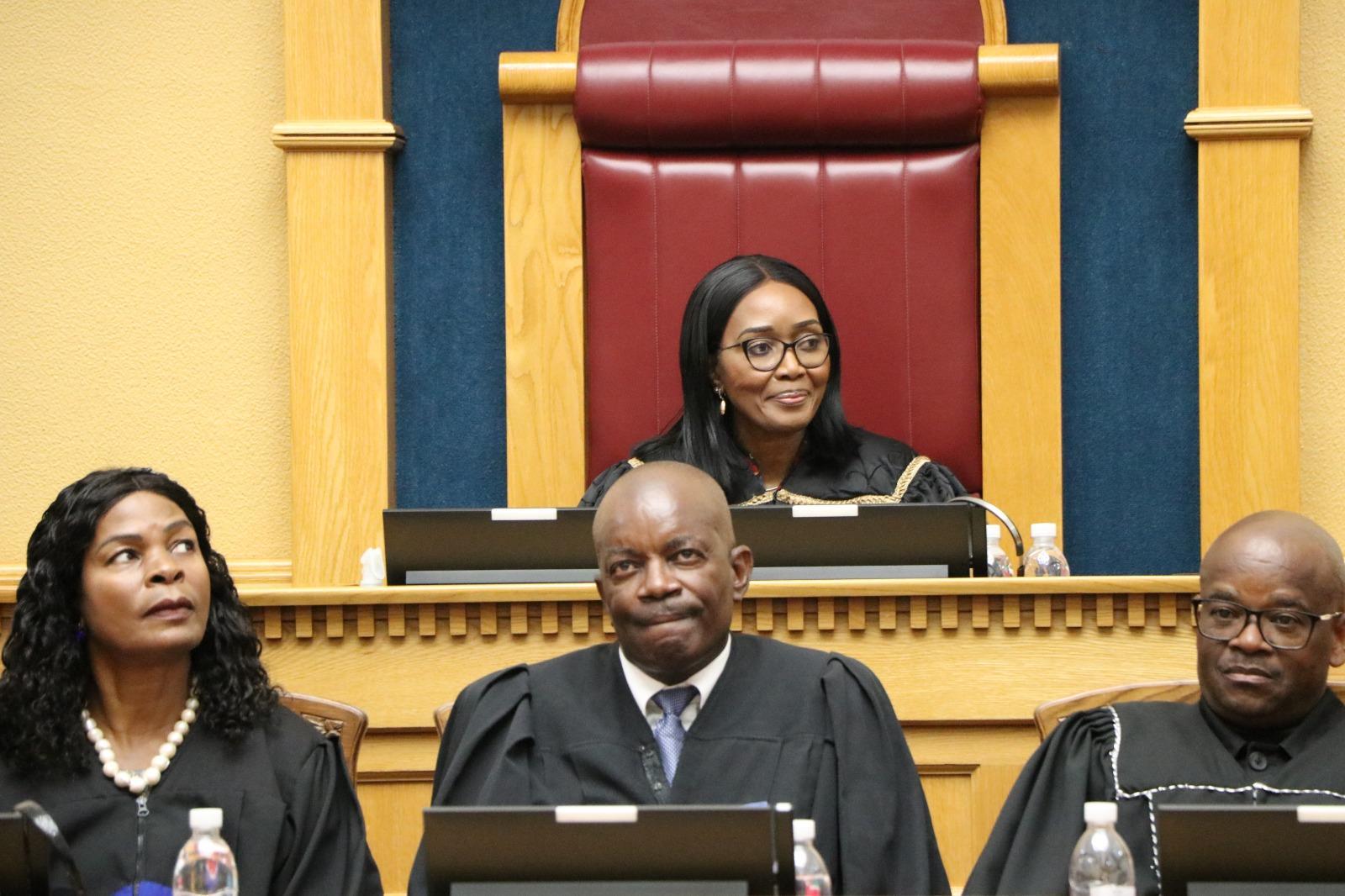
In her messages delivered during the opening of the 2026 Legal Year, President Netumbo Nandi-Ndaitwah reaffirmed the central role of the Constitution in Namibia’s democracy.
Nandi-Ndaitwah also warned against vigilantism, stressing that no individual or group has the right to take the law into their own hands and that respect for the courts is essential to constitutional order.
She further highlighted the need to ensure the safety of judges, magistrates and prosecutors, while crediting Namibia’s prominent leaders for establishing the separation of powers and a strong, independent Judiciary.
Expert
As Namibia marked Constitution Day on 9 February, legal scholar and social commentator Shepherd Nyambe called on ordinary Namibians to move beyond ceremonial celebrations and confront what he describes as a deepening moral and ethical crisis threatening the country’s constitutional ideals.
Constitution Day should serve as a moment of national introspection, reminding citizens that Namibia’s sovereignty does not lie in political leaders or institutions, but in the Constitution itself, Nyambe said.
“The Constitution is not a symbolic document for elites. It is the supreme expression of the people’s will—a social contract that binds both leaders and citizens to justice, dignity, and accountability,” Nyambe said.
Adopted on 9 February 1990, the Namibian Constitution transformed the country from an oppressed territory into a democratic republic governed by the rule of law. Nyambe described it as a moral compass that defines Namibia’s national identity and democratic character.
“For ordinary Namibians, Constitution Day must serve as a civic reminder that power is limited by law and guided by ethical responsibility,” he said.
However, he warned that constitutional guarantees alone cannot sustain democracy if society abandons shared moral values.
Nyambe expressed concern over rising levels of violence, murder, domestic abuse and social injustice, questioning whether Namibian society is drifting away from the ethical foundations envisioned by the Constitution.
“Our Constitution guarantees the right to life, dignity and security, yet daily realities tell a different story. Violence has become normalised, and moral restraint is weakening,” he said.
He linked this moral erosion to socio-economic pressures such as poverty, unemployment, inequality and marginalisation, arguing that these conditions often overpower legal protections.
“When people feel excluded from opportunity and justice, the law alone is not enough. Poverty and inequality fuel desperation, crime and domestic violence,” Nyambe noted.
According to Nyambe, restoring Namibia’s moral fabric requires more than legal rhetoric.
“Moral renewal must go hand in hand with economic justice. Without addressing inequality and unemployment, constitutional promises remain hollow,” he said.
Transformation
Nyambe called for strengthened social safety nets, improved access to education and employment, and stronger community-based justice systems.
He also emphasised the need for consistent enforcement of the law to restore public trust.
“Justice must not only be promised; it must be delivered. Accountability is the bridge between constitutional ideals and lived reality,” he said.
Nyambe further advocated for compulsory constitutional education in government schools, arguing that democracy cannot survive without informed citizens.
“The Constitution must be taught as a living document – one that explains both rights and responsibilities,” he said.
He added that early civic education can help rebuild ethical awareness among young people, strengthen national unity, and cultivate a culture of accountability.
Founders
Reflecting on the architects of the Namibian Constitution, Nyambe praised their wisdom, inclusivity and foresight, describing the Constitution as one of the most progressive in the world.
Like Kuugongelwa-Amadhila, Nyambe paid special tribute to Geingob.
“Geingob’s intellectual leadership and commitment to democratic governance remain etched in Namibia’s constitutional history,” Nyambe said.
He also commended surviving founders such as former National Assembly speaker, Peter Katjavivi, for their continued role in safeguarding constitutionalism.
“Their engagement reminds us that constitutionalism is not a once-off achievement but a continuous process of protection and renewal,” he said.
For More News And Analysis About Namibia Follow Africa-Press