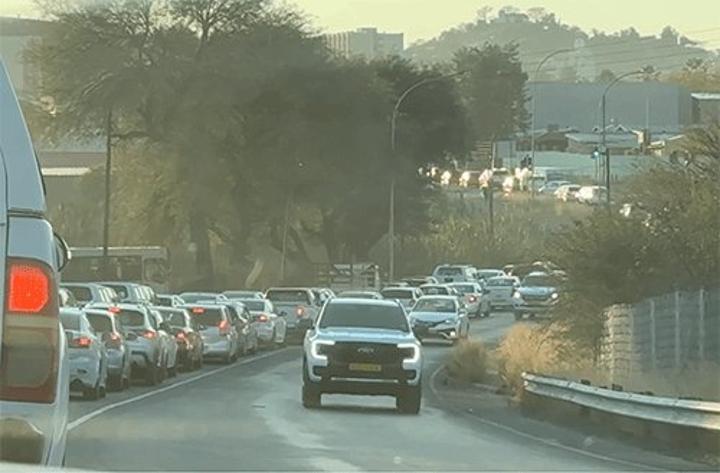
Africa-Press – Namibia. Traffic congestion during peak hours in Windhoek is creating dangerous opportunities for criminals posing as taxi drivers, security officials have said.
This has prompted intensified joint operations by the City Police and the Namibian Police Force (NamPol) to protect commuters, particularly women.
Windhoek City Police spokesperson Superintendent Marcelline Murapo said growing congestion, especially during morning and evening rush hours, has stretched road capacity and complicated enforcement, but police have increased visibility at key intersections and known hotspots.
“As law-enforcement officers, the only thing we can do is deploy our administrative officers to assist with the flow of traffic. The roads are becoming narrower, and there are a lot more vehicles in the city,” Murapo said.
She said officers are deployed early in the morning, in the afternoon and again in the evening to manage traffic during peak periods.
However, congestion has also enabled the rise of fake taxis, with criminals exploiting busy roads and commuter pressure to get home quickly. This follows reports of women being targeted and robbed by unregistered taxis, including a recent attempted robbery involving a journalist.
Murapo said City Police are “very much aware” of the presence of fake taxis operating across Windhoek and described the trend as a serious concern.
“What is important is to save your life rather than rush into a taxi you are not sure about,” she said, urging commuters to use the official taxi verification app before boarding any vehicle.
She said the app allows passengers to check a taxi’s registration number, view driver details and report suspicious vehicles directly to authorities. Commuters were also advised not to board taxis without proper identification markings.
“If you feel unsafe, try to observe the faces of the people, the type of vehicle or any information you can share with the police to assist in tracing it later,” Murapo said.
City Police have identified several hotspots where private vehicles operate illegally as taxis.
“We are very much aware,” Murapo said.
She said police conduct random patrols and visible observations, but illegal operators often flee when they see law enforcement vehicles.
“They act like CCTV cameras for the police. The moment they see a police car from far, they speed off, entering roadways unsafely,” she said.
Murapo said ongoing daily operations focus specifically on fake taxis, with officers screening around 50 taxis per day using the verification app. While most are legitimate, some are found to be operating illegally.
“If it’s fake, we immediately arrest the driver for displaying false information,” she said.
She added that criminals often use borrowed or temporarily parked vehicles to commit robberies, making verification crucial in linking suspects to registered owners.
City Police are working jointly with the Namibian Police, with mixed patrols and shared roadblocks across the city. Murapo said further measures to help the public identify legitimate taxis are planned, but cannot yet be disclosed.
Meanwhile, the City of Windhoek has acknowledged that roadworks contribute significantly to congestion, particularly during peak hours.
Spokesperson Lydia Amutenya said the construction aims to make roads “safer and smoother” but requires patience from road users.
She urged motorists and public transport passengers to plan, allow extra travel time and use alternative routes where possible to ease pressure on the road network.
“Please adhere to all temporary signage, speed limits and instructions from traffic officers and construction teams,” Amutenya said. “Safety remains our top priority for both workers and the public.”
As congestion persists, authorities warn that vigilance by commuters remains a critical line of defence against criminals exploiting Windhoek’s rush-hour strain.
For More News And Analysis About Namibia Follow Africa-Press