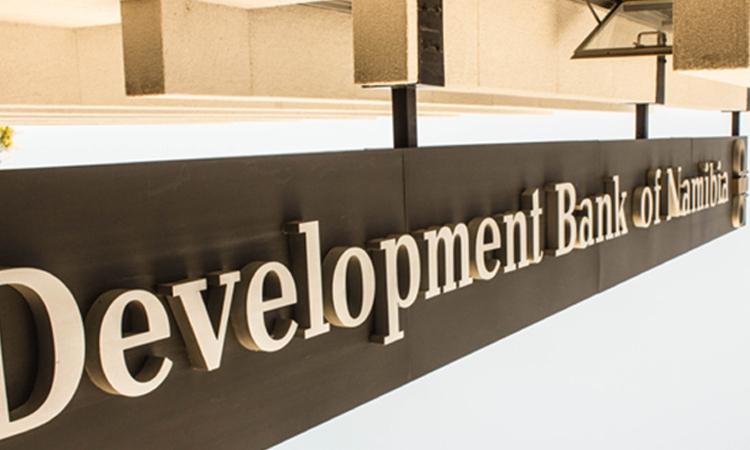
Africa-Press – Namibia. THE Development Bank of Namibia has initiated a programme that will have it converting loans given to some companies to shareholding, as a possible alternative to liquidation.
Although only launched yesterday, such an initiative has been referenced as a possibility before where the bank’s chief executive, Martin Inkumbi, indicated that it could save several troubled businesses when the going gets rough.
The bank said the programme takes the form of partial conversion of debt into various types of preference shares to be held by the bank in the enterprise and the deployment of independent business managers to such entities to render technical and management advisory services.
Speaking at the launch, Inkumbi said the combination of prevalent unfavourable economic fundamentals have left many businesses at the point where they are barely able to operate.
He added that the bank has a duty to recover its capital so that it can make further loans to other borrowers, however, it also strives to strike a balance to preserve the envisaged development impact.
Inkumbi, who will step down next year as the chief executive, has led the bank over the last 10 years and has grown its capital base and balance sheet to N$9,47 billion.
ASSESSMENT CRITERIA
The outgoing CEO said the bank considers employment opportunities created, income for owners, preservation of owners’ capital and assets, contributions to local, regional and national economies, and continued economic growth as reasons to attempt to preserve businesses.
He added that the bank takes all reasonable steps to preserve businesses it has financed and, where possible, creates a win-win situation for the borrower and the bank.
In the coming weeks, DBN will appoint independent business rescue advisers who will make assessments of the distressed business, and make recommendations on the turnabout strategy.
The turnabout strategy will identify changes that need to be made to the operation of the business, its governance and/or its capital structure.
If the capital structure is not appropriate, the bank could consider converting part of the debt to the bank into alternative patent financing instruments such as convertible preference shares.
Inkumbi said preference shares would enable the bank to relax its repayment requirements for a portion of the loan in anticipation of growth of value and yields on the shares.
Owners, he said, would always have the first right to repurchase the shares or, with the agreement of DBN, to arrange for the sale of the shares to third parties.
During the period in which the bank holds preference shares, the business will be contractually obliged to meet a number of milestones identified by the adviser and agreed between the business and DBN.
Once the business is on its feet again, DBN will exit the preference share arrangement, preferably by selling its preference shares back to the original owners.
The first task of the business turnaround adviser, Inkumbi elaborated, will be to ascertain if the business can be rescued. If not, the bank will have to begin steps to recover its loans through the normal liquidation process.
If the business can be rescued, the adviser will make recommendations on management, capital structure and governance which the enterprise will be contractually obliged to implement. In some cases, control of the management of the business could be transferred to mutually agreed business managers with expertise to help manage the enterprise out of a loss making position.
Asked about resistance to the advisers, Inkumbi said the programme is voluntary.
There will be consultation between the bank and the distressed business owners. Where a distressed business owner is not willing to accept terms and conditions of a rescue programme, they can always opt to repay the bank’s loan, or alternatively, face liquidation.
Inkumbi stated that the terms of reference for independent advisory services have been drawn up, and they emphasise high degrees of experience and skills.
The bank said some businesses fail due to poor management and lack of financial control.
Not all businesses in distress would qualify or meet the criteria of the business rescue programme, and priority would be given to those that have some level of business activity happening and revenue generation.
“Ideally, such a business must be in a position to at least partially meet its loan repayment obligation to the bank. The bank will not convert full debt into a preference share instrument. The owners must also be committed and willing to make further capital investment and meet the bank halfway,” said Inkumbi.
Email: [email protected]
Twitter: @Lasarus_A
Although only launched yesterday, such an initiative has been referenced as a possibility before where the bank’s chief executive, Martin Inkumbi, indicated that it could save several troubled businesses when the going gets rough.
The bank said the programme takes the form of partial conversion of debt into various types of preference shares to be held by the bank in the enterprise and the deployment of independent business managers to such entities to render technical and management advisory services.
Speaking at the launch, Inkumbi said the combination of prevalent unfavourable economic fundamentals have left many businesses at the point where they are barely able to operate.
He added that the bank has a duty to recover its capital so that it can make further loans to other borrowers, however, it also strives to strike a balance to preserve the envisaged development impact.
Inkumbi, who will step down next year as the chief executive, has led the bank over the last 10 years and has grown its capital base and balance sheet to N$9,47 billion.
ASSESSMENT CRITERIA
The outgoing CEO said the bank considers employment opportunities created, income for owners, preservation of owners’ capital and assets, contributions to local, regional and national economies, and continued economic growth as reasons to attempt to preserve businesses.
He added that the bank takes all reasonable steps to preserve businesses it has financed and, where possible, creates a win-win situation for the borrower and the bank.
In the coming weeks, DBN will appoint independent business rescue advisers who will make assessments of the distressed business, and make recommendations on the turnabout strategy.
The turnabout strategy will identify changes that need to be made to the operation of the business, its governance and/or its capital structure.
If the capital structure is not appropriate, the bank could consider converting part of the debt to the bank into alternative patent financing instruments such as convertible preference shares.
Inkumbi said preference shares would enable the bank to relax its repayment requirements for a portion of the loan in anticipation of growth of value and yields on the shares.
Owners, he said, would always have the first right to repurchase the shares or, with the agreement of DBN, to arrange for the sale of the shares to third parties.
During the period in which the bank holds preference shares, the business will be contractually obliged to meet a number of milestones identified by the adviser and agreed between the business and DBN.
Once the business is on its feet again, DBN will exit the preference share arrangement, preferably by selling its preference shares back to the original owners.
The first task of the business turnaround adviser, Inkumbi elaborated, will be to ascertain if the business can be rescued. If not, the bank will have to begin steps to recover its loans through the normal liquidation process.
If the business can be rescued, the adviser will make recommendations on management, capital structure and governance which the enterprise will be contractually obliged to implement. In some cases, control of the management of the business could be transferred to mutually agreed business managers with expertise to help manage the enterprise out of a loss making position.
Asked about resistance to the advisers, Inkumbi said the programme is voluntary.
There will be consultation between the bank and the distressed business owners. Where a distressed business owner is not willing to accept terms and conditions of a rescue programme, they can always opt to repay the bank’s loan, or alternatively, face liquidation.
Inkumbi stated that the terms of reference for independent advisory services have been drawn up, and they emphasise high degrees of experience and skills.
The bank said some businesses fail due to poor management and lack of financial control.
Not all businesses in distress would qualify or meet the criteria of the business rescue programme, and priority would be given to those that have some level of business activity happening and revenue generation.
“Ideally, such a business must be in a position to at least partially meet its loan repayment obligation to the bank. The bank will not convert full debt into a preference share instrument. The owners must also be committed and willing to make further capital investment and meet the bank halfway,” said Inkumbi.
For More News And Analysis About Namibia Follow Africa-Press