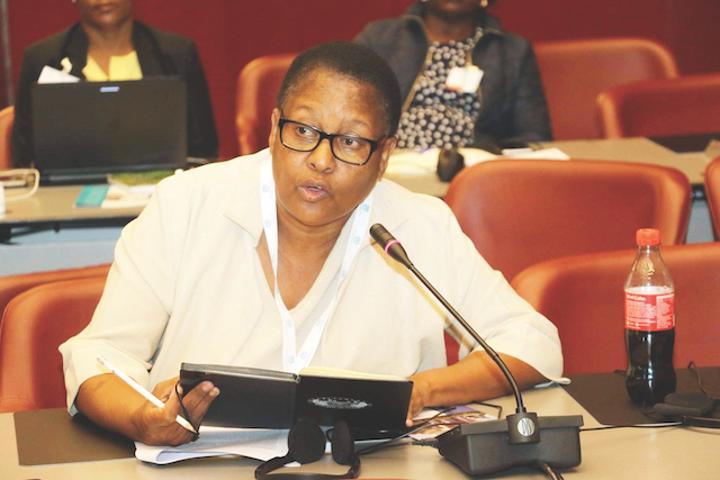
Africa-Press – Namibia. POPULAR Democratic Movement (PDM) parliamentarian Elma Dienda questioned the safety of electronic banking in the National Assembly on Thursday.
POPULAR Democratic Movement (PDM) parliamentarian Elma Dienda questioned the safety of electronic banking in the National Assembly on Thursday.
“The total value of fraud attributable to e-money streams for the period of 2022 so far has amounted to N$3,6 million,” she said.
Electronic payment fraud ensued primarily via phone scams, she said.
“How safe is the electronic payment system?
“Because SIM cards containing these digital wallets can be stolen and misused.”
Dienda said there are many threats to digital wallets, such as SIM swapping and impersonation, when a fraudster steals information and then poses as a genuine user to do a transaction using the stolen electronic wallet details and password.
“There are threats of man-in-the-middle attacks and phishing. What can be done in such a situation is a question the Namibian people want to know.
“Hackers use all sorts of Trojans to remotely take any saved passwords customers might have used in the browsers making internet banking more dangerous than traditional banking because clients are unsuspecting and may never know how their monies are being stolen.”
She said removing the requirement of keying in the card PIN can be likened to the removal of a door to a room full of valuables.
“My worry started when I gave my daughter my bank card for her to settle her tuition fees at the University of Namibia. The university used this contactless feature and an amount of N$15 000 was paid without the need for PIN.”
Dienda said not everyone has the necessary network facilities and data to access internet and cellphone banking.
Neither is internet and ATM banking the most user-friendly for senior citizens and those living in rural communities of Namibia. Therefore, banking services must be available at a similar fee to clients that do not have the ability to access internet banking, she said.
“Ethical issues themselves are also difficult to define, increasingly complex and diverse, and are growing as rapidly as technology. Still there are no specific laws or ethics for online banking and card technology regulation, and because of that, clients happen to face serious ethical and privacy issues when they use their online banking facilities,” she said.
“The total value of fraud attributable to e-money streams for the period of 2022 so far has amounted to N$3,6 million,” she said.
Electronic payment fraud ensued primarily via phone scams, she said.
“How safe is the electronic payment system?
“Because SIM cards containing these digital wallets can be stolen and misused.”
Dienda said there are many threats to digital wallets, such as SIM swapping and impersonation, when a fraudster steals information and then poses as a genuine user to do a transaction using the stolen electronic wallet details and password.
“There are threats of man-in-the-middle attacks and phishing. What can be done in such a situation is a question the Namibian people want to know.
“Hackers use all sorts of Trojans to remotely take any saved passwords customers might have used in the browsers making internet banking more dangerous than traditional banking because clients are unsuspecting and may never know how their monies are being stolen.”
She said removing the requirement of keying in the card PIN can be likened to the removal of a door to a room full of valuables.
“My worry started when I gave my daughter my bank card for her to settle her tuition fees at the University of Namibia. The university used this contactless feature and an amount of N$15 000 was paid without the need for PIN.”
Dienda said not everyone has the necessary network facilities and data to access internet and cellphone banking.
Neither is internet and ATM banking the most user-friendly for senior citizens and those living in rural communities of Namibia. Therefore, banking services must be available at a similar fee to clients that do not have the ability to access internet banking, she said.
“Ethical issues themselves are also difficult to define, increasingly complex and diverse, and are growing as rapidly as technology. Still there are no specific laws or ethics for online banking and card technology regulation, and because of that, clients happen to face serious ethical and privacy issues when they use their online banking facilities,” she said.
For More News And Analysis About Namibia Follow Africa-Press