Africa-Press – Namibia. The Electricity Control Board (ECB) has of late been in the dark about safety issues in the industry, due to health and safety matters not being reported.
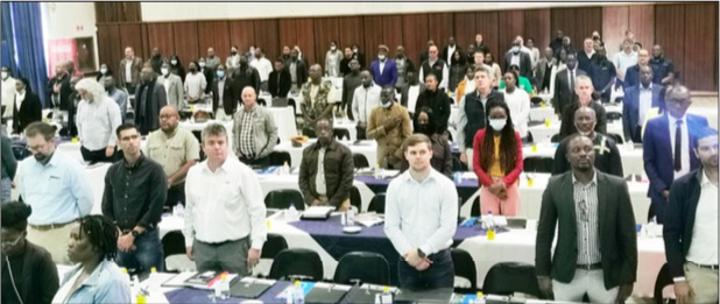
This matter was addressed during the Association of Electricity Distributors Undertakings in Namibia (Aedu) conference, which kicked off at Walvis Bay on Wednesday.
The industry experienced two fatalities in recent months, one involving an electrician (34) employed by the northern power distributor Nored, who died on duty on 27 April.
The electrician fell from an 11 metre-high pole while climbing a 33kV line.
The other incident involved a contractor (37) who was electrocuted while connecting a new NamPower-owned solar power plant near Omaruru to an electricity substation.
According to ECB senior engineer Lameka Amuanyena, most licence holders are not reporting incidents relating to health and safety, which should as per the board’s technical rules be reported to the chief inspector.
“At the moment most of the licensees are unfortunately not reporting. We prepared letters that were sent out on 29 April to remind all licensees to please comply. In that letter, we also attached a template licensees can use,” he says.
Amuanyena says as a regulator, they are also obliged to report incidents to the Ministry of Mines and Energy, especially when a fatality is involved.
“We have been noticing we often only pick up safety issues in the media. It is compulsory for entities to report fatalities to us,” he says.
The ECB is currently in the process of reviewing the industry’s technical rules and finding ways to enforce them.
Currently, there are no punitive measures to punish companies which do not comply with the rules.
“We don’t have punitive measures as such, but we do encourage licensees to report. If it becomes a concern, we definitely need to look into some kind of measures,” he says.
Central-northern electricity distributor Cenored chief executive officer Robert Kahimise says safety is a core value of the electricity supply industry.
“Safety is a must in terms of compliance. The reminder that came up at the end of April is just a reminder to all licensees, including Cenored and others, so that we can consistently comply with licence conditions. Safety is the core of our daily business,” he says.
Aedu chairperson Leon Hanekom says the Ministry of Labour, Industrial Relations and Employment Creation, which is one of the stakeholders, is looking at implementing a safety code for Namibia.
“Through this, every employer would be required to comply with the safety code for Namibia. It will most probably be brought into the electricity supply industry, and I am sure the ECB will set it as licence conditions,” he says.
The ECB is also in the process of transforming from being an electricity regulator to the Namibia Energy Regulatory Authority (Nera).
Once the Nera bill is enacted, the ECB would have an expanded mandate, which would include regulating downstream gas, downstream petroleum, and renewable energy in addition to electricity.
Nera would also have the authority to address shortcomings in the current Electricity Act.
For More News And Analysis About Namibia Follow Africa-Press