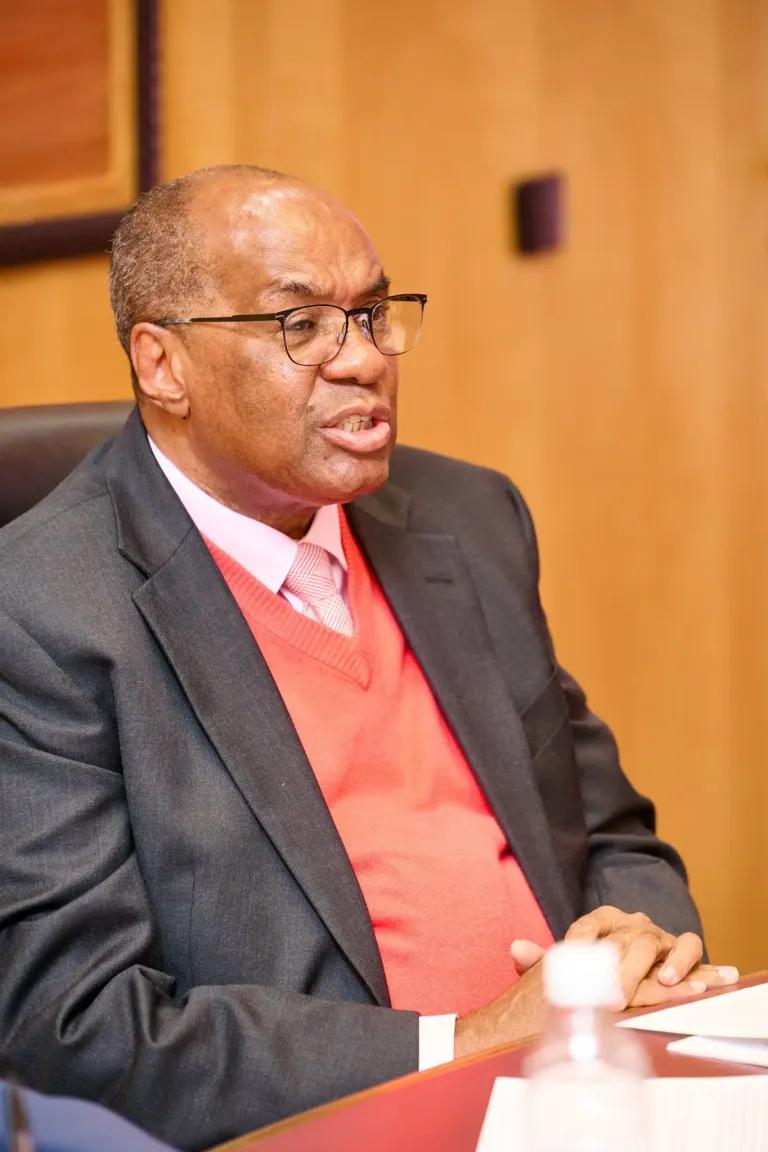
Africa-Press – Namibia. THE Governor of the Bank of Namibia (BON), Johannes !Gawaxab, said that the Bank will continue with its financial tightening efforts to contain the runaway inflation, which is expected to remain high – adding that it “is the right thing for the long-term”.
The governor said this during a public lecture in Rundu on Wednesday, where he explained that tightening financial conditions actually means slowing economic growth. He acknowledged that this will be painful in the short-term, but said that it is necessary for medium and long-term stability in the future.
“If we don’t do that now, the money that you have in your pocket now, that’s being eaten away by inflation, is going to be worthless. So, we have to take this pain, fellow Namibians, so that over the medium to long-term, we have a proper foundation to work from and we make sure that the incomes and the value of your currency is protected,” he said.
!Gawaxab explained that the current harsh economic conditions is a result of a number of exogenous factors, namely Covid-19 and its variants as well as the war in Ukraine and the associated supply chain disruptions.
“It’s not caused by anything that’s mostly domestic. Yes, we had our draughts. Yes, we had our Covid and we needed to borrow, but those things are external factors, it’s not our own making that we are dealing with,” he added.
He said that these external factors significantly hindered the country’s economic growth, which averaged around 3,5% per annum since independence, and explained that 2022 will most likely not bring the projected 3,4% growth as a result.
He noted that this is not only an unfortunate reality in Namibia, but a global problem as global economic growth – which stood at 6,1% in 2021 – will most likely also be lower than expected. This, he said, means that the global economy is contracting, which will further hinder Namibia’s economic conditions as Namibia exports minerals to global economies.
“If global economy is contracting, the demand for our minerals, the demand for our products is also slowing down,” he said.
For More News And Analysis About Namibia Follow Africa-Press