Africa-Press – Namibia. THE Nama Genocide Technical Committee (NGTC) has issued a warning to communities affected by the 1904 to 1908 Nama-Ovaherero genocide against what they term “government divisive forces”.
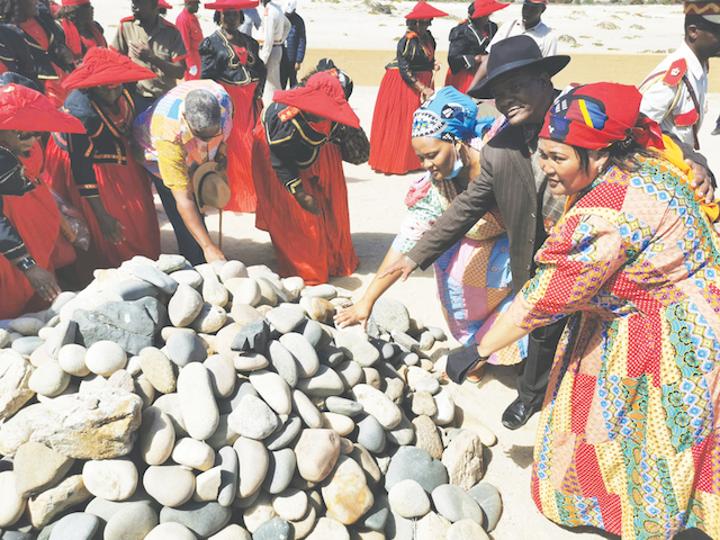
The warning was issued during the 15th Nama-Ovaherero genocide reparation walk at Swakopmund on Saturday under the theme, ‘No Any More’, organised by the Namibian Genocide Association.
The division among the affected communities was amplified by the absence of sections of the Nama and Ovaherero communities.
Two weeks ago the chairperson of the Nama Traditional Leaders Association (NTLA), chief Petrus Kooper, distanced the association from the event.
Kooper told Nama people to stay away from the event and rather wait for another event planned for 2 April.
“Therefore, I call on all the Nama people to fasten your shoelaces and gather in numbers on 2 April at Vineta Stadium, Swakopmund at 08h00. I have instructed the NTLA genocide technical committee to keep you informed on all logistical arrangements,” he said.
Saturday’s event was attended, by traditional leaders from different Ovaherero, Ovambanderu and Nama royal houses, such as the Nguvauva, Kapuuo, Kukuri, Hoveka, Kambazembi and Afrikaner.
The traditional leaders held informal discussions with the Forum of German-speaking Namibians the day before the event.
Parliamentarians McHenry Venaani, Utjiua Muinjangue and Joseph Kauandenge were also in attendance.
The chairperson of the NGTC, Ida Hoffmann, said the Namibian government has initiated divisive forces among those who have been spearheading the genocide discourse since independence.
“The NGTC also calls on the diverse groups of descendants of victims to work towards an inclusive and united front for the Nama-Ovaherero genocide discourse – a front that will reduce and ultimately eliminate the opportunity for divide-and-rule tactics to manifest as we pursue the common purpose of reaching closure on our painful past,” she said.
Hoffman said while the descendants of the genocide victims are seeking restorative justice, their ultimate fight is for the restoration of the dignity of those who died at the hands of the German Schutztruppe.
“No amount of German money will adequately compensate for the losses suffered by our people – both human and material. But Germany must pay and will pay,” she said.
Hoffmann called on the affected communities to condemn and reject the joint declaration between the governments of Namibia and Germany which she described as “clandestine” bilateral negotiations.
According to her, the negotiations for the joint declaration were concluded without the involvement of the affected communities.
She called on such communities to register their dissatisfaction in the strongest possible terms with both governments.
The president of the Popular Democratic Movement, McHenry Venaani, also backed Hoffmann’s call to reject the joint declaration.
He said the joint declaration should be condemned because it denies and excludes the descendants of the genocide victims living in the diaspora.
“We reject the proposal of saying we must accept the joint declaration, and they will add an addendum to the joint declaration,” he said.
Venaani said the fundamentals of the joint declaration are flawed.
He proposed that the parties restart and renegotiate the joint declaration to include the affected communities directly.
“We support the new political direction in the new government of chancellor Scholz (Olaf) that they want to resolve this matter. But we want the matter to be resolved with the full participation of the affected community,” he said.
For More News And Analysis About Namibia Follow Africa-Press