Africa-Press – Namibia. AFTER almost seven years of drought, the government foresees more severe droughts, floods and changes to the farming seasons.
This was said by the executive director in the Ministry of Environment, Forestry and Tourism, Teofilus Nghitila, during the launch of the European Union (EU) action plan on climate change on Friday last week.
“This will cause more frequent and longer droughts, more heatwaves, more frequent and severe veld fires and even increased flooding, as rain patterns change.
“This phenomenon has been the case in Namibia. Last year alone, we witnessed more veld fires in the country that really devastated farm lands in the central area of Namibia,” he warned.
Nghitila said these changes are due to global warming, with experts predicting Namibian temperatures to increase by 2,7 degrees Celsius in the next two decades, and annual precipitation to decrease by 7%.
“Namibia has been vulnerable in terms of climate change impact. This will lead to a reduction in production output,” he said.
Since 2015, the country has been facing severe droughts, which resulted in the head of state declaring the natural disaster a national state of emergency.
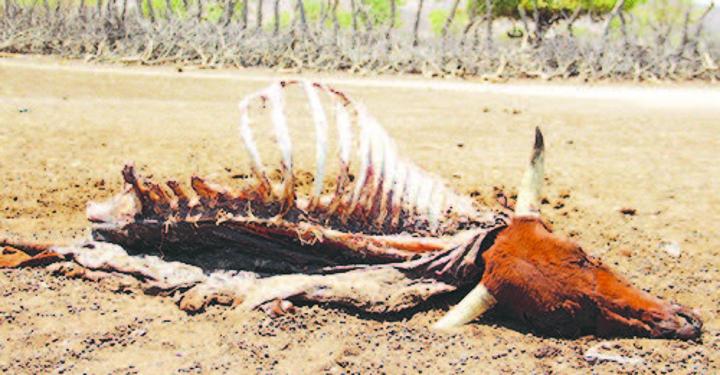
Between October 2018 and August 2020, 90 000 cattle died because of the drought, 50% of them from one region – Kunene.
To salvage the damage, the government spent about N$131 million on drought relief in 2019. During that same period, Namibia experienced its driest rainfall season in 38 years, resulting in a severe drought.
The drought resulted in diminished crop production, estimated at 42% below average in many areas, and left 257 383 people without adequate food, according to various United Nations agency reports.
To remedy Kunene’s drought woes, the government made N$21 million available to the region for the provision of water.
Sixteen boreholes have been drilled, 19 water points have been set up, and 18 boreholes have been rehabilitated.
Last month, the Cabinet introduced food assistance for affected Kunene residents as well as water services and a livestock programme.
The Kunene region received 69 988x10kg bags of maize meal, 269 212 cans of tinned fish, 39 wildlife carcasses, cooking oil, instant porridge, and bales of hay.
MITIGATION MEASURES
UN Namibia said drought events between 2013 and 2016 have affected about 450 000 people and caused massive food insecurity.
In 2019, the annual agricultural output in Namibia and Botswana fell below 50% of the five-year average, and lower than 40% in Zimbabwe.
Nghitila further said Namibia’s legal framework on climate change is progressive and strong enough to support and allow for finding solutions to address climate change.
The executive director believes their current efforts will stabilise the situation in the future with the Environmental Investment Fund (EIF) at the forefront.
“When we are talking about the mitigation and adaptation of climate change measures, we are looking for activities that have tangible impacts. We believe with support and dedication from EIF, we can reduce greenhouse emissions in Namibia,” Nghitila explained.
EFFORTS
EU ambassador Sinikka Antila said this project is part of the action to support Namibia’s efforts in achieving its national determined contributions (NDCs).
“The country’s recently (2021) updated NDCs, in which it made aggressive proposals to reduce up to 91% of its emissions by 2030, as compared to the already ambitious 89% greenhouse gas (GHGs) emission targets committed in 2015 are highly commendable,” he said.
The updated NDCs indicate an improvement in the commitment of of Namibias devotion to meeting the Paris Agreement goal and following the road to net zero, she added.
The ambassador said the launch of the EU Action on the support to Namibia’s NDCs is part of this effort.
“It is very important and encouraging that Namibia remains resolutely committed to the Paris Agreement, and to taking practical and ambitious action to reduce emissions and ensure a climate-resilient economy.
“Namibia’s mitigation commitment is in the form of a decrease in GHG emissions compared to the business as usual baseline over the 2015-2030 period,” she said.
For More News And Analysis About Namibia Follow Africa-Press