Africa-Press – Namibia. THE HAMBUKUSHU Traditional Authority says it will approach the courts to seek recourse if there is no solution to the ownership of Bwabwata National Park.
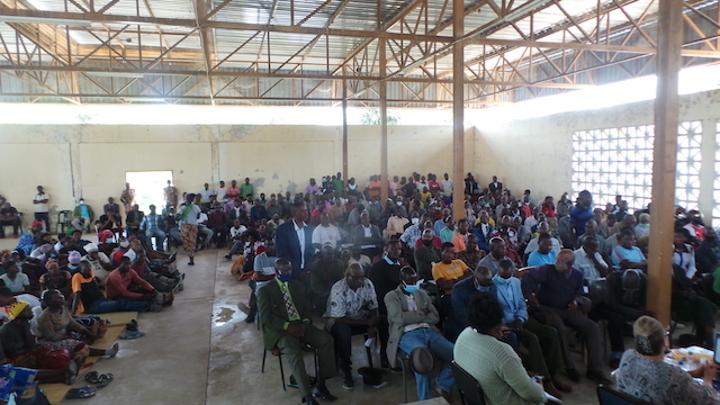
The traditional authority claims the national park is within its jurisdiction. Hambukushu chief Fumu Erwin Munika Mbambo told the parliamentary standing committee on constitutional and Legal Affairs of his intentions on Wednesday.
The parliamentary standing committee was on a fact-finding mission, which started on Tuesday and ended on Wednesday, in response to a petition filed by the authority.
Mbambo, in his submission to the committee, said the Ministry of Environment, Forestry and Tourism should be aware that the ancestors of the Hambukushu people lived in the western Caprivi Strip, present Bwabwata.
“The ministry’s point of departure seems to be that the area had already been proclaimed as a national park during the colonial era, and thus the Hambukushu’s claim of not being consulted in the decision-making on Bwabwata doesn’t hold water. The traditional authority had always maintained that the land called Bwabwata or western Caprivi has since time immemorial been part of their jurisdiction. They, therefore, feel entitled to have some kind of authority or power in the decision-making, management and beneficiation from the resources derived from the said land,” said Mbambo.
He said the Hambukushu settled in the area before they were removed by the colonial government who did not just remove them, but also killed their livestock. Mbambo said, according to the history of Western Caprivi, it is only the Hambukushu who were affected by the colonial forced removals.
“Why is it that the Hambukushu, who suffered under colonial rule, losing their land in western Caprivi, inclusive of Bwabwata, their livestock and their lives during the bitter struggle for independence, are once again being targeted by the Ministry of Environment, Forestry and Tourism in a post-colonial Namibia?” asked Mbambo. He further asked if the Mbukushu were not entitled to ask for restoration of their lost land.
“However, it must be known that those who are bent on treating the Hambukushu as if they are not Namibians over the Bwabwata issue, and that if no amicable solution is found, the Hambukushu Traditional Authority and its community reserve their right for court litigation, including exploring the possibility of adjudication at international legal fora in the matter,” Mbambo hinted.
Earlier on, senior Hambukushu traditional leaders also accused the ministry of dividing the Hambukushu and Khwe communities, who have lived together in the Bwabwata National Park.
“We don’t have land. The ministry of environment is forcing that the land be used for animals. The land should be brought back to us, so human beings should have priority over wildlife. Wildlife does not even vote,” a senior headman of Kangongo village, Erwin Disho, stressed.
“The people are voting. Laws are subject to change. We want our land back,” he said.
The senior traditional leaders are demanding that the environment ministry tells them where they should go, reiterating that Bwabwata is their ancestral land. The Hambukushu also expressed disappointment over the manner in which the ministry has been handling the development of Bwabwata as a game park.
Chairperson of the parliamentary standing committee Kletus Karondo said they undertook the visit to engage and collect facts on the issue in which they listened to community leaders and identified affected groups, as well as the issues spelt out in the petition.
“So far as a standing committee, we have listened, we have picked up the necessary information, facts that will help us compile a comprehensive report that we are going to table in the National Assembly for discussion or adoption or rejection. That is what is going to happen,” Karondo said.
The committee promised to engage the environment ministry to hear its side of the story. The traditional authority proposed that the park be divided into two sections, one for wildlife conservation, and one for human settlement and farming units.
For More News And Analysis About Namibia Follow Africa-Press