Africa-Press – Namibia. THE deputy minister of health, Esther Muinjangue, says the Ministry of Health and Social Services will continue to provide prevention and treatment services, including hygiene promotion, for all types of hepatitis viruses.
Muinjangue said this at a World Hepatitis Day commemoration in Windhoek on Friday.
The day is celebrated annually on 28 July.
After more than 8 000 cases and a total of 66 hepatitis E deaths since 2017, minister of health and social services Kalumbi Shangula in March announced the eradication of the outbreak.
“To achieve hepatitis elimination, at least 60% of people living with hepatitis B and C must be diagnosed, and at least 50% eligible for treatment must be cured of hepatitis C or be receiving treatment for hepatitis B by 2025,” Muinjangue said.
Those in need must have access to hepatitis healthcare services that are accessible, equitable, effective, efficient, timely and of an acceptable quality, she said.
She said the number of hepatitis E cases continue to decline after the declaration of the end of the outbreak.
“However, despite this achievement, we should not desert our public health measures, as the risk for acquiring hepatitis E is still among us,” she said.
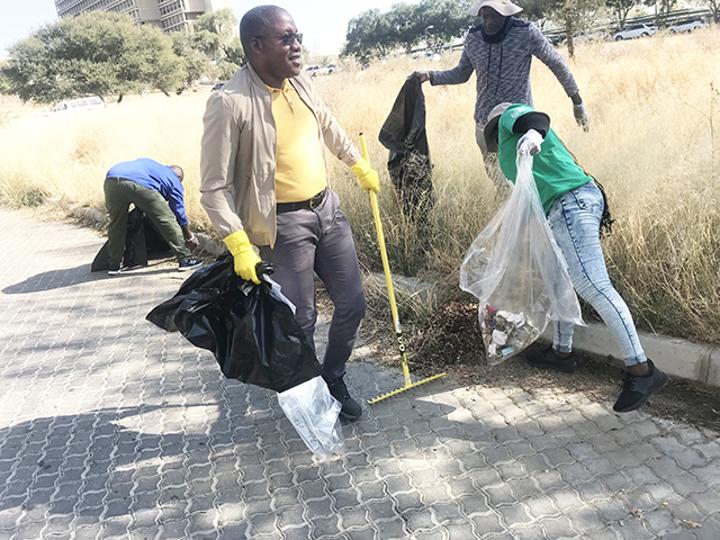
The presence of all stakeholders at Friday’s clean-up campaign demonstrates that Namibians continue to be committed to the prevention of hepatitis E and other communicable diseases, Muinjangue said.
This year’s global theme, ‘Bringing Hepatitis Care Closer to You’, aims to raise awareness of the need to simplify and bring hepatitis care to primary health facilities, community-based venues, and locations beyond hospital sites.
Muinjangue advised the public to protect themselves against hepatitis by getting vaccinated.
One can easily avoid hepatitis by staying cautious and following healthy practices, she said.
“It is high time we take a lesson from all the deaths caused by hepatitis every year,” she said.
The chairperson of Random Acts of Kindness (Raks) Namibia, Charlotte Mojackie, at the event said Raks has launched a series of community clean-up campaigns, because the outbreak of hepatitis at informal settlements is mostly due to poor sanitation and hygiene factors.
“Raks would like to re-emphasise the importance of taking ownership of the of the well-being of our communities, societies, and lives.
“I am excited to see the great turnout at this clean-up campaign launch, and I hope it does not end here. I’m hoping more people would show up at the upcoming campaigns where we will be actively engaged in recycling, sanitation and hygiene matters,” she said.
Mojackie said the clean-up campaigns would tackle different communities monthly, with the next events taking place at the Goreangab and Havana informal settlements towards the end of August.
Executive director of health and social services Ben Nangombe says clean-up campaigns should become a regular exercise as they contribute to maintaining a clean environment.
The World Health Organisation estimates that in 2020 some 296 million people worldwide were living with hepatitis B, 58 million people worldwide were living with hepatitis C, 1,5 million were newly infected with chronic hepatitis B, and 1,5 million were newly infected with chronic hepatitis C.
With regards to hepatitis C, 25% of infected people were diagnosed, and 10% received treatment in 2020.
For More News And Analysis About Namibia Follow Africa-Press