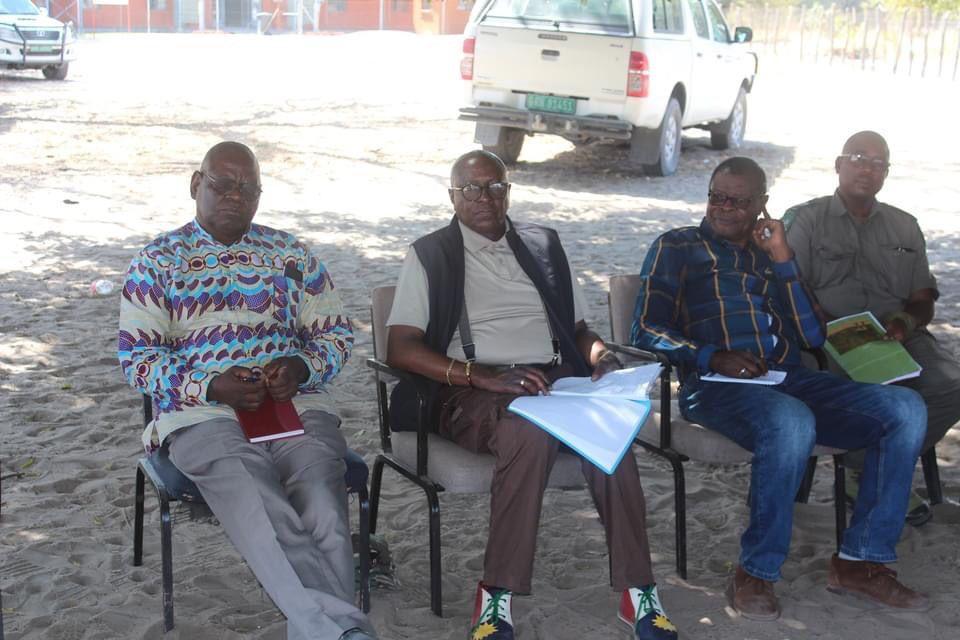
Africa-Press – Namibia. The community of Kabbe north constituency in the Zambezi region has urgently appealed to the government for the implementation of a policy allowing the annual harvesting of problem animals, including crocodiles and hippos, which are rapidly proliferating in the area. The livelihoods of Kabbe’s residents are intrinsically linked to riverine resources, and this plea was voiced during a public hearing organized by the Parliamentary Standing Committee on Natural Resources. The committee is currently conducting an on-site assessment to understand the community’s perspective on the pressing issue of human-wildlife conflict. This effort follows a recent motion introduced in the National Assembly, which was subsequently referred to the committee for an in-depth investigation.
The exponential growth of both human and animal populations in Kabbe has intensified instances of human-wildlife conflict, exacerbated by conflicting interests. Alfred Ilukena, a retired educator and community member, emphasized that the concept of conservation has been misinterpreted to prioritize tourism over balanced ecosystems. He commented, “With expanding populations of both humans and animals but the same limited land area, there arises a clash of interests within the shared environment. To foster harmonious coexistence, we must manage wildlife numbers, particularly the burgeoning populations of crocodiles and hippos in our region, which are causing escalating problems. The government should formulate a policy that permits the annual harvesting of crocodiles, whose numbers have surged in our rivers.”
The residents assert that crocodiles, capable of producing 30 to 60 eggs per nest on average, are responsible for fatalities among both humans and livestock in the area as the animals’ increased abundance depletes the available food in rivers. Ilukena further argued that although Namibia has ratified conventions advocating for the protection of “endangered species, under pressure from international organizations, it is imperative to prioritize safeguarding the local communities directly impacted by these problematic animals.
Ilukena questioned the dichotomy in the treatment of species: “Seals are being culled to preserve our fisheries, so why not apply the same principle to other problematic animals whose populations are surging? International organizations don’t witness the hardships faced by our villages. How can they dictate our resource management? Let’s demonstrate the necessary resolve and establish a policy.”
Deputy Chairperson of the committee and head of the delegation, Hon. Agnes Kafula, echoed the sentiment that international organizations often prioritize wildlife over human lives. She remarked, “When we lose a person to human-wildlife conflicts, these organizations that claim to support our natural resource conservation fail to offer assistance.”
Another member of the parliamentary delegation, Hon. Tangeni Iijambo, proposed a solution involving community-initiated crocodile farming. Such an initiative could generate revenue for regional development and job creation. Iijambo highlighted the dormant Kongola crocodile project, suggesting that due to the growing crocodile population, the community could establish a crocodile farm in the area.
Another resident appreciated the concept of conservancies, which allow local communities to manage resources. However, he stressed that these initiatives were launched without adequate awareness of the associated challenges. The translocation of problematic animals such as hyenas into conservancies resulted in substantial losses for farmers. Additionally, community members decried insufficient compensation fees, which were often delayed.
The meeting also revealed that compensation exclusively covered crop damages caused by three problematic animals: Elephants, Buffaloes, and Hippos. Furthermore, individuals residing outside conservancy boundaries were ineligible to claim compensation from the conservancy management fund designed to aid those impacted by human-wildlife conflicts. According to Chief Warden Maani Matomola from the Ministry of Environment and Tourism, the Ministry of Environment, Forestry, and Tourism would address claims from such individuals following investigations, budget permitting.
To expedite compensation and alleviate financial uncertainties, residents recommended the establishment of a dedicated fund for farmers outside conservancy areas. Hon. Kafula concurred, highlighting the inadequacy of initial consultations that led to the current compensation policy’s failure to address community concerns.
For More News And Analysis About Namibia Follow Africa-Press