Africa-Press – Namibia. THE Keetmanshoop municipality has called for water reclamation proposals.
Reclaimed sewage water can be used for agricultural purposes, and for watering parks, stadiums, gardens and public spaces.
About 4 946 cubic litres of sewage water reaches the sewerage ponds on any given day, which is available for reclaiming and commercial reuse.
Keetmanshoop municipality strategic executive for economic development Jegg Christiaan said the municipality foresees the production of animal feed as the best option.
“There is a huge market for that, if a person can utilise the opportunity to produce lucerne, maize and oats-particularly in a country where rain patterns have become unpredictable,” said Christiaan.
The municipality foresees the venture being implemented on an agricultural real estate model, whereby the municipality would create plots around the sewer ponds, which users can purchase/lease.
Currently, approximately 300 hectares of land are available around the 12 sewer ponds being used for the town of Keetmanshoop.
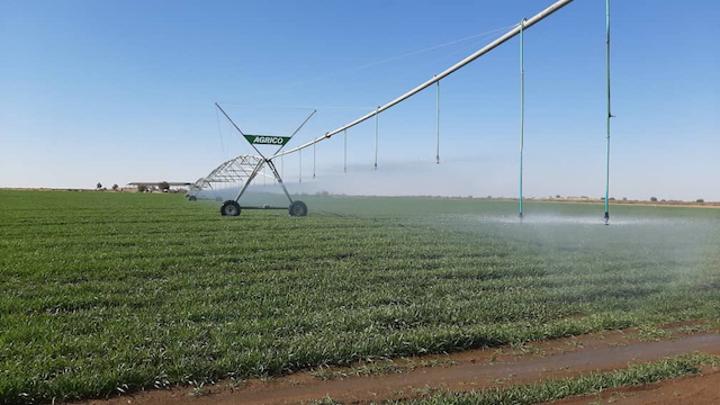
One operator is already reclaiming waste water through using centre pivots to irrigate lucerne, maize and oats across three blocks measuring 15 hectares each.
“The current operator had invested around N$3 million on clearing 60 hectares of land, preparation, seed, fertiliser, pumps and centre pivots, among others,” said Christiaan.
Johan Blaauw went into partnership with the municipality and invested approximately N$5 million to install a borehole for water quality monitoring, building of storage facilities, accommodation for workers and installing the irrigation equipment.
Blaauw said he was able to keep his own feedlot of going and continue supplying meat to South Africa during the drought. He was also able to sell lucerne at a discounted rate to communal farmers, enabling them to continue earning their livelihoods from small livestock breeding.
“However, at times the availability of water is a challenge. During December and January when schools, government offices, and big businesses close and people go on holiday, the water reduces. Then there is not even enough to suffice for the 45 to 60 hectares I have,” said Blaauw.
Another challenge as a result of reduced water is the water which seeps into the ground because the linings of the ponds are worn out.
Christiaan said relining of the ponds will cost about N$2 million for two ponds and the construction of a pump station.
He said the relining of the ponds is part of the process to renew the waste water permits and design a new environmental management plan for the sewer ponds, after permits expired last year.
“It is important for us to address the environmental challenge of sewage water seeping into the ground and contaminating the underground water tables. Plus, the challenge of surface water that runs off can cause environmental pollution. Water reclamation and reuse would mitigate, reduce and possibly even eradicate these risks,” said Christiaan.
At the beginning of this month, the council approved the consultation with development partners to source funding for the upgrade of the Keetmanshoop oxidation ponds to facilitate the optimal harvesting of waste water.
For More News And Analysis About Namibia Follow Africa-Press