Africa-Press – Namibia. A LEAKED recording purporting to be of alleged Phala Phala burglary mastermind Imanuwela David being interrogated by two unidentified South African law-enforcement officials has raised more questions about both the amount stolen and about the ‘off-the-books’ investigation following the theft.
The interrogation appears to have taken place in a vehicle in 2021, the year following the burglary.
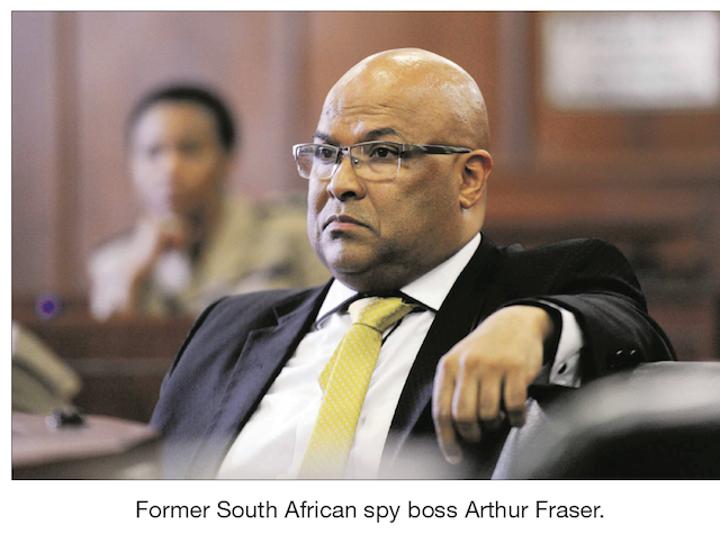
The alleged details of the Phala Phala burglary were first exposed in an affidavit by former South African spy boss Arthur Fraser, in which he accused the neighbouring country’s president, Cyril Ramaphosa, and the head of the VIP protection unit, Wally Rhoode, of criminality in concealing the theft and in the detention and interrogation of some of the suspects.
Ramaphosa has largely kept mum on the allegations, except to acknowledge that the burglary did take place, and to state that the money that was stolen was not from the proceeds of crime and was far less than what Fraser claimed.
Fraser did not put a fixed figure to the stolen cash, saying the information he received from a member of Rhoode’s team was “speculated to be in the region of approximately US$4 million to US$8 million”.
In the audio recording, David is heard claiming the figure was much lower, because they only stole a portion of the cash hidden in the sofa at the farm.
He tells his interrogators that a cleaner working at Ramaphosa’s directed him to the money that was stored in the leather sofa and brought him samples of the cash to prove it was authentic.
He describes the operation as “easy” and says it required no violence.
He tells the unidentified men that the robbers only took about U$800,000 (about R13-million) packaged in eight wrapped parcels containing US$100 000 each.
“That lady [the cleaner] said don’t take everything, because you are dealing with the president, they are going to f*ck you up, and they are going to f*ck me up,” he explains.
He also gives details about how he crossed into Namibia, saying he left because he sensed that “this thing is too hot”.
David claims he was arrested because someone who did not get paid from the stolen cash snitched on him.
From the description in the recording, it appears that the police raided a Milnerton property where David and other suspects were staying in 2020 after the robbery.
David describes the raid, saying the police beat the suspects and even took out the “whole ceiling of the house” looking for the money, but the suspects told the police it had been spent.
He claims they were dumped “in the bush” after the raid.
Interestingly, the recording includes the claim that David’s father worked for the state.
The content of the recording suggests the fallout from Fraser’s disclosure could potentially be embarrassing for the Namibian political leadership, not just for Ramaphosa.
David was allegedly picked up at the border by Paulus Ngalangi, the then Fishcor chief executive officer.
Notably, the former head of the Namibian Criminal Investigations Directorate (CID), Nelius Becker, who compiled a Namibian Police report on David, was one of the key investigators of the so-called Fishrot corruption scandal, which allegedly saw millions of Namibia dollars in fishing quota fees collected by Fishcor diverted to executives, but with a significant cut going to the ruling party, Swapo.
It is also notable that Becker was unexpectedly moved across from the CID to the police’s forensics division in mid-July 2020, a month after David’s arrest – a move that has raised eyebrows since he had been in charge of the CID for less than a year.
‘NO-MAN’S LAND’
Since news of Fraser’s complaint broke, South African officials, contrary to claims made by the Namibian Police, have denied receiving a request from the Namibians for mutual legal assistance in investigating David.
The Namibian Police’s inspector general, Sebastian Ndeitunga, released a statement saying their officers met with their South African counterparts in “no-man’s land” at the Noordoewer-//Kharas border region on 19 June 2020, shortly after Imanuwela’s arrest.
The meeting is corroborated in the Namibian Police’s report, though the identity of the South African official who engaged Namibian authorities to set up the meeting in “no-man’s land” is blacked out of the police report.
Ndeitunga said the officials shared “operational information pertaining to David Imanuwela and other Namibian nationals” suspected of involvement in the break-in at Ramaphosa’s farm.
After identifying “individuals, bank accounts, and various properties including lodges, houses and vehicles suspected to have been purchased with the proceeds of crime”, and having obtained a preservation order, Namibian authorities turned to South Africa’s ministry of justice to “to confirm whether or not a crime was registered in South Africa”.
However, according to Ndeitunga’s statement, “no response was received from South African authorities, resulting in the cancellation of the preservation order and release of assets”.
In his affidavit, Fraser claimed after the robbery Ramaphosa asked for assistance from Namibia’s president Hage Geingob in apprehending David.
“This resulted in major general Rhoode travelling to Namibia, where the suspect was interviewed and stolen monies seized from him. Major general Rhoode had travelled to Namibia utilising official government resources and had not been legally processed through border control.”
A commissioner of the Namibian police’s special branch, who attended the no man’s land meeting, and whose name is also redacted, confirmed that David “was the mastermind behind the burglary and supplied some names and photographs of his accomplices”, according to the police report.
The report added: “Due to the sensitivity of the matter and the envisaged fallout it will create in South Africa they requested that the matter is handled with discretion.”
It also noted that the two presidents were “allegedly” engaged in ongoing discussions.
Geingob has strongly denied allegations that he assisted Ramaphosa in covering up the theft.
Justice minister Ronald Lamola’s spokesperson, Chrispin Phiri, said there was a specific process that countries had to follow when applying for mutual legal assistance, which involved liaising through the country’s respective embassy or high commission.
“We can confirm that, to date, all requests for mutual legal assistance have followed these processes without any complications between the two states Namibia and South Africa. We can categorically state that, to date, there is no official record of this specific request,” Phiri said in a statement.
*This is a shortened, edited version of an article that appeared on the Daily Maverick’s website. The amaBhungane Centre for Investigative Journalism is an independent non-profit organisation. They co-publish investigations, which are free to access, to news sites like Daily Maverick. For more, visit them at www.amaB.org
For More News And Analysis About Namibia Follow Africa-Press