Africa-Press – Namibia. PRESIDENT Hage Geingob called on education stakeholders not to blame each other for the poor results of the Namibia Senior Secondary Certificate Ordinary and Advanced Subsidiary levels (NSSCO and NSSCAS.)
This comes after some quarters partially blamed teachers for the high 2022 NSSCO failure rate.
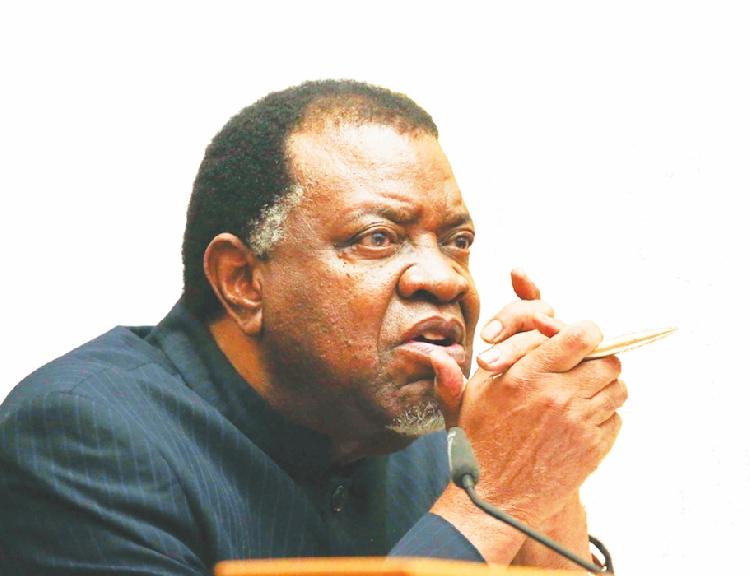
In a statement, Geingob said he wanted to reassure the country’s citizens that after receiving a report from education minister Anna Nghipondoka, the necessary decisions and actions would be taken to advance the interests of teachers, pupils and the education sector in general.
“Therefore, the president would like to appeal to all stakeholders, specifically the teachers, the pupils, the parents, the education ministry and the unions to avoid blaming one another for the dismal results, which everyone agrees are not in the interests of the country.
“Such an approach of blaming one another is not helpful,” reads the statement.
After the tabling of the report and the necessary decisions are taken, Geingob said he is convinced all stakeholders will find a common solution to avoid a repeat of 2022’s results.
Meanwhile, Namibia National Teachers’ Union (Nantu) acting president Daniel Humbu said teachers spend about 80% of their time doing administrative work rather than teaching, which compromises the full implementation of the new curriculum.
Nantu released a statement yesterday reacting to the NSSCO and NSSCAS results.
“This curriculum has turned teachers into administrators, 80% of our teachers’ time is spent on filing rather than being given time to do research and prepare properly for the next day. This is very bad,” Humbu said.
He said the government does not provide adequate financial resources to support the implementation of the revised curriculum.
“No proper training to teachers was provided to implement the curriculum. In fact, the majority of teachers were not consulted during the review of the curriculum in 2015.
“How do you expect teachers to perform if you did not involve them during the review, not even hearing from them for their input?
“The government has planned to fail,” he said.
To date, Humbu said no teacher training institution trains teachers for Advanced Subsidiary level in the country, which is a clear indication of a lack of collaboration between institutions and the education ministry.
“Nantu carried out research in 2019 on the implementation of the revised curriculum. The outcome was presented to the education ministry in 2020, with recommendations. Nothing was done, and the same song is being sung – no money. The government must be ready to invest in education for good returns,” he said.
He questioned the claims that education receives the largest chunk of the national budget, calling for a transparent budgeting process involving all education stakeholders to ensure adequate funding for prioritised needs.
While Nantu is alarmed by the poor academic results for 2022, it is not surprised by the outcome, given the disruption caused by Covid-19 during 2020/21, which had prolonged school closures, working from home, a rationalised curriculum, psychological effects and a lack of support for teachers.
“We would like to express our heartfelt gratitude and appreciation to those pupils who performed exceptionally well. To those who could not make it, we would like to encourage them to put more effort and work harder to succeed,” Humbu said.
Nantu officially launches ‘Operation Nantu on Staffing Norms’ today to underscore prescribed teaching norms.
“We mean business this year. Our teachers will be informed not to be forced by any authority to teach beyond the norm, or do multi-grade teaching at all,” Hambu said.
Meanwhile, Nghipondoka yesterday said many contributing factors affected the ministry’s finalisation of the curriculum reform. This ranges from a shortage of resources exacerbated by Covid-19 disruptions, and some systemic effects on service delivery.
To produce quality results, it should be ensured that teachers get enough support, effective formative assessment to inform improved teaching and learning and time-on-task in addressing school needs for teaching and learning in terms of human and material resources, Nghipondoka said.
“For pupils who wrote the NSSCO exams last year, an in-depth analysis has been made to determine the number of pupils who fall under the category of candidates who might qualify to [sic] any other institution of higher learning,” she said.
She urged 2022’s NSSCO pupils to look out for information on institutions of higher learning where they may qualify for further studies.
For More News And Analysis About Namibia Follow Africa-Press