Africa-Press – Namibia. THE Ministry of Environment, Forestry and Tourism (MEFT) says it conducted consultations with various stakeholders, including the Hambukushu Traditional Authority, on its 1999 submission to Cabinet for the proclamation of the Bwabwata national game park in the Kavango East region.
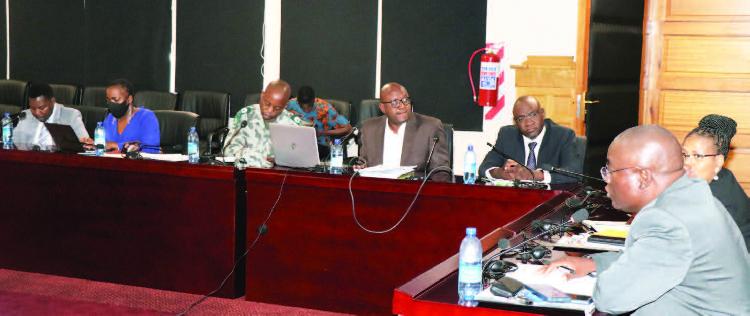
MEFT submitted its arguments during a public hearing held by the parliamentary standing committee on constitutional and legal affairs.
National Assembly speaker Peter Katjavivi instructed the standing committee to carry out the hearing regarding a petition submitted to him by the Hambukushu Traditional Authority last year, which asked Cabinet to refrain from proclaiming Bwabwata as a national park.
The traditional authority claims that the ministry did not carry out proper consultations on the proclamation of Bwabwata in 1999, and asked that Cabinet revisits its decision of 2007 prohibiting communities in the Bwabwata National Park area from owning cattle.
The ministry, however, refuted assertions that it did not carry out proper consultations regarding its planned proclamation, and said various stakeholders, including the affected communities and people living in the Bwabwata area, were consulted.
Thus, the Cabinet decision of 1999 should remain, due to livestock disease and the presence of cattle constituting a threat to the spread of disease in the core area, set aside for special protection of wildlife, conservation and tourism.
The director of parks and wildlife management, Colgar Sikopo, in his presentation delivered on behalf of the ministry last week, stressed that Bwabwata is the most visited park in north-eastern Namibia.
He said it holds major socio-economic potential because it offers income to residents, creates jobs and business opportunities within the community, and offers economic benefits to the region and Namibia as a whole.
Sikopo said structures for community consultations concerning the management and development of the park were created, such as the Bwabwata advisory committee. The Hambukushu Traditional Authority has been invited to these structures but has not made a nomination, he said.
The establishment of a community-based conservation body would strengthen participation and see benefits flowing to the community, he asserted.
Responding to the claims that proper consultations were not carried out, Sikopo said the MEFT held consultation meetings with the ministry of lands, the local government ministry, as well as the agriculture ministry.
They also consulted the then Kavango East governor, John Thighuru, and traditional authorities in the area, including Fumu Erwin Munika Mbambo, chief Joseph Tembwe Mayuni of the Mashi Traditional Authority and the late headman of the Khwe people, Kippi George, he said.
Conservancies operating in the park such as Kwando, Mayuni, Mashi, Wuparo and Sauzuo were also consulted, alongside the World Wildlife Fund and Integrated Rural Development and Nature Conservation.
“Communities of the Hambukushu at Kamutjonga, neighbouring the park, have requested that the MEFT establishes a conservancy west of Bwabwata National Park. Letters from the community and former regional councillors are available but the Hambukushu Traditional Authority refuses to give them permission to go ahead.
“In the absence of organised and legal bodies for community-based conservation, the Hambukushu community is not actively involved but they want to be,” said Sikopo.
In their petition to the committee, the Hambukushu Traditional Authority, led by Mbambo, claim the area is the ancestral land of the Hambukushu and they should be allowed to own livestock in the Bwabwata area.
After the petition to Cabinet last month, the standing committee carried out a fact-finding visit to the Bwabwata area, and engaged the Hambukushu Traditional Authority, the Kyaramacan Association and community, as well as the Omega settlement community in the Kavango East region.
For More News And Analysis About Namibia Follow Africa-Press