Africa-Press – Namibia. Rwanda’s post-conflict model of unity, zero tolerance for corruption and technology-driven security governance offers concrete lessons.
Namibia can adopt it to strengthen oversight, national security and service delivery.
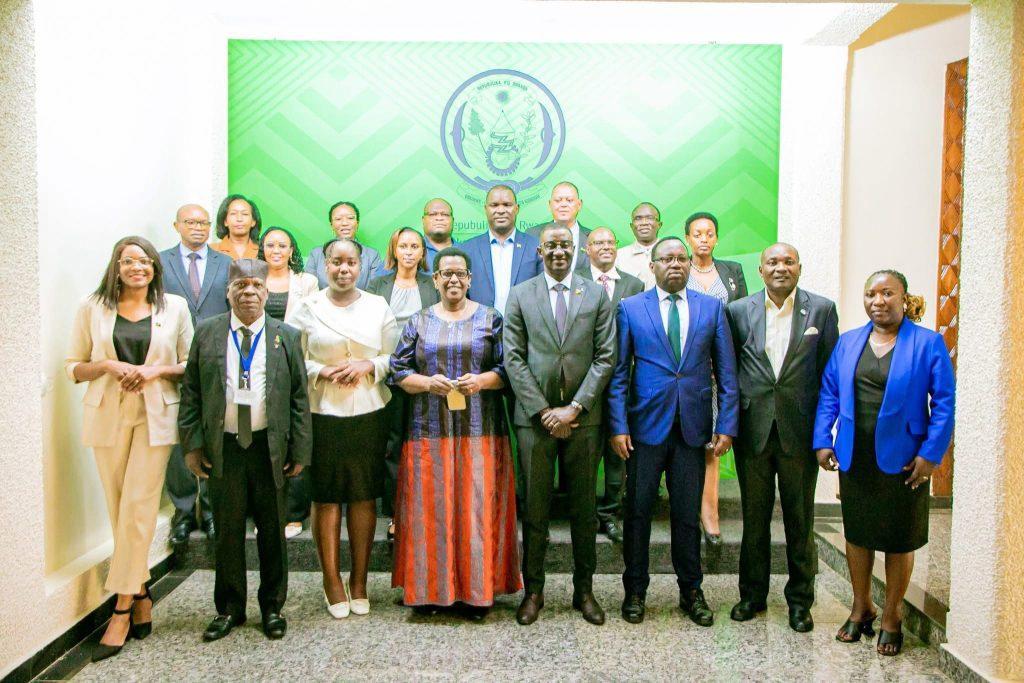
These are the sentiments of the chairperson of the Parliamentary Standing Committee on International Relations, Defence and Security James Uerikua (Swapo). The Members of Parliament led a delegation, comprising his deputy Utaara Mootu (Landless People’s Movement), on a study visit to Kigali recently, aimed at exchanging best practices on policies and regulations related to international relations, defence and security.
Others forming part of the delegation include Martin Lukato Lukato (National Democratic Party) and Pohamba Shifeta (Swapo). He said committees on international relations are crucial for strengthening democracy, ensuring government accountability and shaping effective foreign policy by providing legislative oversight and facilitating public participation.
“Overseeing international agreements and engaging in parliamentary diplomacy to build international cooperation, bridging national interests with global governance, is one of the important visions of the committee. Rwanda has robust cybersecurity laws and buffers to prevent penetration in government systems,” Uerikua said.
What stood out for Uerikua about Rwanda is the participation of security forces in United Nations missions and continuous skills development at local and international training centres.
“The use and integration of ICT in the work of the security forces has greatly enhanced service delivery. The zero tolerance for corruption at all levels has ensured efficiency and strengthened accountability. The implementation of Unity Club, championed by the first lady (Jeanette Kagame) and all former executive members, to strengthen unity and remove tribalism or ethnic groupings to avoid any genocide going forward,” he stated.
The former Otjozondjipa governor noted that the best practice observed in Kigali that Namibia could realistically adopt is the Rwanda Governance Board taking stock of the implementation of government ministries’ programmes.
“They evaluate services rendered to the public and the satisfaction level of citizens. Board holds ministries to account on public resources,” he stated.
Additionally, Uerikua believes National Cleaning Day monthly is a realistic measure, as it has ensured that Rwanda maintains the title of cleanest city in Africa, and this will strengthen the existing relations between the two states.
“It strengthens the already-existing bilateral relations. We have an MoU signed with our police and correctional services. The two institutions fall under the mandate of the committee – and as such, we will ensure the full implementation of the agreements. Agreed to work out modalities to sign an MoU with our counterpart committee to further strengthen ties and facilitate exchange of information and visits,” he said.
Adding her part, Mootu indicated that the engagements reinforced a lesson for them as parliamentarians because institutions are built on purpose through consistent oversight, evidence-based decision-making and a culture of performance and responsibility.
“Benchmarking helps us compare approaches and identify best practices. Benchmarking helps us assess what we can adapt for Namibia. We stay aware of the framework and the national priorities,” she stated.
Further, the importance of the engagements grows in a changing environment because Africa’s interests need coordinated positions and stronger South-South cooperation. “The committee supports policy development and implementation. Benchmarking gives ideas that can guide recommendations, legislative priorities and follow-up actions that improve the way we run things and outcomes for our people,” stated Mootu.
She added that “Overall, she said the Kigali visit reaffirmed the value of learning from African institutions and investing in African-led solutions, adding that it was a timely reminder that, when oversight is informed, diplomacy is purposeful, and institutions are strengthened, the ultimate beneficiaries are our citizens”.
Rwanda’s defence minister Juvenal Marizamunda highlighted his country’s transformation from a liberation army in the early 1990s into a modern, professional military institution that safeguards national sovereignty, contributes to national development and plays a leading role in international peacekeeping missions.
For More News And Analysis About Namibia Follow Africa-Press