Africa-Press – Namibia. NAMIBIA MADE ITS second important discovery in recent weeks, setting up its oil and gas industry to create an influx of new investment and local content opportunities for the country.
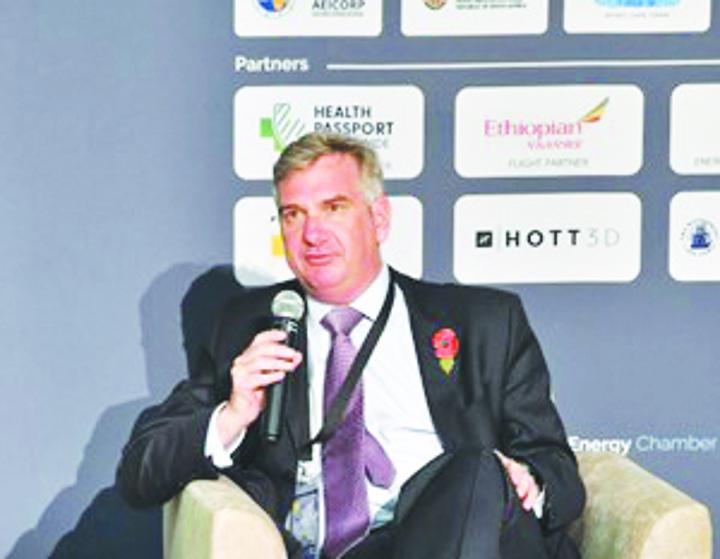
The African Energy Chamber (AEC) sat with Ian Cloke, the chief operating officer (COO) of Afentra, to discuss the enormous potential of what Namibia’s new era of hydrocarbon exploration and production could mean for the country.
AEC: How will Namibia’s growing oil and gas sector transform the country’s economy? Cloke: Oil and gas development, depending on the scale, can lead to the transformation of a country’s economy, delivering high-skilled jobs, trickle-down employment and other benefits.
While at scale, oil and gas can transform the national economy, careful attention has to remain on enhancing existing sectors to ensure continued diversity in the economy.
While the local use of gas for power can have a positive impact on the local economy, it is often more beneficial to export oil to maximise national revenue. AEC: What will be the key to boosting oil output between now and 2025?
Cloke: The majority of ‘greenfield’ deepwater oil projects take around six to eight years from discovery to first oil, with many taking much longer. However, some projects have been delivered in around four years, and these should be the template if value is to be realised early.
Africa has pioneered ‘fast-track’ discoveries, the most significant being the Jubilee development in Ghana, where, following the Mahogany-1 discovery in 2007, Tullow and its partners Kosmos and Anadarko delivered this significant deepwater development to first oil in three-and-a-half years.
There are other examples of the ‘early delivery’ of first oil, such as the Ceiba development in Equatorial Guinea, the Kuito development in Angola, and more recently, the prolific Liza development in Guyana, delivered by Exxonmobil four-and-a-half years after discovery.
The key to the delivery of the Jubilee development in such a compressed timeline was the alignment of the strategic objectives of all stakeholders. On the technical front there is a need to accept that the development will proceed in parallel with the appraisal of the discovery.
This can be perceived to increase development risk, but if managed appropriately within a collaborative partner group it can assist in making the appraisal process more efficient and cost effective.
In addition, there needs to be recognition that standardisation rather than technical perfection can significantly enhance the long-term value outcome for all stakeholders.
Onshore in the Kavango Basin, we all watch with interest whether the encouraging results of the first two wells which encountered shows translate into oil discoveries which can be commercially developed using Namibia’s excellent road and rail infrastructure.
The last two big onshore discoveries in Uganda and Kenya have taken many years for their developments to be sanctioned due to a combination of many factors. In the event of a commercial discovery in the Kavango Basin, there is much to learn from these two significant oil discoveries.
AEC: To what extent will the development of Namibia’s oil and gas projects attract a wider range of operators and diversify the African exploration landscape?
Cloke: Namibia already has the benefit of a large number of players offshore which remains under-explored. In the event that the Venus and Graff discoveries are indeed commercial, and the government demonstrates it is supportive of efficient delivery of first oil, this is likely to significantly improve the country’s attractiveness as an investment destination.
The Kudu gas project could also be enabled by the export of gas from any deepwater project to shore. AEC: How would Namibia’s competitive petroleum exploration scene help the state-owned National Petroleum Corporation of Namibia (Namcor) take a stand in shaping the country’s prospects?
Cloke: The development phase, after discovery, is very different to the early exploration phase. Namcor and the Namibian government have done an excellent job in attracting ‘exploration dollars’ in a competitive global exploration environment despite the historical lack of success.
They need to reflect on the current environment for oil and gas investment and consider how they can also be supportive of their investors through the development and production phase.
If they can create strategic alignment with the companies developing the discoveries, it’s likely that this would bring significant benefit and value to all stakeholders. AEC: What should be done from a regulatory point of view to develop oil and gas?
Cloke: While Namibia has a strong regulatory environment for oil and gas exploration, this would need to be adopted to ensure it is appropriate for the development and production phase.
The implementation of this regulatory environment can and should take time to ensure it is both appropriate and has longevity. It is therefore important that government regulators and the companies leading the development agree on an interim way forward.
This can be achieved, as was the case in Ghana, by the companies self-regulating. If the companies proceed on this basis and the national regulators take a flexible and pragmatic approach, a world-class regulatory environment can be developed. AEC: What role do you feel hydrogen will play in Africa’s energy transition?
Cloke: Green hydrogen is still a very immature technology and could be an important future contributor to the Namibian economy. However, there are other areas with the energy transition which are much more mature, such as solar and wind energy, which could have a significant and positive impact on the economy and reduce energy poverty faster.
This combination of wind, solar and hydrocarbons could create a diverse and reliable energy supply which could further underpin the diversification of the Namibian economy, as well as making an immediate positive economic impact. This approach can be complementary to ‘exploring’ the potential of less mature opportunities such as green hydrogen.
For More News And Analysis About Namibia Follow Africa-Press