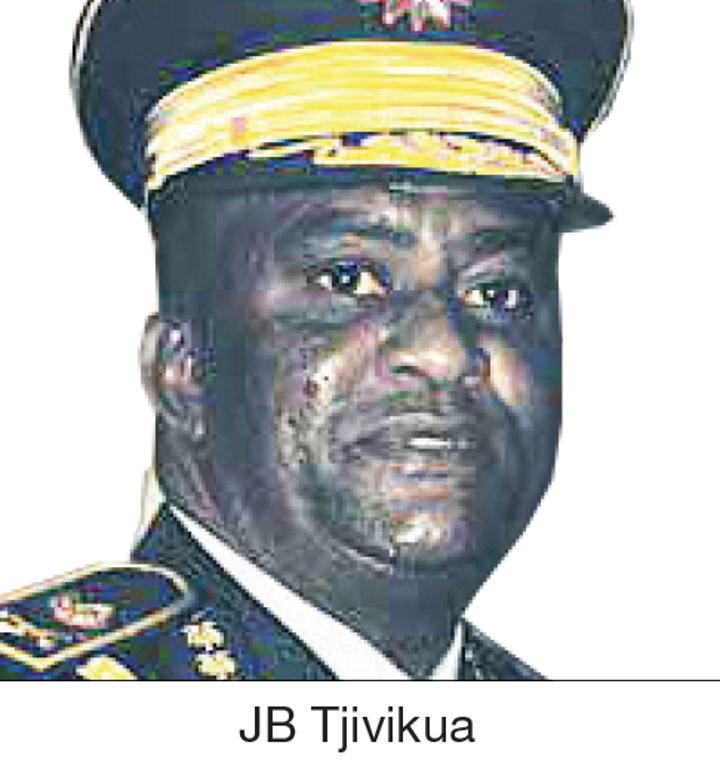
Africa-Press – Namibia. JB Tjivikua
THE PASSING OF the access To information bill in the National Assembly last month is a welcome development. The bill now heads to the National Council for review before being signed into law by the president.
The aim of the bill is to empower citizens, promote transparency and accountability, to contain corruption, and to make democracy work for the people in a real sense.
Its core principle is that people have the right to know about the activities of public authorities, unless there’s a good reason for them not to, and to compel both public and private entities to proactively and promptly make information available.
This is sometimes described as a presumption or assumption in favour of disclosure.
The legislation allows citizens to request any information about government transactions and operations, provided it does not jeopardise privacy and matters of national security.
In reciprocity, the government will provide public access to information held by public authorities.
It is therefore crucial for the citizenry to exercise their right to access state-held information as this empowers them to demand transparency and enhanced accountability from the government.
Essentially, this is done in two ways: Public authorities are obliged to publish certain information about their activities, and members of the public are entitled to request information from public authorities.
As such, the right to information includes the right to: inspect works, documents and records; take notes, extracts or certified copies of documents or records; take certified samples of material; obtain information in the form of printouts, tapes, videos, cassettes, or any other electronic mode, or through printouts.
These will undoubtedly serve as a critical tool in the fight against corruption, as well as in enabling citizens to fully participate in public life, making the government more efficient, encouraging investment, and helping citizens exercise their fundamental human rights.
Access to information is indispensable for a functional democracy.
CHALLENGES
In 2003, the Open Society Institute (OSI) Justice Initiative recognised the need to assess the success of implementation efforts and to advance good implementation practices across the globe.
A pilot study was conducted in five countries. In each country, four categories of people submitted approximately 100 requests to 18 different government agencies.
The categories embraced non-governmental organisation representatives, journalists, individual citizens, and ‘excluded persons’, defined as those who, because of their social or economic circumstances, face serious obstacles to engagement because of disability, illiteracy or poverty,
The same request was made to each agency twice, each time by a different requester, to test whether the agency responded differently according to the type of person making the request.
In addition, three distinct classes of request were submitted: Routine, difficult and sensitive.
The results illuminated the challenges of implementing transparency legislation, and coincided with the first-hand experiences of many implementers and users.
Of the 496 requests for information in the five countries, 35,7%, or just over one in three requests, garnered the information sought.
Approximately half of the requests (49,6%) received the information or written refusal within the time periods established in the respective laws.
This was clearly progress towards transparency. Importantly, and as the report noted, the five monitored countries are all introducing new standards of government transparency while undergoing democratic transitions.
In this context, both outcomes and compliance with international Freedom of Information (FOI) standards, in almost 50% of the cases, and the provision of information in response to 35% requests, can be seen as a solid basis for building greater openness.
‘MUTE REFUSALS’
Unfortunately, the OSI report also records that more than one-third of requests met with complete silence from the authorities.
In terms of these “mute refusals”, as the survey refers to them, South Africa fared the worst – 63% of properly submitted requests were ignored.
As the country report on South Africa comments: “These results are of particular concern given South Africa’s Freedom of Information (FOI) law, the 2000 Promotion of Access to Information Act (ATIA), the first of its kind in Africa, has been hailed as a model for other African countries.”
Though South Africa’s law may be the best drafted and most comprehensive among the five test countries, in terms of compliance with international standards and best practices, only 23% of requests were successful compared with 34% for Macedonia, which had no legal right to access to information, Armenia with 41% and the best performer Peru, with 42%.
THREE-PHASE PROCESS
Enabling legislation for the right to information should be seen as a three-phase process, also called the ‘transparency triangle’: Passage, implementation, and enforcement.
All three elements are crucial and interrelated, but experience indicates that the implementation phase is paramount and serves as the base of the triangle.
Without full and effective implementation, the right to information becomes just another example of ‘hyperinflation’ of new laws that serve no purpose and no one.
Implementation of the access to information law is complex.
Common challenges may include difficulties in adjusting to the mindset of the bureaucracy and people who hold the information; a lack of capacity in relation to record keeping and record making; insufficient resources and infrastructure; inadequate staffing in terms of training, specialisation and seniority; and lack of capacity building or an incentive system.
Even the best law can be rendered meaningless if the myriad of implementation challenges are not addressed.
The best common feature is for us to make a serious commitment to the law. Regardless, Namibia must believe in her potential to implement this bill effectively.
* Major general JB Tjivikua served in the Namibian Police for 27 years, and is a directive writer, 1990 (RCMP) Canada
For More News And Analysis About Namibia Follow Africa-Press