Africa-Press – Namibia. OUR VERY CONSTITUTIONAL order, statehood, peace and stability and national security, as well as our Bill of Rights (and responsibilities), are under existential attack.
This attack comes from burgeoning home-grown violent extremism and/or violent anarchist extremism (VEAE) which have been on the rise since at least 2014.
VEAE is broadly defined as participating in and inciting, condoning and justifying the commission of violent acts to achieve political, ideological, and religious, social or economic goals.
Among others, manifestations of VEAE include an attempt to seize and occupy state land in Kleine Kuppe, Windhoek, followed by attempts to seize and occupy State House and the parliament building.
Lawlessness is defined as a state of disorder due to disregard of the law while anarchy refers to disorder due to the absence or non-recognition of authority.
Signs of lawlessness and anarchy have become even more pronounced since 2019.
The surge in violent extremism and violent anarchist extremism undermine our hard-won independence, peace, national security and our bill of rights (and responsibilities).
It also threatens sustainable human development.
VEAE ‘MONGERS’
The merchants of VEAE are grievance mongers who include radicalised individuals and members of ‘militaristic’ groups such as the Economic Freedom Fighters in Namibia (NEFF) and South Africa (EFF), and the Affirmative Repositioning (AR) movement as well as some opportunistic opposition politicians.
In order to escalate social and political tensions and accelerate systemic collapse, Namibia-based VEAE merchants exploit abject poverty, unemployment, rampant corruption in government and a widespread lack of trust in government institutions, as well as real or perceived state powerlessness.
Factors influencing VEAE include childhood unhappiness as well as apparent lack of parental involvement and interest in a child’s upbringing, distortion and misuse of beliefs, political ideologies and ethno-cultural differences.
Like other forms of extremism worldwide, Namibian-based VEAE merchants use social media as a principal means of disseminating
propaganda and recruiting followers.
Recruitment also occurs in formal or informal physical settings such as bars, neighbourhoods, schools and even universities.
VEAE mongers also infiltrate social justice movements and mainstream non-violent demonstrations that may resonate with their beliefs and aims.
They also infiltrate protest movements together with a range of other militants and activists such as anti-vaxxers, conspiracy theorists, followers of new churches and others.
In an apparent effort to instigate revolt by members of law enforcement agencies, VEAE mongers also seek to increase attention on the living conditions of our police and army officers.
ACTION PLAN
There is no universal consensus on what exactly constitutes ‘preventing’ or ‘countering’ VEAE.
However, the United Nations lists key elements of ‘preventing’ or ‘countering’ VEAE as including non-coercive means to dissuade individuals or groups from mobilising towards VEAE.
The UN holds that the primary responsibility to combat VEAE lies with governments and their national institutions.
It also underlines the important role played by intergovernmental organisations, nongovernmental organisations, academia, religious leaders and the media in countering VEAE.
The UN says activities to prevent or counter VEAE may include the pursuit of wide ranging activities by governments and other entities to prevent radicalisation.
This includes messaging through diverse conventional as well as social media channels.
There must also be community engagement and outreach through all available means such as town hall discussions and capacity-building, especially among the youth and women, as well as education and training for a broad range of stakeholders, including community leaders, traditional leaders, religious leaders and law enforcement officials.
INTERVENTIONS
On 15 January 2016, UN secretary general Ban Ki-moon presented a Plan of Action to Prevent Violent Extremism, calling for a comprehensive approach.
It includes encompassing not only essential security-based measures but systematic preventative steps to address underlying conditions that drive individuals to radicalise and join extremist groups.
There is therefore an urgent need for Namibia to mount a multi-pronged national strategy.
The government needs to roll out a national action plan to prevent and counter VEAE in all 14 regions as a matter of urgency.
It must, among others, enlist traditional communities, religious communities and civil society organisations to facilitate effective cooperation with law enforcement agencies in both preventative and restorative interventions.
Namibia’s opposition parties also have an obligation to combat VEAE, not to instigate or condone it.
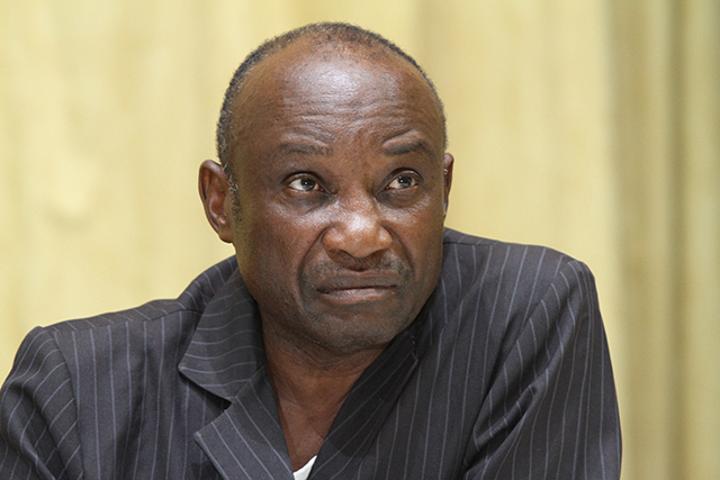
* Phil ya Nangoloh is a Namibian human rights practitioner and founder and executive director of NamRights Inc
For More News And Analysis About Namibia Follow Africa-Press