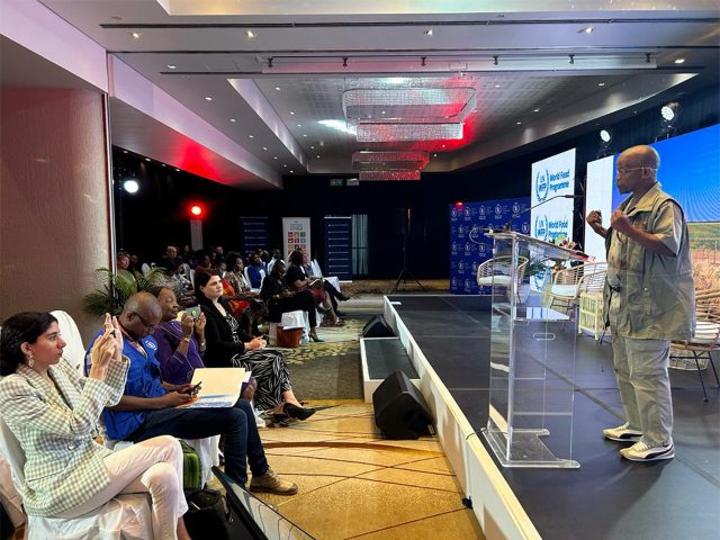
Africa-Press – Namibia. Food systems play a critical role in achieving food and nutrition security for all. In Namibia, the Capricorn Foundation (CF) and the United Nations World Food Programme (WFP) have collaborated to raise awareness about transformative food systems for sustainable development. On March 31, 2023, the two organizations hosted a workshop under the theme “Transformative Food Systems for Sustainable Development” in Windhoek and broadcast it live on Facebook and YouTube.
The workshop was attended by key players in the private sector and government and aimed to create greater awareness of transformative food systems in Namibia and their role in achieving sustainable livelihoods, socio-economic development, and national food and nutrition security. Ms. Marlize Horn, Executive Officer of the Capricorn Foundation, emphasized the importance of food systems in achieving long-term food and nutrition security, environmental sustainability, climate change adaptation and mitigation, job creation, and rural livelihood transformation. She also highlighted the challenges facing the current food systems in achieving these goals.
The Capricorn Foundation launched its annual Food Waste Challenge in July 2022, calling for innovative solutions from the public to reduce food waste in Namibia. The challenge was successful and will continue annually to reach vulnerable communities, increase awareness of food insecurity accelerated through food waste, and collaborate with institutions such as the WFP to address this systemic world problem.
Namibia has gained prominence in the food systems sector since the UN Food Systems Summit in 2021. The summit brought together several stakeholders, including youth, smallholder farmers, indigenous people, researchers, the private sector, policymakers, academic institutions, and civil society. Ms. Ericah Shafudah, WFP Namibia Deputy Country Director, highlighted the importance of joint efforts to enhance the ability of smallholder farmers to adapt and endure current climatic and economic conditions. She emphasized that safeguarding and maintaining the livelihoods of vulnerable communities and assisting smallholder farmers in increasing local food production outputs require a strategic, well-organized, and multi-sectoral approach.
WFP has complemented the saving lives and changing lives agenda in Namibia by providing operational support and building resilience in rural communities. The organization has established community, school, and health-centred food systems projects nationwide that leverage modern methods of agriculture, such as low-cost and climate-smart irrigation systems. By establishing these adaptive food systems, WFP is providing food security for vulnerable populations and empowering communities to become more self-sufficient and resilient in the face of unpredictable weather patterns. It is a long-term approach to changing lives rather than just saving lives.
In conclusion, the workshop hosted by the Capricorn Foundation and the WFP is an essential step towards transformative food systems for sustainable development in Namibia. Collaboration among stakeholders in the food systems sector is critical to achieving long-term food and nutrition security, environmental sustainability, and rural livelihood transformation. The innovative solutions provided by the public and the multi-sectoral approach of organizations such as the Capricorn Foundation and the WFP are crucial in addressing systemic world problems such as food waste and food insecurity.
For More News And Analysis About Namibia Follow Africa-Press