Africa-Press – Namibia. THE Namibia Ports Authority (Namport) defended choosing a Swiss-based company, asserting that the country does not have the local capacity to grow the planned volumes for the new container terminal.
This comes after Namport approved the Swiss-based container terminal giant, Terminal Investment Limited (TIL), as the preferred bidder to operate the port utility’s new N$4 billion container terminal for 25 years.
Namport faced backlash after the announcement of the foreign company as the preferred bidder to operate the terminal.
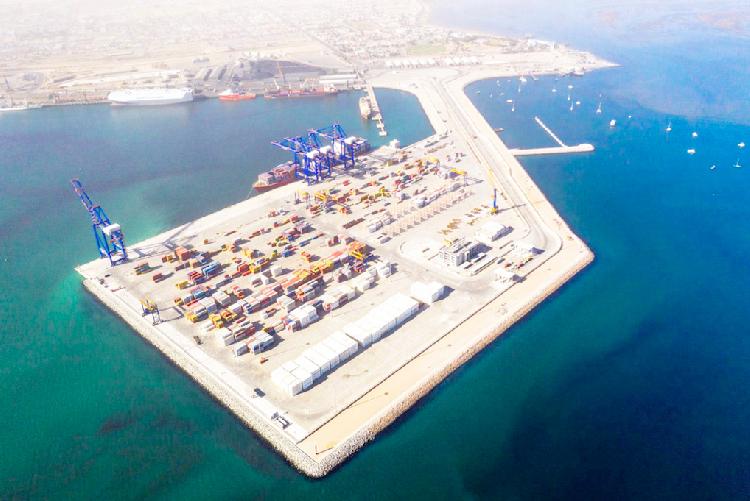
The new terminal increased the container handling capacity of the port, from the current 350 000 containers to 750 000 per year. It was constructed on 40 hectares of land, reclaimed from the sea by the China Harbour Engineering Company.
“The very important decision of where in the world to position/handle transshipments is made by either the shipping line or an operator who has a relationship or cooperation with a shipping line.
“It is precisely for this reason that it would not be practical to expect local business people to operate the terminal,” Namport chief executive officer Andrew Kanime recently told The Namibian.
He said Namibia will benefit from the exponential growth in business handled through the port of Walvis Bay stemming from this much sought-after foreign direct investment.
“We presently just do not have the local capacity to grow the volumes in the manner we so envisage for the new container terminal,” he said.
Namport said TIL will only handle the loading and offloading of containers into and off vessels by an independent operator.
“The ownership of the terminal, and all other port operations, such as marine services, will continue to vest in Namport,” Kanime said.
Since the start of planning, they knew that Namibia as a very small market could “never” sustainably support the full operations of the terminal, Kanime said.
“The business opportunity we identified was that we could construct the terminal and then engage an operator who can bring in significant business that would take our volumes throughput to very high levels and earn us as a country and the owner of the terminal some very good returns,” he said.
Kanime said that the port utility will remain in full control of security aspects.
“There is going to be absolutely no change in the current security protocols at the port of Walvis Bay. Namport will continue to oversee all security arrangements at the port, complemented by the police, whom we host in the port and the navy whose base is also next to the port of Walvis Bay.
“The customs procedures, scanners and inspections will also continue to be done by the Namibia Revenue Agency, as is presently the case,” he said.
This comes as the vice president of the Namibia Local Business Association (Naloba) Peter Amadhila said recently that the new container terminal, if run by a foreign operator, poses national security threats, as the country will not have much control of what is coming in and going out.
This comes after Namport approved the Swiss-based container terminal giant, Terminal Investment Limited (TIL), as the preferred bidder to operate the port utility’s new N$4 billion container terminal for 25 years.
Namport faced backlash after the announcement of the foreign company as the preferred bidder to operate the terminal.
The new terminal increased the container handling capacity of the port, from the current 350 000 containers to 750 000 per year. It was constructed on 40 hectares of land, reclaimed from the sea by the China Harbour Engineering Company.
“The very important decision of where in the world to position/handle transshipments is made by either the shipping line or an operator who has a relationship or cooperation with a shipping line.
“It is precisely for this reason that it would not be practical to expect local business people to operate the terminal,” Namport chief executive officer Andrew Kanime recently told The Namibian.
He said Namibia will benefit from the exponential growth in business handled through the port of Walvis Bay stemming from this much sought-after foreign direct investment.
“We presently just do not have the local capacity to grow the volumes in the manner we so envisage for the new container terminal,” he said.
Namport said TIL will only handle the loading and offloading of containers into and off vessels by an independent operator.
“The ownership of the terminal, and all other port operations, such as marine services, will continue to vest in Namport,” Kanime said.
Since the start of planning, they knew that Namibia as a very small market could “never” sustainably support the full operations of the terminal, Kanime said.
“The business opportunity we identified was that we could construct the terminal and then engage an operator who can bring in significant business that would take our volumes throughput to very high levels and earn us as a country and the owner of the terminal some very good returns,” he said.
Kanime said that the port utility will remain in full control of security aspects.
“There is going to be absolutely no change in the current security protocols at the port of Walvis Bay. Namport will continue to oversee all security arrangements at the port, complemented by the police, whom we host in the port and the navy whose base is also next to the port of Walvis Bay.
“The customs procedures, scanners and inspections will also continue to be done by the Namibia Revenue Agency, as is presently the case,” he said.
This comes as the vice president of the Namibia Local Business Association (Naloba) Peter Amadhila said recently that the new container terminal, if run by a foreign operator, poses national security threats, as the country will not have much control of what is coming in and going out.
For More News And Analysis About Namibia Follow Africa-Press