Africa-Press – Namibia.
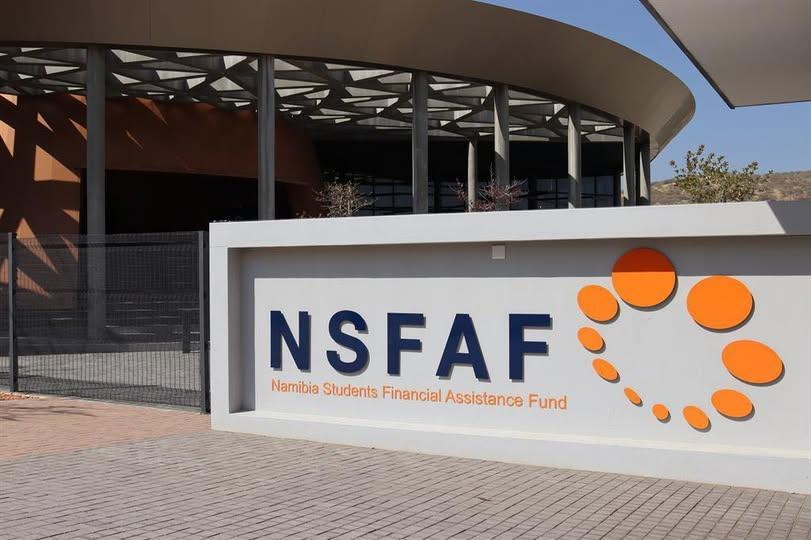
The Namibia Students Financial Assistance Fund (NSFAF) has rolled out the graduate debt settlement extension to meet destitute graduates halfway, enabling them to receive their certificates to secure employment or other economic opportunities.
This emanates from a Cabinet directive that students who had completed their studies before 2026 but could not graduate due to outstanding tuition fees be assisted to participate in graduation ceremonies and access employment opportunities.
NSFAF spokesperson Percy Tjahere told New Era that the programme does not cancel any NSFAF debts, but it is a targeted intervention to settle students’ outstanding institutional tuition fees. Students, despite having completed their qualifications, were unable to receive their certificates/degrees due to institutional debt. “This created a barrier to employment and further study. The government, therefore, intervened as a once-off socio-economic relief measure to unlock these graduates into the labour market,” he said. The initial application uptake was lower than anticipated. About N$22.1 million was paid to approved beneficiaries last year.
It also allows institutions to release certificates and transcripts.
The government also approved and transferred N$118 million to NSFAF to implement the specific programme.
But it is important to note that the debt settlement is offered as a loan.
NSFAF pays the institution directly, and the beneficiary collects the qualification, and the graduate then enters a repayment arrangement with NSFAF under normal recovery provisions once employed.
By the same time, approximately N$95.8 million remained to support additional eligible graduates. The extension includes those not initially captured in the first rollout.
“A significant portion of the allocated funds remains unutilised. Moreover, there has been strong demand from institutions and graduates appealing for inclusion. Hence, extending the programme allows the government to maximise the social and economic impact of the funds already appropriated without requiring additional budget,” he added. Moreover, Tjahere noted that the programme will allow graduates to enter the labour market and become economically active. The overall objective is to reduce graduate unemployment and ensure that completed qualifications can translate into economic participation.
It aligns with the government’s aim to improve graduate employability, reduce barriers to labour market entry, protect public investment in higher education, and support economic participation among young Namibians.
Regional branches
Additionally, the National African Students’ Association (NASA) launched a hard critique of the NSFAF’s centralised operations, calling for the immediate establishment of fully functional branches in all 14 regions to prevent the “complete exclusion” of rural students from higher education.
In a statement released last week, NASA national secretary for academics, sports, arts and culture, Abel Miguel, argued that while the fund’s mandate is noble, its current Windhoek-based model has become a barrier to social justice.
“Students in remote and rural areas face unnecessary barriers such as long travel distances, high transport costs, and limited access to accurate information,” he stated. Miguel warned that these hurdles often lead to delayed registrations and academic interruptions that excessively affect the most disadvantaged.
NASA believes that establishing regional offices will improve accessibility and inclusivity for students nationwide and enhance efficiency in application processing and query resolution, which will reduce administrative congestion at the national office.
The regional offices will also not only promote transparency, accountability, and student-centred service delivery and create employment opportunities for qualified Namibians at the regional level but also, the step will bring services closer to students and strengthen the overall impact of student financial support in Namibia.
“Education is a right, not a privilege determined by geographical location. Decentralising NSFAF services is not a luxury but a necessity if we are to achieve equity, social justice and national human capital development. NASA, therefore, calls upon the Ministry of Higher Education, Technology and Innovation, NSFAF management and all relevant stakeholders to urgently prioritise the rollout of NSFAF branches in all regions,’’ he said.
For More News And Analysis About Namibia Follow Africa-Press