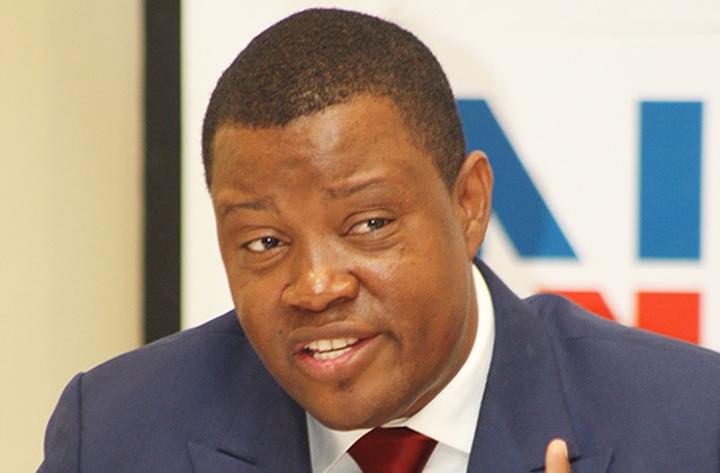
Africa-Press – Namibia. OPPOSITION parties should become actively involved in addressing the issues facing the country, instead of merely criticising the government’s failures, said McHenry Venaani, leader of the official opposition, the Popular Democratic Movement (PDM).
Venaani said while it is good to hold the government accountable, opposition party members in parliament must be trendsetters by introducing legislation that will better the socio-economic situation of Namibians.
He said the opposition must translate “ideological posturing” into the real change that is needed in the country.
“Our voices should not only be used to criticise, but we must also level up the political transaction in this country and debate about the future of this country,” Venaani said.
According to him, opposition leadership is exactly what the country needs and they must lead the national conversation on contemporary issues that plague society.
“It is clear that what is needed is a complete paradigm shift in national leadership and we maintain that we are best positioned to bring about that effective paradigm shift,” Venaani said.
He urged his party’s shadow cabinet – made up of 11 shadow ministers – to take initiative by becoming proactive in areas where the current government is failing.
“We are alive to the acutely rising rates of unemployment and the increasing cost of living. Unless the shadow cabinet internalises the challenges of the everyday Namibian and produces ironclad, innovative solutions facing our country, we are at risk of being party to the failure of the government,” he said.
Venaani was speaking at the opening of the PDM shadow cabinet retreat yesterday, where he also criticised the amount of time parliament goes on recess during a year.
Venaani urged the opposition to come up with ways to make parliament more effective.
“Is our parliament an effective body that delivers social change to our people when parliament only meets for six months in a year, and half of the time we are on recess?”
Venaani said effective governance is a critical component for socio-economic development and social cohesion.
The Namibian government’s effectiveness was reported at 56,73 % in 2021, according to the World Bank.
It requires robust, accountable and transparent institutions; delivering quality services; protecting people’s freedoms and effectively combating corruption to build an inclusive society, Venaani said.
“At times of uncertainty like the present, we must provide clear leadership. We must stand with the downtrodden. We must meet their ambitions for real change. We must walk towards a better future a country that is fairer and more dynamic, one that isn’t afraid to use the power of the government to help working people succeed,” Venaani said.
Venaani raised concern over the living conditions of many Namibians, pointing out that the country has fewer houses than families, with the majority of the population still living in improvised housing.
He said it is unacceptable that there is still such a large portion of the population living in insecurity over the lack of adequate housing, adding that this contributes to the enormous consternation, frustration and suffering in the country.
“The root cause of this problem is simple: the government has been woefully inadequate in the provision of serviced land, particularly in and around Windhoek,” Venaani said.
For More News And Analysis About Namibia Follow Africa-Press