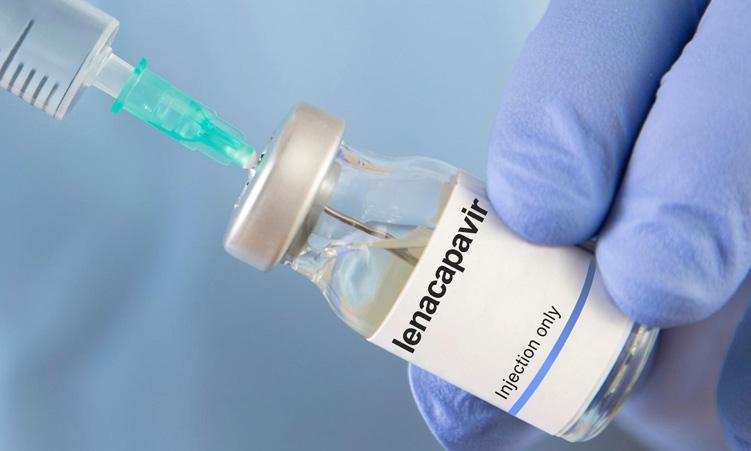
Africa-Press – Namibia. The Ministry of Health and Social services is starting the regulatory process to introduce lenacapavir, a long-acting, twice-yearly HIV injectable, starting with the private sector.
Health minister Esperance Luvindao says the ministry wants to ensure those who can afford it in the private sector are not denied access to life-saving innovation.
“But the Government is not sitting idle. We have embarked on the regulatory approval processes to ensure this drug can enter the Namibian market.
“We want to ensure that those who can afford it in the private sector are not denied access to life-saving innovation. But let me be clear: Our ultimate goal is equity,” Luvindao said.
“We will advocate on the global stage and negotiate tirelessly to bring the price down, ensuring that the people who need this drug the most [get it] and eventually access it at public health facilities,” she says.
The planned rollout comes as 4 500 new HIV infections were recorded in Namibia in 2024, 400 of which are children, while about 222 000 Namibians are living with HIV as of December.
Lenacapavir is a long-acting injectable, administered only twice a year as an HIV treatment.
Windhoek-based general practitioner Dr Tomica Zarou commends the ministry’s efforts to make the injection accessible to both the private and public health sectors.
“The cost might vary, depending on the medical insurance. Patients might not pay the same as the next patient,” Zarou says.
‘START WITH PUBLIC SECTOR’
Walvis Bay-based HIV activist Bernhard Kamatoto says it is not fair that the roll-out will be accessible to those in the private sector first.
“I understand the cost involved, but I believe the government will spend the same as they do on the current antiretroviral (ARV) medication,” he says.
Kamatoto says the ministry can make efforts to roll out lenacapavir to both the private and public sector at the same time.
“I suggest that the ministry starts the rollout with the public sector, then later to the private sector.
“It woud save the government the cost to procure ARVs continuously. There is no difference between the two drugs,” he says.
HIV activist Helena Nangombe says: “ It is exciting to see the progress made on the HIV response. It is sad that our starting point is always those who can afford it, while the large group of people living with HIV are catered for in the public health sectors.”
She says progress means all affected people can access treatment equally.
The first Namibian woman to have openly disclosed her HIV status, Emma Tuahepa, is welcoming the government’s effort to start the process of rolling out lenacapavir.
“I welcome the injection, but we must also consider the side effects that come with all the medications, we should educate the public. There are many options for HIV medication,” she says.
Local HIV activist Immanuel Sheefeni says reaching the private sector first is a good approach.
“This is a good approach because it would instill trust in the public. We can observe and see how those who are able to afford the injection get it first.
“That way the public would not perceive the injection in a negative way, nor think it is there to eliminate the poor or those who cannot afford it,” he says.
Former health minister Richard Kamwi says lenacapavir offers hope, but warns that Namibia’s ability to adopt it would depend on funding and government priorities.
Global health officials have, however, not yet confirmed which nations would be included in the first roll-out phase, apart from Eswatini, which received a first consignment last week.
The long-acting injectable is described as a breakthrough that could significantly reduce new HIV infections, particularly in high-burden countries such as Namibia.
‘GREAT PROMISE’
Kamwi says the drug shows “great promise”, especially for people who struggle with daily treatment.
“We must decide whether we can afford this injection once it becomes available,” he says.
Lenacapavir currently costs over US$28 000 (N$482 000) per year in the United States, while a much lower price of about US$40 (N$680) per year for low- and middle-income countries is only expected from 2027.
“We are in 2025. That price drop is still two years away,” Kamwi says, adding that the Joint United Nations Programme on HIV-AIDS (UNAIDS) has been pushing to lower the price.
Kamwi says while lenacapavir could strengthen HIV prevention, its adoption would depend on how the government prioritises resources.
Meanwhile, the ministry says of the 222 000 Namibians living with HIV, 213 248 are aware of their HIV positive status, 209 180 are on treatment, and 205 606 are virally suppressed.
Although officials have repeatedly noted that 10 African countries will be included in the first phase of the rollout, they stress that government readiness, incidence rates and the ability to deploy long-acting PrEP safely would guide final selection.
South Africa in October announced that lenacapavir would soon be added to South Africa’s HIV-AIDS prevention toolkit.
UNAIDS says more than 40 million people globally are currently living with HIV.
For More News And Analysis About Namibia Follow Africa-Press