Africa-Press – Namibia. Auleria Wakudumo
The Republican Party has come out swinging, saying Namibians must reject uranium mining in the Stampriet artesian basin, warning that any mining activity in the area could permanently damage one of the country’s most important underground water sources.
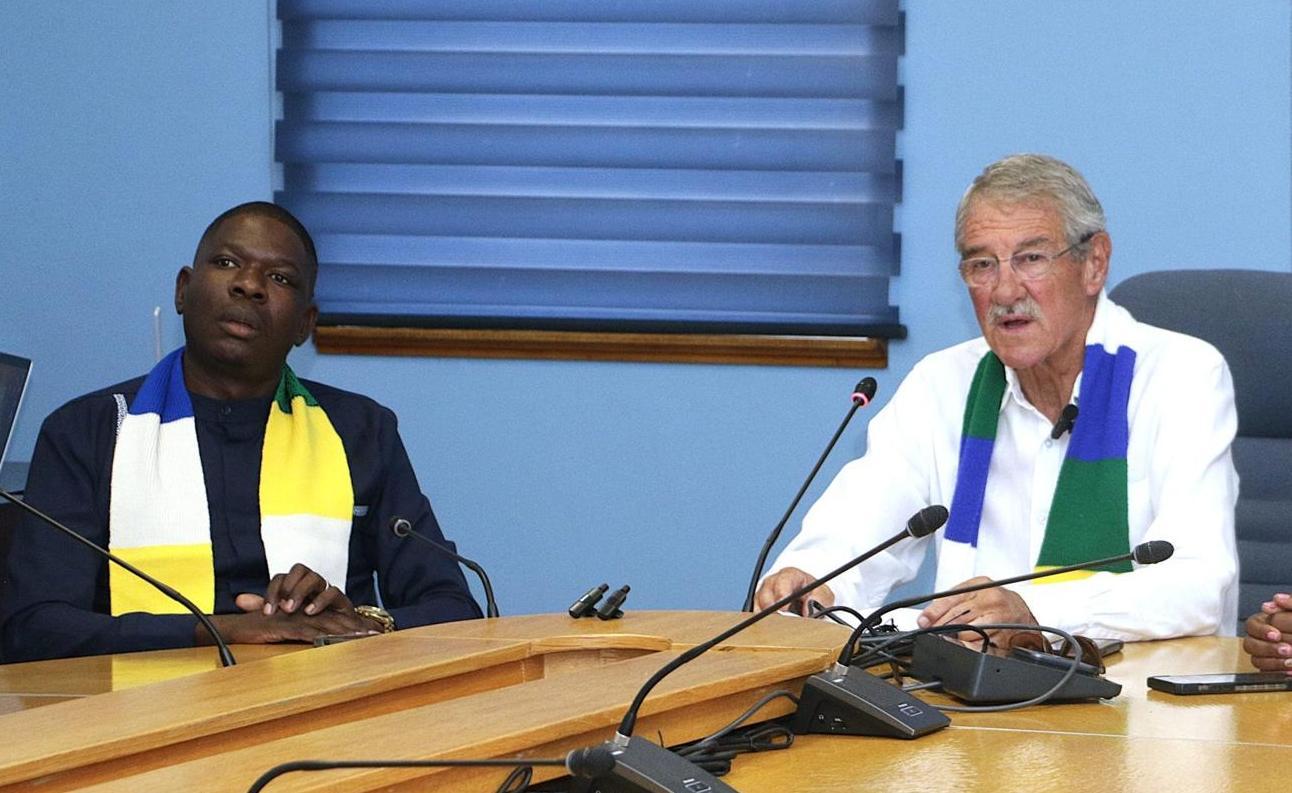
Speaking at a media conference in Windhoek yesterday, RP leader Henk Mudge urged citizens to speak up and unite against proposed in situ leaching uranium mining projects in the Omaheke and Hardap regions.
“The basin is too important to risk and must be protected for future generations mining that could threaten the Stampriet water system,” he said.
He stressed that the aquifer supports thousands of people, farms and towns across southern Namibia and extends into Botswana and South Africa.
He warned that any contamination of the underground water system could have long-term and irreversible consequences.
Mudge also accused ‘Headspring Investments’, a Namibia-registered subsidiary linked to Russia’s Rosatom State Atomic Energy Corporation, of carrying out improper drilling activities during exploration. He claimed some actions went beyond permit conditions, raising concerns about how mining would be managed if approved.
He noted that the company was issued drilling permits by the ministry of agriculture in March 2021, but these were later withdrawn due to gross violations and non-compliance with major conditions. The RP leader further called for an immediate stop to all exploration and test mining in the area until independent scientific studies are completed. He also demanded full transparency from government on all water testing results and borehole data in the region.
According to him, the economic benefits of uranium mining do not outweigh the risk to water security. He argued that agriculture already generates long-term value and should not be sacrificed for short-term mining gains.
Mudge also called on the governments of South Africa and Botswana to take a formal position on the proposed project, saying the Stampriet aquifer is a transboundary water system shared by the three countries.
“I call on Botswana and South Africa to make their positions known before any approval is granted. This is not Namibia’s decision alone,” he said. He further warned that if contamination spreads to neighbouring countries, Namibia could face legal claims for compensation running into billions of dollars. He urged the government to respect international agreements, including the UN Convention on transboundary watercourses.
The veteran politician also accused the government of failing to properly consult key stakeholders, including farmer-based organisations which strongly opposed the project. He claimed parliamentary processes favoured mining interests while excluding affected communities and technical groups.
He also questioned the independence of environmental assessments and warned that decisions could be influenced by foreign corporate interests.
“The government has not released full water testing results to the public. I call for immediate publication of all environmental and groundwater data related to the Stampriet basin,” he said.
Bribery
Mudge also said the Stampriet community is divided over the mining issue. The division has been caused by alleged bribery linked to Headspring Investments.
He alleged that some community members, including traditional leaders and some prominent people in parliament were influenced through payments and gifts.
“Gifts were given to the community members, but farmers refused them and publicly burnt the items because they refuse to be bought,” he said.
Local media houses reported on the division of the community members. Some community members said that they refuse to suffer whilst sitting on uranium. They said that this can create employment and eradicate poverty. However, others strongly oppose this, stating that a selfish move could lead to the contamination of water.
Mudge said Namibia stands at a critical point and must choose between protecting its water resources or allowing industrial mining in a sensitive aquifer system.
Furthermore, Mudge also warned that uranium mining using the in-situ leaching (ISL) method has caused serious environmental damage in other countries, and he argued that these cases show a high risk for Namibia.
“No ISL uranium mine has ever successfully restored groundwater back to its original natural condition after mining in the United States. This means that even after operations stop, contamination can remain in the aquifer,” he added. [email protected]
For More News And Analysis About Namibia Follow Africa-Press