Africa-Press – Namibia. ZAMBEZI regional governor Lawrence Sampofu has applauded small-scale farmers in the region for their efforts in ensuring the region realises its potential of becoming the country’s food basket.
He said this during his state of the region address at Katima Mulilo on Monday.
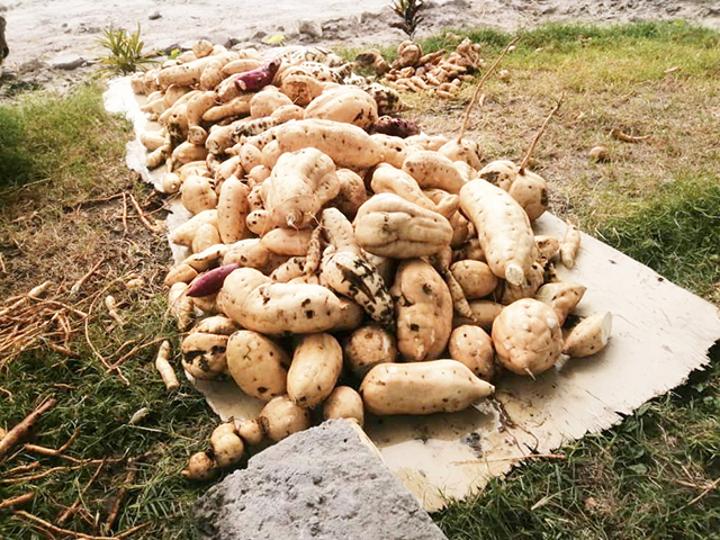
Sampofu said indigenous farmers, through the Zambezi Horticulture Producers Association (Zahopa), has organised themselves across the region to work towards sustainable food security, and they are doing well.
“Through production zones and clusters the organisation started promoting organised production by aggregating on uniform inputs like seeds to collectively take advantage of pollination, and soil conditioning to upscale and yield better quality crops.
“I am so glad to report that small-scale farmers have emerged to embrace the food basket concept,” he said.
Sampofu called on investors and private entities to support the agriculture sector, as the Zambezi region has the potential to feed the nation.
He said traditional authorities in the region has made more than 25 000 hectares of land available to embark on green schemes, which would not only create food security, but also job opportunities – especially for young people.
He said the government continues to support farmers through programmes such as the national horticulture programme, through which N$1,4 million was made available to subsidise 63 farmers.
“The Namibia Agricultural Mechanisation and Seed System Improvement Project (Namsip) has certified 75 farmers who have been trained to plant mahangu and maize seeds in the region.
“The Ministry of Agriculture, Water and Land Reform has also provided maize seeds and has assisted 30 households with ploughing services,” he said.
Sampofu said a total of 79 hectares, of which 59 hectares was for Irga rice and 20 hectares for super rice, was ploughed during the 2021/22 cropping season as part of the Kalimbeza rice project.
“Irrigation was drove by the usage of one pump, which could not supply the required amount of water to the plantation. The harvesting of rice, which was ready at the beginning of January, was delayed due to heavy rains and the harvester that was broken.
“The process only started in March, resulting in a loss due to shattering from overripe crops and bird attacks,” he said.
The governor said things are looking up for livestock farmers too, as they slaughtered 732 head of cattle since operations started at the Katima Mulilo export abattoir in 2021.
“The cattle slaughtered translated to a financial injection of about N$4,3 million into the region’s economy. The abattoir served about 143 farmers,” he said.
Going forward, they would work towards the realisation of a one-stop border post to mitigate the current load and increase trade, he said, as well as to determine the borderline between Namibia and Zambia so it can be debushed and cleared to mitigate security interferences faced by communities living along borders.
“There is a lack of truck ports in the region to reduce congestion and mitigate security threats experienced by drivers in the buffer zone. It is the porous border line used for illegal cross-border activities versus limited resources,” he said.
For More News And Analysis About Namibia Follow Africa-Press