Africa-Press – Namibia. A PROPOSITION by the Swapo think tank recommending that the government should introduce a N$50 monthly levy to set up a national healthcare system has attracted stern criticism.
Different quarters have expressed their reservations about the plan which is still in its infancy, asserting that if allowed to pass, it will be open to abuse.
The research paper recommends that the government introduces a N$50 monthly levy, payable by everyone who earns more than N$5 000 per month.
It also looked at the political, financial and technical feasibility for the development and implementation of universal health coverage.
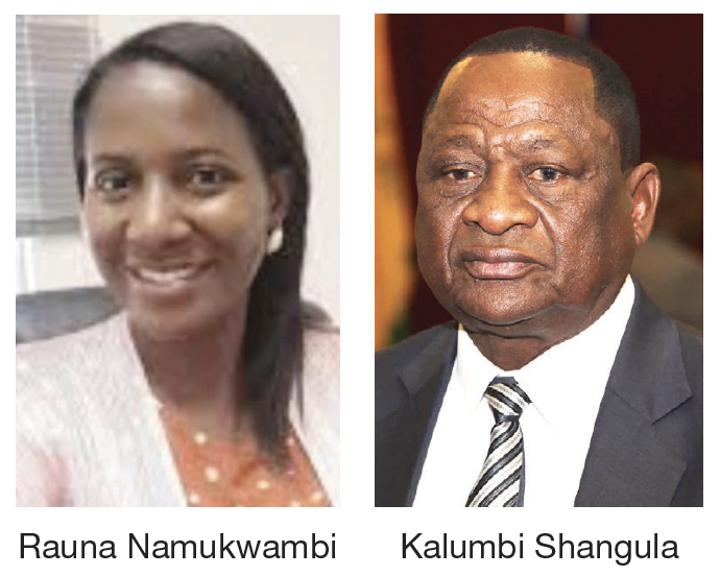
Healthcare practitioner Rauna Namukwambi, who authored the paper, presented it to the ruling party central committee over the weekend.
Health minister Kalumbi Shangula was the editor of the paper.
Yesterday he told The Namibian the idea was not his.
“My views were not sought. My role was that of an editor. It is a research paper,” he noted.
The proposed health insurance, if it sees the light of day, will be managed by a private or state-owned medical aid fund.
The research paper proposes that funds collected be used to renovate ageing health facilities, and to construct new ones.
The proposed plan will be managed in consultation with the University of Namibia, the Namibia University of Science and Technology, and vocational education and training institutions to reduce costs associated with tenders.
Labour analyst Sydwill Scholtz says the proposed contributions would create another fund which could be prone to mismanagement by officials.
He said if this would be a means to fight unemployment and create another state-owned enterprise, it is likely to raise eyebrows with the human cost element attached to it.
“The Labour Act 11 of 2007 under section 12 makes it compulsory for employees to consent to any form of deduction other than statutory deductions, so unless the deduction would be prescribed by an act of parliament, employees may rightfully refuse to contribute,” Scholtz said.
He said in general, the focus should be on the management of the existing funds earmarked for this purpose, and for the existing state-owned enterprises (SOEs) to make their contribution to national health facilities, instead of burdening the employed with additional deductions.
“A N$50 additional deduction may seem mediocre to some, but it might mean the difference between a meal and hunger for a few days for others, however, with the current levels of unemployment in the country, it seems that Swapo is trying to duplicate the functions and deductions of the already existing SOEs in the country,” he said.
Scholtz added that all employed Namibians already contribute towards the Social Security Commission, which has a health element attached to it, and should therefore cater for these needs to some extent.
“The deterioration of public healthcare facilities can be ascribed to many other factors [other] than the lack of funds, and the N$50 is likely not going to be enough to upgrade our systems to an acceptable level as soon as is required.”
Affirmative Repositioning leader Job Amupanda questioned whether anyone in the Swapo think tank bothered to read, analyse and understand what was going on before coming up with what he deemed a hollow idea.
“I get disgusted by people who don’t read. Twenty-eight years ago, in 1994 already, parliament passed the Social Security Act (34 of 1994). In Section 32, the National Medical Benefits Fund is already clear on how this will be funded in 32 (3) (a), (b), (c), (d) & (e),” he posted on social media.
Amupanda said for 28 years, Swapo and the government have refused to implement this fund, as well as the National Pension Fund (Section 34).
“… on instructions of whites. If they can’t implement what is already available, how will they implement this if not to create a stealing opportunity?” said Amupanda.
He said he would instruct his lawyers to bring an application to force the government to first implement Section 32 and 34 of the Social Security Act (34 of 1994).
The research paper forms part of Swapo’s promise to the electorate to implement universal healthcare coverage in Namibia to improve quality healthcare delivery for all.
Another labour expert, Herbert Jauch, says the low income bracket is already struggling financially. “I am not sure on what the amount of N$50 per month is based, and how this will ensure that universal healthcare will be a reality in Namibia,” he said.
For More News And Analysis About Namibia Follow Africa-Press