Africa-Press – Namibia. IT’S almost six in the evening at Katutura’s Single Quarters.
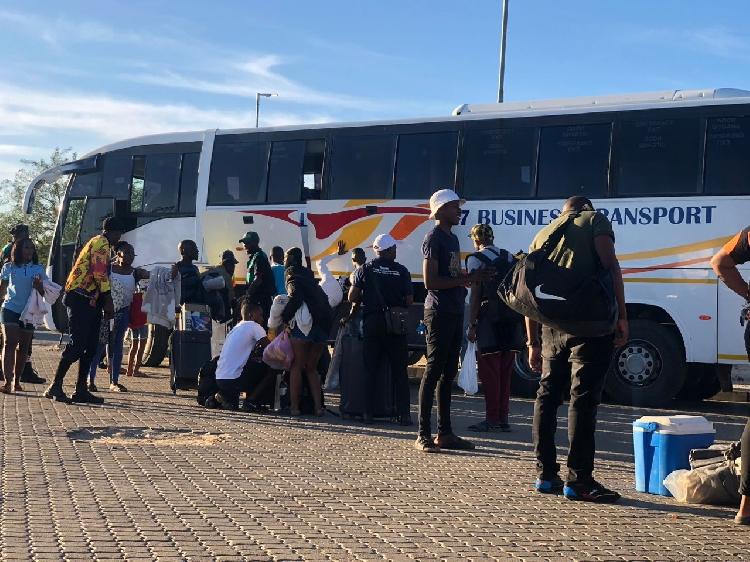
The place is bustling with passengers carrying bags and suitcases.
A few empty buses are warming up their engines, ready to hit the road.
A huge white bus with the words Silas Ndapuka 24/7 Transport is reversing slowly so passengers’ luggage can be loaded.
Before getting onto the bus, all passengers must queue up at the paypoint comprising a bus trailer and small tent.
Two women inside the trailer are taking travellers’ money.
Some can be heard complaining about hefty bus fares.
“Kufilingeko nande efele [can you at least reduce it with a hundred?],” one begs. “Move here, meme,” a lady in a black dress and silver shoes shouts to a passenger.
“How many items do you have, naambino [this too]?” she asks another one.
The man is carrying two pieces of luggage and a backpack.
Without weighing the luggage, the lady in black enters some numbers onto her calculator.
“N$700,” she says.
He forks out the money and pays without protesting.
A seat on the bus costs N$350 per person, but with luggage it can be up to N$2 000. The queue is getting longer, with children, youngsters and elders all waiting to travel to the north for the festive season. “Tambula okambelela koye ka kukuta nawa! [get yourself a nice, dry piece of meat!],” a man in a blue jacket and old jeans shouts.
He says his name is Kambilitongo, a name he has earned from selling biltong. He walks over to a young woman in the queue and asks: “Sister, you don’t want mbilitongos? Just N$10.”
The girl shakes her head and leaves.
The first bus is ready to take off at around 18h50.
The driver hoots twice to notify the passengers he is ready to drive. He is delayed by three girls who first went to buy kapana inside the Single Quarters.
A family of three arrives in a silver taxi with three bags and two boxes.
Tate Kambilitongo approaches them. “Meme, some delicious meat for you – mbilitongo,” he offers.
She declines his offer.
The woman turns her attention to the pay point. The woman in the black dress looks at the family, their luggage, and back at them again.
She rapidly enters numbers into her calculator and tells them: “One point faiva!” She doesn’t have a scale and weighs the bags with her eyes.
The woman looks shocked and whispers something to her husband. The husband replies: “I think we should go kuubesa vashona (small buses). We don’t have that much.”
His wife tries begging the lady in black to decrease the fare – with no luck. She has the “take it or leave it” look on her face. One of the guards at the bus stop says on Friday it was so full that nine buses left for the north.
“This holiday we eat nice, neh. The more the passengers pay, the more we get paid,” he chuckles. Maria Hamunyela, the secretary at the Windhoek bus stop, says people started travelling at the end of November already, and between five and six buses leave in one day.
“People are really travelling every day,” she says.
For More News And Analysis About Namibia Follow Africa-Press