Africa-Press – Namibia. THE Stampriet Aquifer Uranium Mining (Saum) committee has accused Russian-owned Headspring Investments of sugar-coating the dangers of radioactivity in the country.
Saum is a pressure group comprising mainly farmers and owners of commercial establishments like lodges which depend on the Stampriet artesian basin for drinking water.
The group is opposed to the in-situ leach mining of uranium using sulphuric acid that Headspring advocates, fearing it would contaminate the water source that stretches into neighbouring Botswana and South Africa.
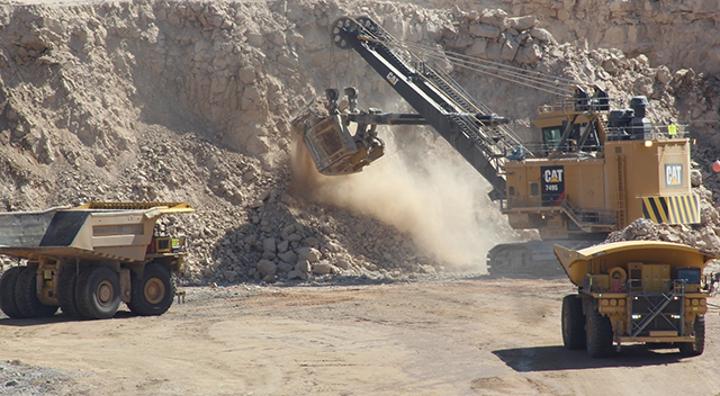
On 20 July 2022, Uranium One group, a subsidiary of Headspring Investment, took the media on a tour of farm Tripoli near Leonardville in the Omaheke region, where it is drilling and exploring for uranium.
The company’s project manager, Kirill Egorov, at the time said Uranium One has invested about N$855 million (US$50 million) in the domestic economy to date, including projects to uplift the community of Leonardville.
In a statement signed by its chairperson, Divan Oppermann, Saum said while the committee supports improvement, development and mining projects if not detrimental to our country, showcasing operations on the ground and improvements made to the community of Leonardville obviously influences perception.
Speaking at a familiarisation tour at farm Tripoli, Egorov maintained that in-situ leaching is a safe method to drill for uranium and does not contaminate groundwater.
Oppermann, however, argues that about 600 exploration boreholes for uranium have been drilled in the Stampriet basin so far, and two uranium ore bodies with associated heavy metals have been discovered in the main and strongest artesian aquifer, which contains top-quality drinking water.
“The water in the aquifer is pumped by NamWater to provide the communities of Leonardville, Aranos, Aminuis, Onderombapa, Derm, Stampriet, Gochas and Koës with drinking water,” he says.
He says Headspring Investments have indicated an intention to test the feasibility of mining one of the ore bodies by means of a pilot plant operation involving acid in-situ leach mining.
“This proposed operation is now the subject of an environmental impact assessment (EIA) and will only be able to proceed if issued with an environmental clearance certificate by the Ministry of Environment, Forestry and Tourism,” he says.
The Saum committee says it is aware of, supports and feels responsible for the concerns of inhabitants of the Stampriet Artesian Basin regarding the safety of the only freshwater source within this 63 250 square-kilometer-wide area.
“Landowners and community members fear the groundwater could be polluted by uranium, radioactive decay products of uranium, and heavy metals if in-situ leaching of uranium was to take place.
“This concern is highlighted by the large number of exclusive prospecting licences issued for nuclear fuels (uranium), which cover about 60% of the total area of the Stampriet basin,” their statement reads.
Oppermann says statements made on various videos and in newspapers claiming in-situ exploration and mining is safe cannot be proven, and the fact that two drilling permits covering 37 boreholes issued to Headspring Investments were retracted by the Ministry of Agriculture, Water and Land Reform on 9 November 2021 – citing non-compliance with permit conditions – supports their concerns.
This same letter clearly stated that at least 70 more boreholes were drilled for exploration purposes without a valid permit, Oppermann says.
The committee reiterated its stance that since in-situ leaching happens underground, no-one would immediately see the impact of this process if leakage occurs.
“There is no guarantee that in-situ leach mining of uranium would not negatively affect our precious drinking water.
“We do not want to risk the health and safety of our children and of present and future generations and endanger this unique and critical water resource,” Oppermann says.
Headspring Investments could not be reached for comment.
For More News And Analysis About Namibia Follow Africa-Press