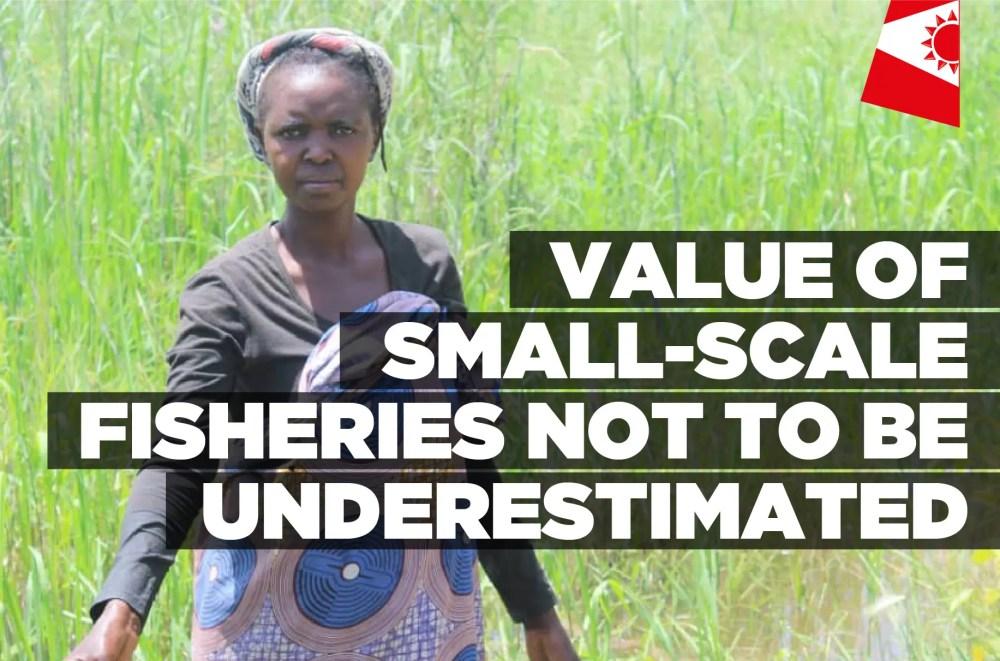
Africa-Press – Namibia. NAMIBIA’S small-scale fisheries sub-sector indirectly supports the livelihoods of over 280 000 Namibians, making up approximately 11% of the country’s total population. Livelihood support is in the form of income, employment, socio-economic benefits, food, and nutrition security.
According to Albertina Joseph Dishishi, Chief Fisheries Biologist, a fisheries baseline assessment is one of the activities that is supporting the implementation of the National Plan of Action for Small-Scale Fisheries.
Dishishi made the remarks recently during a workshop held in Kavango East, followed by a mapping assessment of the Kavango East and West Regions. She said that Namibia’s fisheries law does not explicitly recognize or provide support to small-scale fishers.
“Through the development of the NPOA-SSF, we have created a framework for supporting fisheries dependent communities,” she said.
In 2020, the government through the Ministry of Fisheries and Marine Resources committed to developing the National Plan of Action for Small-Scale Fisheries (NPOA-SSF) by implementing the Voluntary Guidelines for Securing Sustainable Small-Scale Fisheries in the Context of Food Security and Poverty Eradication (SSF Guidelines).
Hence, a baseline survey to map small-scale fisheries hotspots that are frequented by women towards promoting gender-equitable and climate resilience food systems at the household level was undertaken.
Direct support to SSF is estimated at 46 500 of which 45 000 are in the inland fisheries sector and 1 500 fishers are in the coastal small-scale fisheries sector. The SSF Guidelines promote gender-equitable development strategies for small-scale fisheries.
The Ministry of Fisheries and Marine Resources, through the Directorate of Inland Fisheries and Aquaculture, have embarked upon a sub-programme titled Implementing the Small-Scale Fisheries Guidelines for gender-equitable and climate-resilient food systems and livelihoods.
For More News And Analysis About Namibia Follow Africa-Press