Africa-Press – Namibia. WALVIS BAY – Electricity is one of the most expensive basic commodities in Walvis Bay, unlike most Namibian towns.
To put this into perspective and in juxtaposition, the suburb of Kuisebmond alone consumes about 54% of the total electricity used by the entire town of Swakopmund, highlighting the growing pressure and demand for affordable housing and land at Walvis Bay.
The whole of Walvis Bay uses 55.4 MW of electricity, of which 15 MW is consumed by Kuisebmond alone, while Swakopmund’s total power consumption stands at 28 MW.
Walvis Bay consists of the central business district (CBD), Kuisebmond, Narraville, Meersig and Hermes, as well as Langstrand and Dolphin Beach.
These statistics were shared by ErongoRED CEO Immanuel !Hanabeb during a recent presentation to the Erongo Regional Council. According to !Hanabeb, electricity consumption in Kuisebmond peaks around 20h00, at times matching that of the entire town of Swakopmund.
“The challenge with Kuisebmond is that, even though it does not have distinct peri-urban areas, electricity demand increases tremendously,” he said. He added that the proliferation of backyard dwellings behind main houses exacerbates the situation.
“The consumption at about 20h00 is like a hot potato; it rivals that of the whole of Swakopmund,” he said.
Due to this, he said ErongoRED has had to explore alternatives to support the network and prevent outages.
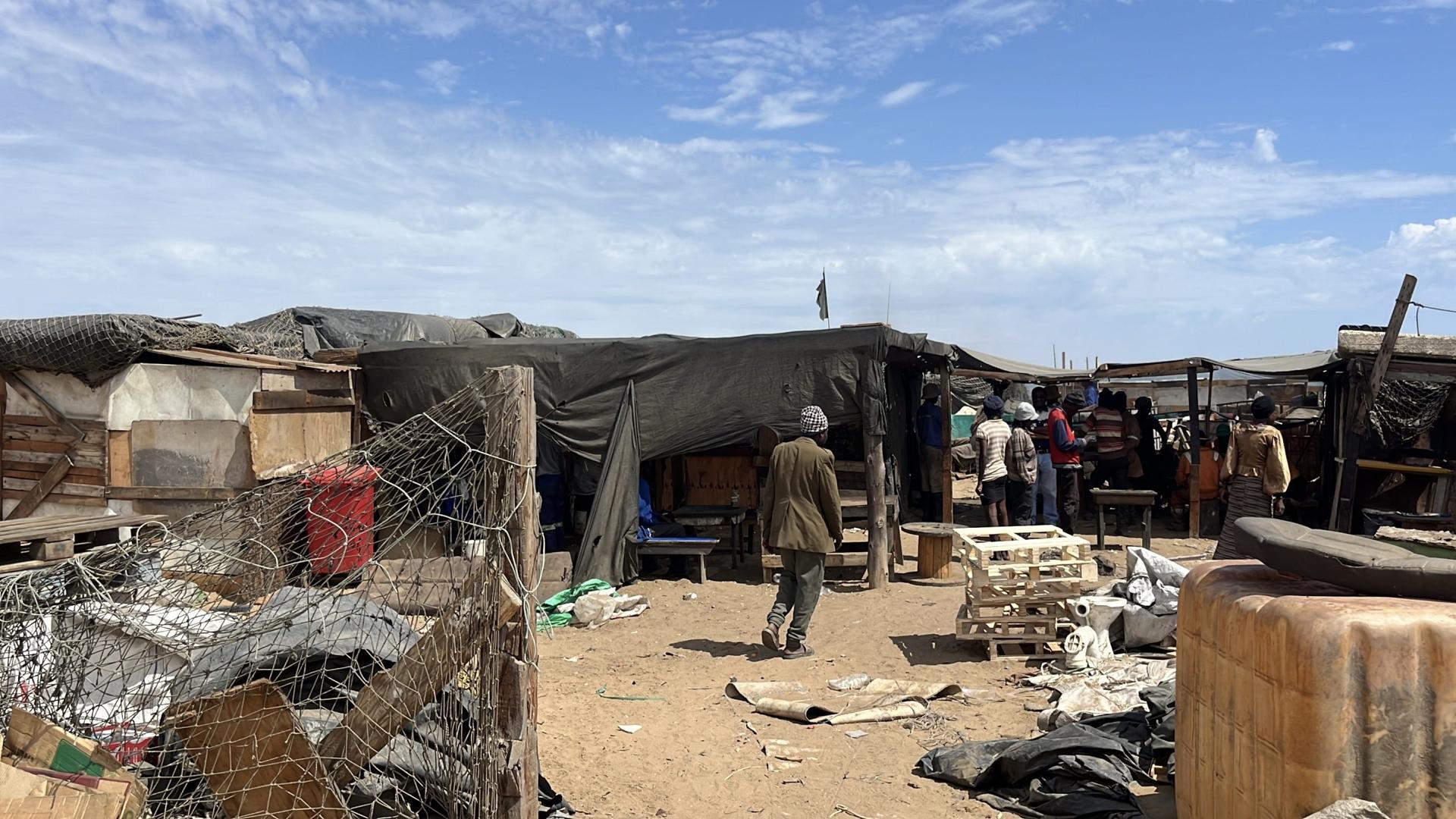
This growing electricity demand is largely driven by rapid population growth and the expansion of informal and backyard housing in Walvis Bay.
Reports in 2018 indicated that the number of people living in shacks and backyard dwellings in Walvis Bay increased from 9 860 in 1994 to about 30 000.
According to the 2023 Namibia Statistics Agency, the population of Walvis Bay, including the nearby Langstrand area, now stands at 102 704.
The census further shows that 31 822 residents in Walvis Bay live in informal housing, making the town the third-largest contributor to Namibia’s informal urban population after Windhoek and Rundu. In comparison, Swakopmund’s population has grown to 75 921, up from 23 808 in 2001.
Walvis Bay municipality spokesperson Anita Kaihiva said the town is facing increasing pressure to provide affordable housing and land to its growing population.
According to a 2023 socio-economic survey conducted by the municipality, which is currently being updated, there are approximately 23 000 backyard shacks housing about 42 000 people.
The municipality’s waiting list for housing and erven includes 1 600 applicants under the Build Together Housing programme, 22 165 for the National Housing Enterprise, and 2 240 pre-approved clients. “So far, only four community groups have been allocated land at Farm 37. Backyard informal structures put extra pressure on municipal infrastructure, including water, sewer, and electricity,” Kaihiva said.
To meet the demands of the growing population, the council last year upgraded the Kuisebmond pump station.
The project, valued at N$25.5 million, will replace the existing sewer pump station, which is nearing the end of its service life.
“It can no longer adequately accommodate the area’s growing demand. Once completed, the upgraded pump station will significantly enhance capacity, strengthen operational reliability, and improve the overall efficiency of the town’s wastewater network, ensuring that Kuisebmond will continue to receive reliable and quality municipal services,” council said in December.
Intervention
To address the housing shortage, the government last year availed N$75 million for the construction of 200 houses, while the Walvis Bay council budgeted an additional N$6 million for the initiative.
The funding also covers bulk infrastructure provision such as water and sewerage.
The houses were completed last year but are yet to be allocated to residents due to the ongoing installation of bulk services.
For More News And Analysis About Namibia Follow Africa-Press