Africa-Press – Namibia. ALAIN MODOUX
ON 3 MAY 2022, the world celebrated World Press Freedom Day – the principle of which was agreed on by consensus in December 1993 by the United Nations General Assembly – for the 29th consecutive time.
In choosing this date, the assembly wanted to pay tribute to the 60 or so African journalists who adopted the ‘Windhoek Declaration on Promoting an Independent and Pluralistic African Press’ at a seminar in Windhoek on 3 May 1991. The meeting was an initiative of Unesco and the United Nations.
This founding text, which defines the conditions necessary for the democratic functioning of the media, became the ‘mother’ of four other regional declarations that resulted from seminars similar to the one held in Namibia.
The first one brought together media professionals from Asia (Alma Ata, Kazakhstan, 1992), the second from Latin America and the Caribbean (Santiago de Chile, 1994), the third from the Arab countries (Sana’a, Yemen, 1996) and the fourth from Europe and North America (Sofia, Bulgaria, 1997).
The Windhoek Declaration, as well as the four other regional declarations, although openly denouncing the policies and practices of some states vis à vis the media (without naming them), were adopted, without modification or opposition, by all Unesco member states.
They unanimously acknowledged that the Windhoek Seminar played a “catalytic role” in the democratisation process that marked the international democratic landscape throughout the 1990s.
AN ERA OF LOST ILLUSIONS
Given the current state of international relations, it is hard to believe that such unanimity was possible on a subject as sensitive as press freedom!
For the record, the years immediately following the fall of the Berlin Wall on 9 November 1989 were a promising period for democracy and human rights.
The multilateral system set up in the aftermath of the Second World War, and rapidly undermined by the East/West rivalry, had finally found its feet. More peaceful international relations seemed possible and sustainable.
The adoption of World Press Freedom Day is probably the most representative illustration of the prevailing optimism at that time.
While the control of information had been one of the main issues of the Cold War for more than 40 years, the international community, by adopting the principle of this ‘World Day’, had managed to agree, without opposition, on the importance of a free, independent and pluralistic press.
OWNERSHIP AND LEGACY
This unanimity would probably not have been possible without the resolute and continued commitment of African diplomats, collectively at Unesco, within the Africa Group chaired by the ambassador of Niger, Lambert Messan, and individually at EcoSoc in Geneva, a UN body entrusted, among others, to make recommendations to the General Assembly.
These diplomats convinced their non-African colleagues that the idea of establishing a ‘World Press Freedom Day’ was born in Africa and that it would be carried through to its conclusion by Africans.
In New York, it was enough for the Namibian ambassador to the UN to call on all his colleagues to support the EcoSoc recommendation for it to be adopted without discussion by the General Assembly.
This ‘diplomatic ownership’ of the Windhoek legacy by Africans was key to the success of the entire process.
Furthermore, the approach of dealing with the highly sensitive issue of press freedom region by region, starting with Africa, helped to “de-Westernise” the perception of the South on this issue. In this respect, African journalists and diplomats played their leadership role perfectly.
Impressed by these expressions of support from all continents, ambassador Messan did not hesitate to state solemnly that “the Windhoek Declaration is Africa’s contribution to the edifice of human rights”.
The leading role played by Africans in the Windhoek process seems to have been appreciated by many countries. This was confirmed by the Chinese representative to the Unesco General Conference. When asked about his delegation’s position on the proposal to declare 3 May World Press Freedom Day, he replied that “as long as the proposal came from the Africa Group, his delegation could not but support it”. That was 30 years ago!
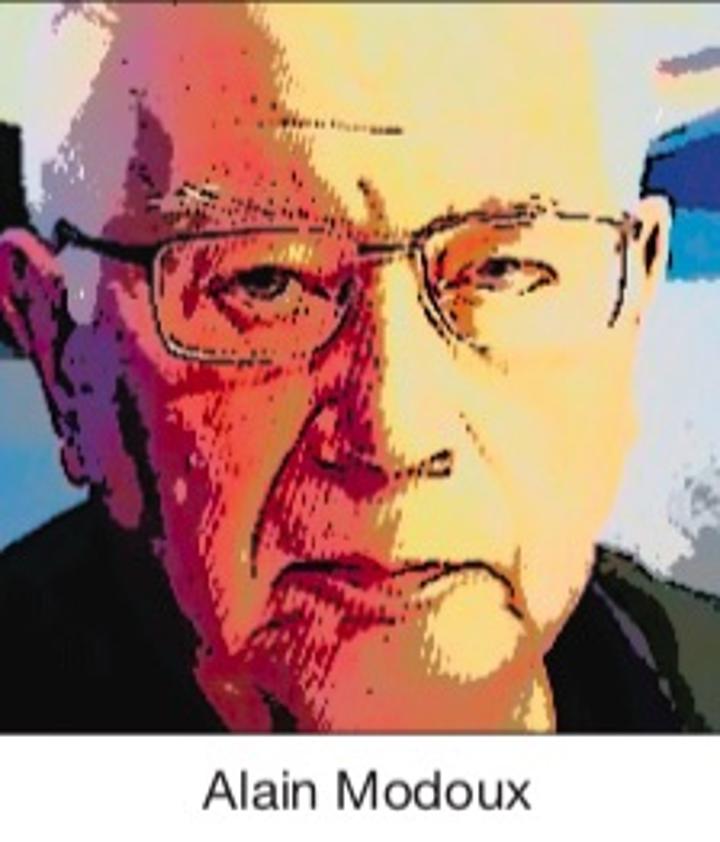
* Alain Modoux, former assistant director general of Unesco for Freedom of Expression, Democracy and Peace for two and a half years personally steered the UN General Assembly to proclaim 3 May World Press Freedom Day. Twenty years later, he was awarded Unesco’s Taïno Medal for his “outstanding contribution” to the creation of this day.
For More News And Analysis About Namibia Follow Africa-Press