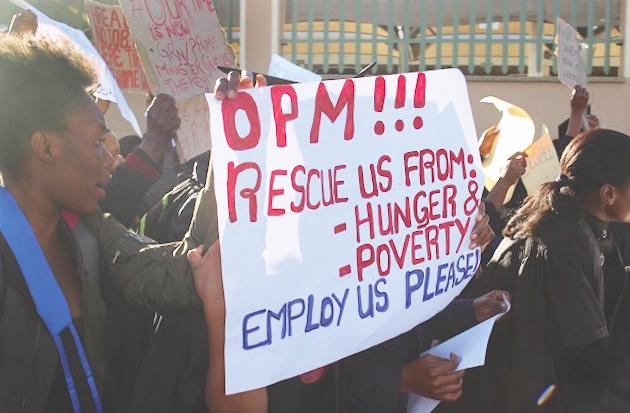
Africa-Press – Namibia. DESPITE the government channeling N$183,4 million to the Ministry of Sport, Youth and National Service between 2013 and 2021 to create jobs for young people, the country is still struggling to employ its youth.
Namibia’s youth unemployment rate currently stands at 50%.
DESPITE the government channeling N$183,4 million to the Ministry of Sport, Youth and National Service between 2013 and 2021 to create jobs for young people, the country is still struggling to employ its youth.
Namibia’s youth unemployment rate currently stands at 50%.
The latest labour force survey, which was released in 2018, showed that Namibia’s youth unemployment rate stood at 46,1%, of which men accounted for 43,7% and women for 48,5%.
In 2016, 44% of young people in the country were jobless.
Youth unemployment was estimated to be at 43% in 2013, and 39% in 2012.
This is despite a special programme initiated by the youth ministry aimed at taking destitute young Namibians off the streets.
The ministry receives an annual budget of between N$15 million and N$34 million to address youth unemployment countrywide.
Ministry spokesperson Aina Shikesho says creating jobs is complex and cross-cutting.
“The ministry uses its budget allocation to coordinate government programmes meant for youth empowerment that are under the mandate of other ministries, agencies and offices,” she says.
Shikesho says the ministry spends funds on the 121 rural youth enterprises, income-generating horticulture projects and charcoal production projects.
Executive director of sport, youth and national service Erastus Haitengela says the advent of the Covid-19 pandemic has worsened the situation.
“The Covid-19 emergency meant that funds budgeted for youth empowerment were either verimented internally to address equally important youth-related activities in maintaining our multipurpose centres, or were diverted to other offices, ministries and agencies as per parliament directives to support the government’s fight against Covid -19,” he says.
Haitengela did not disclose more information on where the funds were redirected.
DO MORE
According to a report on Namibia’s youth unemployment by the African Peer Review Mechanism (APRM), Namibia has a lack of understanding of the need for youth empowerment and mainstreaming of youth involvement in different socio-economic and political sectors.
The country’s young people do not have ready access to financial support due to stringent lending requirements and costs imposed by lending institutions, it states.
The APRM also red-flags the lack of accountability of those who are supposed to monitor and evaluate the success of various programmes.
Labour analyst Sydwill Scholtz believes much could have been done with the ministry’s funds.
“ . . . by creating direct agreements between institutions of higher learning and the private sector for students in tertiary institutions and high schools to properly identify employment in areas that are in demand,” he suggests.
He says more teachers could have been employed in sport development specifically.
Scholtz says there are investments and support for sport codes such as soccer and wrestling, but not athletics.
“When it comes to areas where Namibia shines, such as athletics, it seems there is never sufficient funds to further the skills of our local talent,” he says.
Scholtz wants the ministry to partner with the private sector to provide students with actual job exposure.
“[This] while they are making their career decisions instead of putting students through an academic system which measures all students on the same credentials,” he says.
Students Union of Namibia leader Simon Amunime says the youth ministry has been misrepresenting the youth for years.
“Because they have no genuine and practical employment creation interventions other than conferences and workshops that just empower a few officials, while leaving the majority of the young people at the periphery,” he says.
Amunime says the utilisation of the annual budget of N$30 million for employment creation has minimal impact.
“It is my hope and wish that the budget allocation is increased at least to an annual N$100 million, and that the utilisation of such funds be directed to youth investment-related projects, and that such funds be accounted for,” he says.
DUPLICATE PROGRAMMES
The ministry’s youth employment programme seems to be a duplicate of one of the government’s credit loan schemes.
According to the ministry’s website, the Namibia Youth Credit Scheme facilitates the signing of contracts and disburses loans of between N$2 000 and N$100 000 to successful Namibian young people.
According to the ministry’s previous accountability report, it has disbursed N$366 000 of its budget of N$30 million to the scheme’s beneficiaries, and has trained 150 students.
The government has also introduced the credit guarantee scheme and a training and mentorship programme under the Development Bank of Namibia (DBN).
Despite receiving a separate budget for their youth employment activities, the ministry also duplicates funding to youth organisations.
Similarly, the ministry spends its N$30 million budget allocation on coordinating government programmes meant for youth empowerment under the mandate of other ministries, agencies and offices.
In addition, the ministry spends funds under this programme on the National Youth Council (NYC) and National Youth Service (NYS). Both these entities annually receive separate budget allocations, which constituted N$22,7 million for the NYC, and N$69,6 million for the NYS in the 2020/21 financial year.
Other than the credit scheme for the youth, the ministry provides basic business management training and appraisal of aspiring youth entrepreneurs through its annual N$30 million budget.
Although the ministry has a separate budget for youth unemployment, there is also a budget for youth training.
“Youth training and youth unemployment have the same objective, therefore there is no brick wall between the two.
“In other words, to create employment, you need to spend money by developing skills,” Shikesho says.
Meanwhile, experts have called on the government to offer paid internships to help bridge the graduates who have no work experience. However, the government has indicated that such a programme would be costly and the funds are not available.
The Mobile Telecommunications Company (MTC) has assisted 600 interns on a budget amounting to N$7 million to date.
The Office of the Prime Minister has also now come on board by contributing N$2 million annually
The latest labour force survey, which was released in 2018, showed that Namibia’s youth unemployment rate stood at 46,1%, of which men accounted for 43,7% and women for 48,5%.
In 2016, 44% of young people in the country were jobless.
Youth unemployment was estimated to be at 43% in 2013, and 39% in 2012.
This is despite a special programme initiated by the youth ministry aimed at taking destitute young Namibians off the streets.
The ministry receives an annual budget of between N$15 million and N$34 million to address youth unemployment countrywide.
Ministry spokesperson Aina Shikesho says creating jobs is complex and cross-cutting.
“The ministry uses its budget allocation to coordinate government programmes meant for youth empowerment that are under the mandate of other ministries, agencies and offices,” she says.
Shikesho says the ministry spends funds on the 121 rural youth enterprises, income-generating horticulture projects and charcoal production projects.
Executive director of sport, youth and national service Erastus Haitengela says the advent of the Covid-19 pandemic has worsened the situation.
“The Covid-19 emergency meant that funds budgeted for youth empowerment were either verimented internally to address equally important youth-related activities in maintaining our multipurpose centres, or were diverted to other offices, ministries and agencies as per parliament directives to support the government’s fight against Covid -19,” he says.
Haitengela did not disclose more information on where the funds were redirected.
DO MORE
According to a report on Namibia’s youth unemployment by the African Peer Review Mechanism (APRM), Namibia has a lack of understanding of the need for youth empowerment and mainstreaming of youth involvement in different socio-economic and political sectors.
The country’s young people do not have ready access to financial support due to stringent lending requirements and costs imposed by lending institutions, it states.
The APRM also red-flags the lack of accountability of those who are supposed to monitor and evaluate the success of various programmes.
Labour analyst Sydwill Scholtz believes much could have been done with the ministry’s funds.
“ . . . by creating direct agreements between institutions of higher learning and the private sector for students in tertiary institutions and high schools to properly identify employment in areas that are in demand,” he suggests.
He says more teachers could have been employed in sport development specifically.
Scholtz says there are investments and support for sport codes such as soccer and wrestling, but not athletics.
“When it comes to areas where Namibia shines, such as athletics, it seems there is never sufficient funds to further the skills of our local talent,” he says.
Scholtz wants the ministry to partner with the private sector to provide students with actual job exposure.
“[This] while they are making their career decisions instead of putting students through an academic system which measures all students on the same credentials,” he says.
Students Union of Namibia leader Simon Amunime says the youth ministry has been misrepresenting the youth for years.
“Because they have no genuine and practical employment creation interventions other than conferences and workshops that just empower a few officials, while leaving the majority of the young people at the periphery,” he says.
Amunime says the utilisation of the annual budget of N$30 million for employment creation has minimal impact.
“It is my hope and wish that the budget allocation is increased at least to an annual N$100 million, and that the utilisation of such funds be directed to youth investment-related projects, and that such funds be accounted for,” he says.
DUPLICATE PROGRAMMES
The ministry’s youth employment programme seems to be a duplicate of one of the government’s credit loan schemes.
According to the ministry’s website, the Namibia Youth Credit Scheme facilitates the signing of contracts and disburses loans of between N$2 000 and N$100 000 to successful Namibian young people.
According to the ministry’s previous accountability report, it has disbursed N$366 000 of its budget of N$30 million to the scheme’s beneficiaries, and has trained 150 students.
The government has also introduced the credit guarantee scheme and a training and mentorship programme under the Development Bank of Namibia (DBN).
Despite receiving a separate budget for their youth employment activities, the ministry also duplicates funding to youth organisations.
Similarly, the ministry spends its N$30 million budget allocation on coordinating government programmes meant for youth empowerment under the mandate of other ministries, agencies and offices.
In addition, the ministry spends funds under this programme on the National Youth Council (NYC) and National Youth Service (NYS). Both these entities annually receive separate budget allocations, which constituted N$22,7 million for the NYC, and N$69,6 million for the NYS in the 2020/21 financial year.
Other than the credit scheme for the youth, the ministry provides basic business management training and appraisal of aspiring youth entrepreneurs through its annual N$30 million budget.
Although the ministry has a separate budget for youth unemployment, there is also a budget for youth training.
“Youth training and youth unemployment have the same objective, therefore there is no brick wall between the two.
“In other words, to create employment, you need to spend money by developing skills,” Shikesho says.
Meanwhile, experts have called on the government to offer paid internships to help bridge the graduates who have no work experience. However, the government has indicated that such a programme would be costly and the funds are not available.
The Mobile Telecommunications Company (MTC) has assisted 600 interns on a budget amounting to N$7 million to date.
The Office of the Prime Minister has also now come on board by contributing N$2 million annually
For More News And Analysis About Namibia Follow Africa-Press