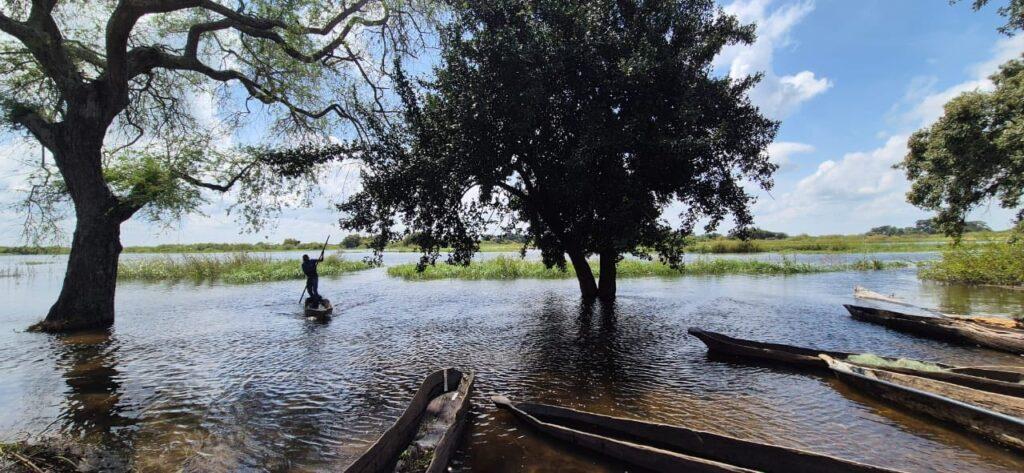
Africa-Press – Namibia. THE Zambezi River’s water level more than doubled during March, rising from 3.36 metres on 1 March 2026 to 6.84 metres on 31 March 2026.
This swift rise in water levels has had a major impact on the Zambezi Region, displacing many households, causing loss of income, and isolating some residents from essential services such as schools and healthcare facilities. It has also led to growing concerns over human-wildlife conflict, as the flooding has reduced the available land for animals to move freely.
Given the impact of the floods in the Zambezi Region, several government officials have visited the area to assess the situation. This began with a visit from the Head of State herself, President Netumbo Nandi-Ndaitwah, followed by visits from ministers, including the Minister of Education, Sanet Steenkamp, and the Minister of Urban and Rural Development, James Sankwasa.
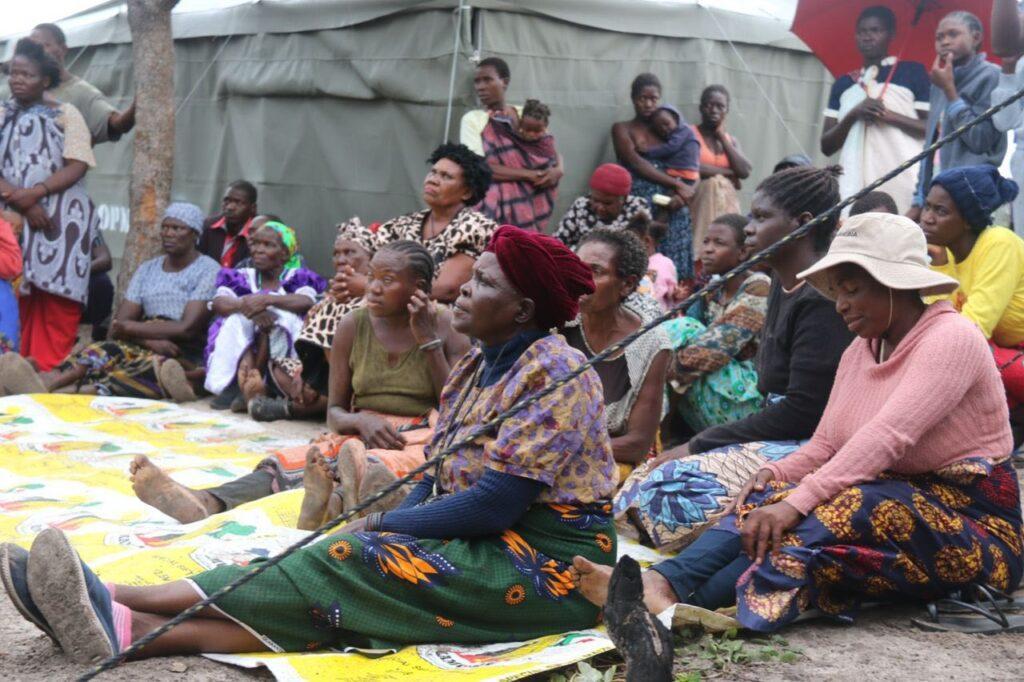
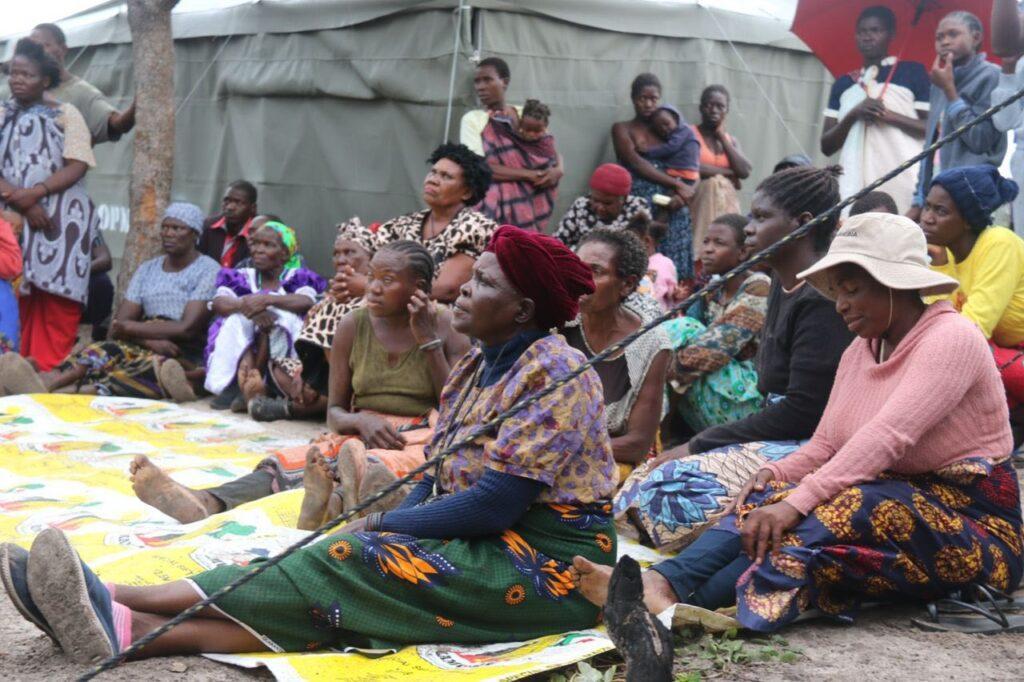
Scenes from the affected areas and relocation centres. Photos: Ministry of Information and Communication Technology.
At a recent briefing, the Katima Mulilo Mayor, Kabende Kabende, informed Sankwasa that while some affected households have been relocated, further efforts are needed to improve the conditions at the relocation centres. The mayor stressed the urgent need for additional bedding, food, clean water, and sanitation to better support those being sheltered in these centres. Albert Sibeya, Acting Chief Executive Officer of the Katima Mulilo Town Council, also raised concerns about the insufficient resources available to assist affected residents.
“Acting Chief Executive Officer of the Katima Mulilo Town Council, Albert Sibeya, said the flash floods have severely disrupted livelihoods, with many households losing property, household goods and sources of income. He added that while the government has provided tents and plans are underway to deploy a mobile clinic, available resources remain insufficient to meet growing demand. Sibeya stressed the need for urgent humanitarian support, including food supplies, medical assistance and sanitation services, particularly for vulnerable groups such as children and the elderly,” the Ministry of Information and Communication Technology’s (MICT) Zambezi Regional Office reported.
Sankwasa reassured the public that the government is committed to supporting affected communities and noted that there is ongoing coordination between the Office of the Prime Minister and local authorities to improve conditions at the relocation centres and expedite relief efforts.
Hellen Likando, Director of Disaster Risk Management at the Office of the Prime Minister, confirmed that food, shelter, and essential supplies are being prioritised at the relocation camps, with proper registration systems in place and additional aid on its way. She also assured the affected communities that the rice provided is of high quality and safe to consume, but acknowledged that maize meal – which is preferred by many – will be procured soon.
Aside from displacement and the loss of property and income, the floods have also triggered an increase in human-wildlife conflict and negatively impacted agriculture in the region. The MICT Zambezi Region reports that relocated community members in the Sibbinda Constituency have raised concerns about elephants destroying their crop fields.
Colga Sikopo, Deputy Executive Director of the Ministry of Environment, Forestry and Tourism, explained that the rise in human-wildlife conflict is due to both people and animals being under pressure from the limited space available, leading to increased competition for land and disrupted animal movement caused by flooding.
Sikopo assured that the ministry is actively working to manage the growing risk of human-wildlife conflict in the affected areas but urged residents not to take matters into their own hands. He cautioned that such actions could escalate the situation by making wildlife more aggressive and unpredictable.
For More News And Analysis About Namibia Follow Africa-Press