

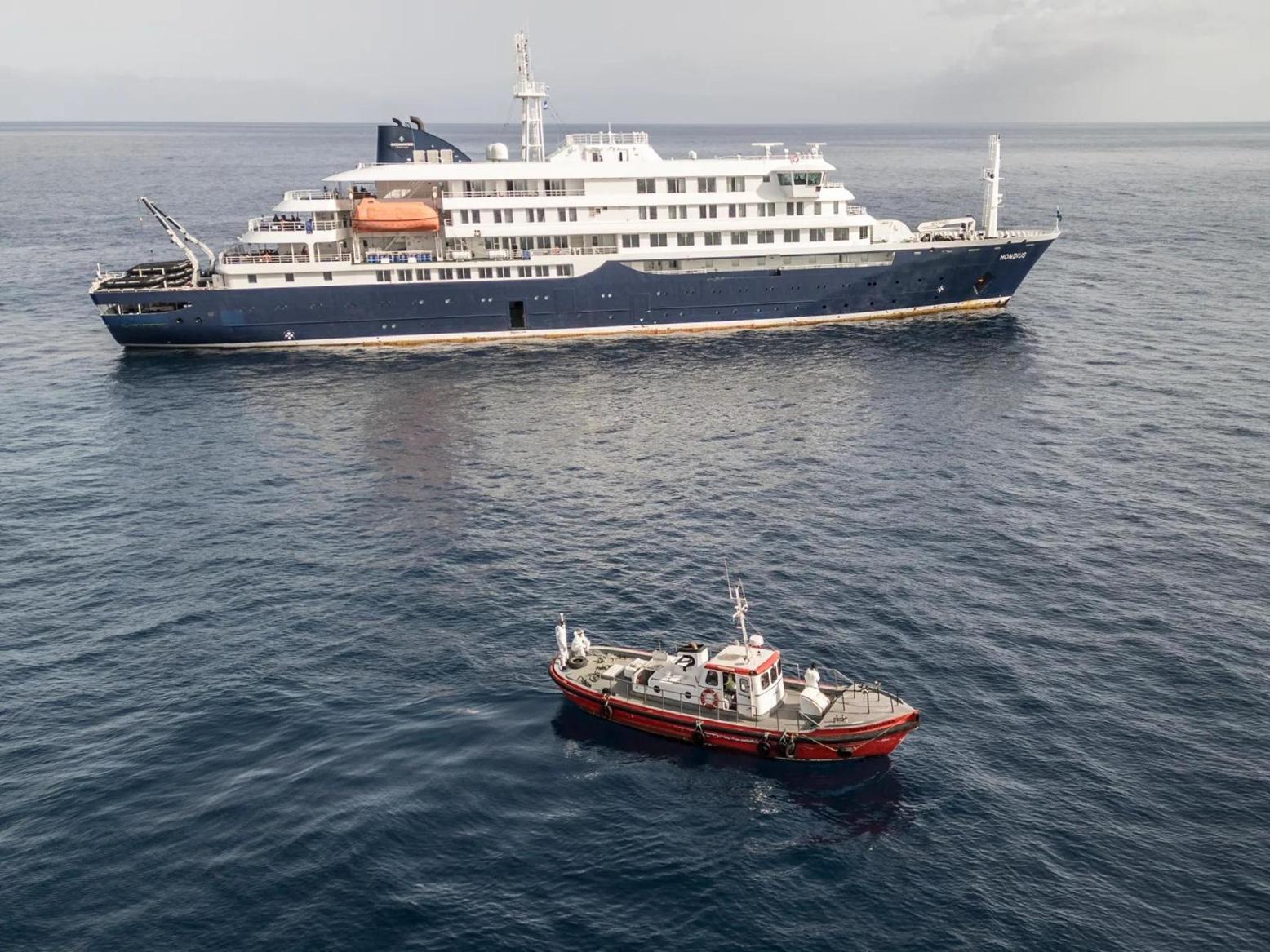
Africa-Press – Nigeria. The outbreak of hantavirus aboard the Dutch cruise ship “MV Hondius” has revived scenes of anxiety reminiscent of the early days of the COVID-19 pandemic, as the outbreak has resulted in three deaths and several infections among passengers, amid international efforts to contain the infection and trace contacts in multiple countries.
However, public health officials and the World Health Organization assert that the current situation does not indicate the beginning of a new global pandemic, despite the virus’s severity and high mortality rate associated with it.
An American magazine reported that international health authorities are facing a series of complex questions regarding how to manage the passengers on board the ship, trace potential cases across borders, and prevent the spread of infection within and outside hospitals.
Hantavirus Differs from COVID-19 in Spread
In this context, a news site reported that an outbreak of a deadly virus aboard a cruise ship may seem familiar after the COVID-19 experience, but health officials reject comparisons between the two cases, emphasizing that hantavirus does not spread in the same manner.
A publication quoted experts and health officials stating that the risk to the general public remains low, despite the anxiety caused by the confinement of passengers on the ship and the commencement of extensive contact tracing.
According to the magazine, all passengers on the ship were asked to remain in their cabins while extensive disinfection began, isolating anyone who showed symptoms immediately.
Experts from the World Health Organization on the Ship
The director-general of the World Health Organization stated that the organization sent a team of experts to the ship during its stop in Cape Verde, including doctors from the Netherlands and experts from the European Centre for Disease Prevention and Control.
He added that the organization is providing detailed guidelines to ensure the safe and respectful disembarkation of passengers and crew when the ship arrives in the Canary Islands, after leaving Cape Verde heading to the Spanish port of Grandia.
The publication noted that some passengers, including six Americans, left the ship during its stop at the remote island of Saint Helena in the Atlantic Ocean, before the outbreak of the virus was discovered on board, raising concerns about the potential spread of the infection to different countries.
The Discovered Strain
The discovered strain is the “Andes virus,” the only known type of hantavirus capable of human-to-human transmission, but experts emphasize that this transmission requires close and prolonged contact, such as among family members, close partners, or medical staff.
The news site and the publication clarify that the discovered strain is the “Andes virus,” but experts stress that this transmission requires close and prolonged contact, such as among family members, close partners, or medical staff.
An expert from the World Health Organization stated that “this is not COVID, nor is it influenza. Its mode of transmission is completely different.”
Another expert warned that most types of hantavirus “do not easily transmit between humans,” but he cautioned that scientists still know little about the nature of this virus’s transmission.
Symptoms of the Disease
According to the magazine, initial symptoms typically appear one to eight weeks after exposure to infected rodents or their excretions, including fever, fatigue, muscle aches, headaches, dizziness, nausea, and abdominal pain.
The magazine added that the disease can rapidly progress to severe respiratory difficulties due to fluid accumulation in the lungs, a condition known as hantavirus pulmonary syndrome, with a mortality rate of up to about 38%.
The publication indicated that the mortality rate associated with the Andes virus ranges from 20% to 40%, while the World Health Organization confirms that human infections remain relatively rare.
According to the magazine, hantavirus primarily spreads through contact with rodent urine, droppings, or saliva, while human-to-human transmission is extremely limited. There is currently no approved vaccine or direct specific treatment for the virus.
No Treatments Available Currently
The publication noted that the available treatment is limited to supportive care and intensive care to sustain patients’ lives until the body can fight off the virus. An expert stated that there is an “urgent” need to develop new vaccines and treatments.
The publication mentioned that a company is conducting preliminary research to develop a potential vaccine against hantavirus in collaboration with the U.S. Army Medical Research Institute, but the project is still in its early stages.
In the context of international response, both the magazine and the publication reported that several countries have begun monitoring passengers from the ship and their contacts. In France, a person who shared a flight with one of the infected individuals was tracked. In the Netherlands, a flight attendant underwent testing after coming into contact with a woman who later died from the virus.
Several U.S. states, including Georgia, Arizona, California, and Virginia, have begun monitoring passengers who returned from the trip. Health authorities in these states confirmed that those under monitoring do not show symptoms so far.
The Need for International Coordination
The World Health Organization stated that the virus’s incubation period may extend for weeks, meaning additional cases may emerge in the coming period, necessitating continued international coordination and contact tracing.
In contrast, the U.S. response has faced some criticism, as experts expressed surprise at the absence of field teams from the Centers for Disease Control and Prevention, unlike what occurred during previous health crises.
The publication noted that the administration officially withdrew the United States from the World Health Organization earlier this year, accusing the organization of mismanaging the COVID-19 pandemic and imposing unfair financial burdens on Washington.
Despite this, the director-general of the World Health Organization emphasized that combating epidemics requires broad international cooperation, stating: “The best immunity we have is solidarity. Viruses do not care about politics or borders.”