
By Abba Hamisu Sani
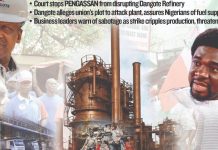
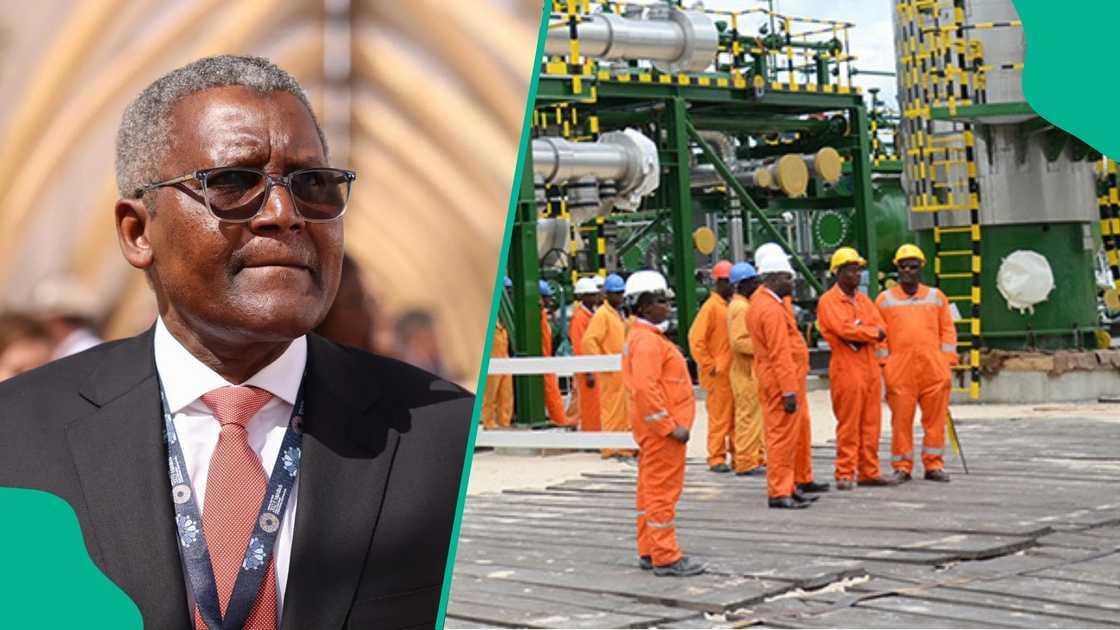
Africa-Press – Nigeria. The crisis between Dangote Refinery and the Petroleum and Natural Gas Senior Staff Association of Nigeria (PENGASSAN), which led to the mass disengagement of staff at the privately owned facility, remains a source of concern.
The refinery became embroiled in a bitter dispute with the union over labor practices and safety standards. PENGASSAN accused the company of “high-handedness” and warned against what it described as a growing pattern of unfair labor practices.
On Friday, September 26, 2025, Dangote Refinery terminated the appointments of several staff members following the feud with PENGASSAN, although the company claimed it was part of an ongoing reorganization.
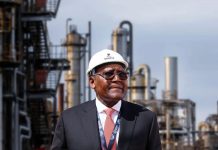
The refinery stated that the decision was made in response to repeated sabotage by staff members, which threatened the operational safety of the 650,000-barrels-per-day facility.
In a letter dated September 24, 2025, signed by Chief General Manager of Human Asset Management, Femi Adekunle, the refinery said it was “constrained to carry out a total reorganization of the plant” due to multiple recent cases of sabotage across various units, raising serious safety concerns.
A senior official at Dangote Petrochemical Refinery, who requested anonymity, said the move aimed to plug leakages and protect the company’s assets following repeated sabotage.
“It does not mean they have been sacked. That is incorrect. What was done was to put a check in place. It’s more like a system clean-up to identify the sources of sabotage and leakage, and then address them. Once the issues are resolved, they will be reabsorbed. That’s why it’s not a sack, and that word was not used,” he explained.
He added that the exercise was carried out suddenly to prevent those allegedly involved from concealing their actions.
“Some acts of sabotage have been noticed repeatedly, and the company is simply trying to safeguard its assets. You cannot give two weeks’ notice in such cases; otherwise, those responsible would cover up and complicate matters,” he said.
The official further clarified that refinery operations were ongoing, and both Nigerian and expatriate staff were still actively working at the plant.
“As we speak, people are still working at the refinery. Those affected know themselves, and anyone who didn’t receive the letter is not affected. Anyone uninvolved in sabotage has nothing to worry about,” he stressed.
Gas is the primary fuel powering several units at the Dangote Refinery. On Saturday, September 27, 2025, PENGASSAN issued a letter to some of its members, instructing them to halt gas supply to the refinery.
The association stated that its decision was in response to the refinery’s management disengaging union members and allegedly spreading misinformation to justify its actions.
“All crude oil supply valves to the refinery should be shut. Loading operations for vessels headed there must be halted immediately. NGIC Chairman must ensure that gas supply to the refinery is cut off effective immediately. All chairmen summoned are to report promptly on the progress of this directive,” the letter read.
Refinery’s Swift Response
In a swift reaction, Dangote Refinery issued a statement describing the order as illegal and urged PENGASSAN to comply with Nigerian laws. The management emphasized that the union has no legal authority to disrupt or interfere with the refinery’s contracts with third-party vendors for gas and crude oil supply.
The refinery stated that the directive amounts to economic sabotage on multiple levels, citing the potential disruption of petroleum product supply, including aviation fuel, petrol, diesel, kerosene, and cooking gas.
“This is a brazen, albeit shocking, display of lawlessness and criminality by PENGASSAN. Absolutely no law gives the union the right to direct its branches to ‘cut off’ gas and crude oil supplies to Dangote Refinery. There is no statute that supports or enables such actions,” the statement said.
“Moreover, it constitutes criminal conduct for PENGASSAN or its members to disrupt or interfere in any way with the contracts between Dangote Refinery and its vendors. These supply agreements were not made with PENGASSAN, and the union has no right whatsoever to obstruct their execution.”
PENGASSAN’s Directive as Economic Sabotage
The refinery’s management further asserted that beyond the lawlessness and criminality of PENGASSAN’s instructions, the directive represents economic sabotage.
“In plain language, PENGASSAN has directed its branches to disrupt and halt the supply of petroleum products from Dangote Refinery to Nigerians,” the statement added.
It explained that the affected products include aviation fuel and gas—essential commodities for millions of Nigerians.
“In what circumstance would it be justified for PENGASSAN to cause such disruption and hardship to Nigerians? None that we can see. In whose interest is PENGASSAN acting? Certainly not in the interest of the Nigerian state or its citizens,” the refinery concluded.
Call for Government Intervention
Dangote Refinery has called on the federal government and its security agencies to intervene and bring PENGASSAN to order, stressing that the association’s actions are not only lawless but also pose a serious threat to the Nigerian economy and its citizens.
“We are, by this write-up, drawing the attention of the Federal Government and its security and law enforcement agencies, as well as other levels of government in Nigeria, to this criminal, lawless, reckless, and irresponsible conduct of PENGASSAN, and calling on its agencies in particular to call the association to order,” the statement read.
The company emphasized that PENGASSAN has no right to introduce anarchy and chaos into society.
“The association is not above the law, and it must not be allowed to believe that it is, or behave as if it is. We are also calling on all Nigerians to take note of the unqualified and irredeemable hardship which PENGASSAN wishes to inflict on all of us. There is no Nigerian household that does not use or need the petroleum products which PENGASSAN has now directed its branches, by fiat, to withdraw from the Nigerian market. Again, we list some of them: petrol, cooking gas, diesel, kerosene, and aviation fuel,” it added.
The company further warned that the production and supply of these products would cease if PENGASSAN is allowed to enforce its lawless and criminal directive, adding that the association must not be permitted to ride roughshod over Nigerians.
“The repercussions from the PENGASSAN directive would affect and inflict harm on all Nigerians. This is therefore a fight for all Nigerians. We all must encourage and nudge PENGASSAN to live up to its commitment,” Dangote management stated.
National Assembly Wades Into the Crisis
The House of Representatives Committee on Petroleum Resources (Downstream) has called on the Petroleum and Natural Gas Senior Staff Association (PENGASSAN) to suspend its directive to cut off gas and crude oil supply to Dangote Refinery.
This call was made by the chairman of the committee, Ikeagwuonu Ugochinyere, in a press statement on Saturday, September 27, 2025.
He expressed concern that the shutdown order could destabilize the downstream sector, discourage potential investors, and undermine peaceful resolution.
The chairman disagreed with PENGASSAN’s ongoing industrial action and its directive to some branches to cut off gas and crude oil supply to Dangote Refinery without notice or adherence to the procedures outlined in relevant trade union acts. He urged the protesting union to lift the order and allow dialogue to lead the way.
Committee’s Position
Ugochinyere Ikeagwuonu stated that the committee has reached out to stakeholders for a downstream stability roundtable to help resolve the issues that led to the shutdown order. The parties involved include the Nigerian Midstream and Downstream Petroleum Regulatory Authority (NMDPRA), PENGASSAN, the Nigerian Union of Petroleum and Natural Gas Workers (NUPENG), and lawmakers.
He added that the committee has appointed Akin Rotimi as sub-committee chairman, with Midala Usman, Billy Osawaru, and Mathew Nwaogu as members, to harmonize positions on the disputes in the downstream sector, particularly regarding workers’ rights to join or not join a union.
“The alleged issue of retrenchment, the powers of private companies to run their operations as they see fit, and other matters central to the dispute between Dangote Refinery and the unions—especially NUPENG and PENGASSAN,” he said.
Ugochinyere noted that the committee has 14 days to complete its assignment and called on all parties, especially NUPENG, PENGASSAN, and Dangote Refinery, to submit detailed information on the issues to enable the committee to carry out its task.
Expert Opinion
Development expert and public affairs analyst Dayyabu Baba described the unfolding events at Dangote Refinery—where staff were expelled for joining a labor union—as unfortunate.
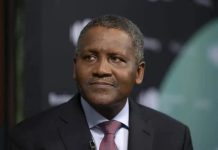
“One cannot help but question the wisdom behind such a move. While Aliko Dangote is celebrated for his business acumen and resilience, his current approach to labor relations appears to lack strategic finesse,” Baba said.
He emphasized that countering force with force is unwise, especially when the law clearly supports workers’ rights to freely associate. In a country whose constitution and labor laws protect union membership, confronting the union head-on is neither sustainable nor smart.
Baba added that, given Dangote’s long history of overcoming business challenges, building a working relationship with the union should not be impossible. Yet, his current strategy suggests otherwise. If he truly desires seamless operations at his refinery, he must rethink his approach—outmaneuver the union through persuasion, align their interests with his vision, and, where necessary, seek legal reforms rather than outright confrontation.
Applying a Subtle Path
A more subtle path, Baba suggested, would have been to let the union maintain its internal momentum, then gradually cultivate a parallel or alternative faction.
“The truth is, there were multiple options available—quiet negotiation, strategic engagement, even silent cooperation—that could have avoided this public clash. But perhaps Dangote’s experience in dealing with educated elites, government officials, and corporate rivals did not prepare him for the dynamics of labor politics, where emotion, solidarity, and external sponsorship often play decisive roles. It is high time he recognizes the nature of the forces he now contends with,” Baba stated.
He concluded that Dangote must remember freedom of association is a fundamental human right. By expelling workers for unionizing, he risks violating not only national labor laws but also international standards. Beyond legal implications, such actions can damage his public image and strain industrial harmony within the refinery.
In the end, Baba stressed, wisdom demands dialogue—not dominance. A visionary industrialist should seek to win hearts, not wage wars.
For More News And Analysis About Nigeria Follow Africa-Press