
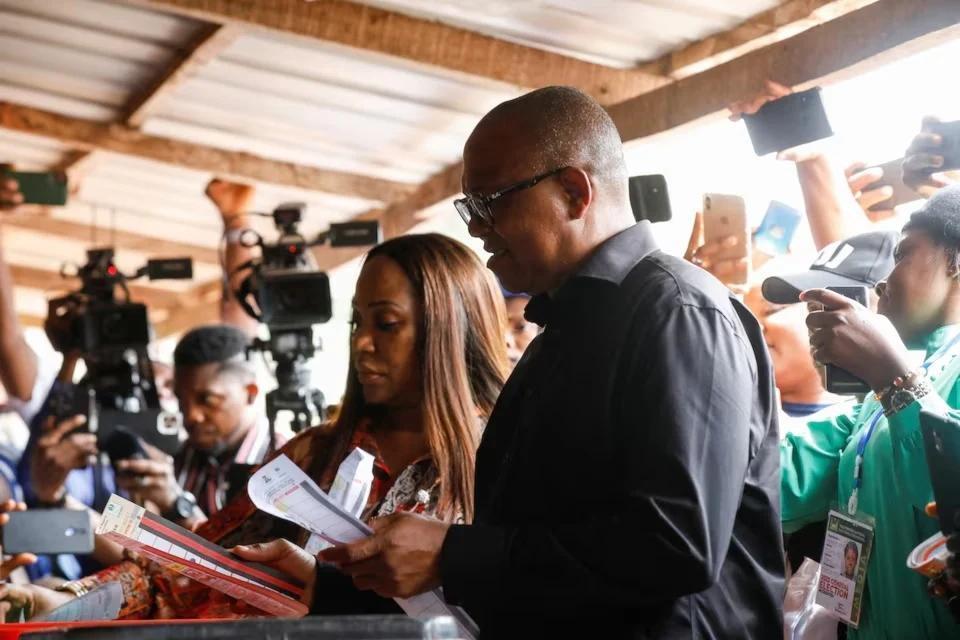
Africa-Press – Nigeria. Nigerian politician Peter Obi has announced his intention to run again in the upcoming presidential elections after winning his party’s nomination, paving the way for a renewed contest with Nigerian President Bola Tinubu amid a divided opposition and dwindling chances of forming a united front against the ruling party.
Obi’s victory in the primaries of the Nigerian Democratic Congress was announced on Sunday, less than a month after he withdrew from a coalition that aimed to nominate a single opposition candidate. Obi’s acceptance disappointed some opposition supporters who hoped for his return to the coalition.
This announcement comes after weeks of the disintegration of an opposition alliance that sought to unify political forces against Tinubu, following the withdrawal of prominent figures from the coalition due to internal disagreements and legal disputes.
In a statement released on Sunday evening, Obi stated, “We must address insecurity decisively and urgently, as no nation can thrive while its citizens live in constant fear.”
Obi finished third in the 2023 elections but successfully built a broad support base, particularly among youth and urban voters, through the “Obidient” movement, which has become one of the most significant political phenomena in the country in recent years.
On the other hand, Tinubu has secured his nomination from the ruling party for a second presidential term, asserting that the economic reforms he initiated upon taking office have begun to yield results in terms of financial stability and attracting investments, despite the ongoing cost of living crisis and rising inflation rates.
Former Vice President Atiku Abubakar, who finished second in the previous elections, won the nomination of the African Democratic Congress last week in his seventh attempt to run for the presidency. Leaders of other smaller parties are also expected to announce their candidacies.
Observers believe that divisions within the opposition may give Tinubu an early advantage in the presidential race, especially with the absence of consensus among the main anti-government forces regarding a unified candidate capable of challenging the ruling party.
Nigeria is scheduled to hold new presidential elections in early 2027 amid significant economic and security challenges, including inflation, declining purchasing power, and security crises in several northern and central states.