
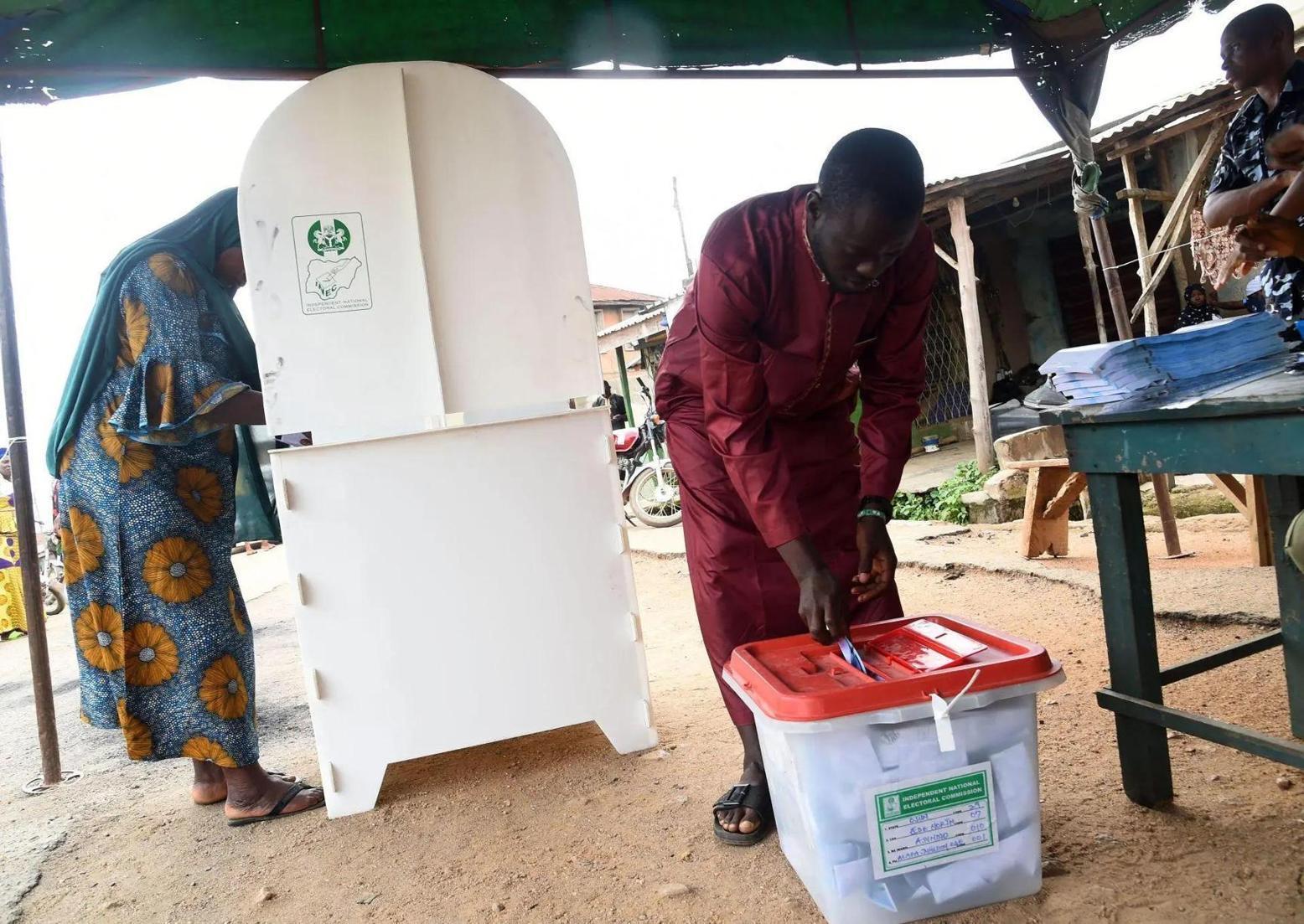
Africa-Press – Nigeria. Voters in Osun State, located in southwestern Nigeria, are heading to the polls to choose their next governor. At first glance, this appears to be a race for the administration of a state with a population of approximately 4.7 million. However, the political class interprets it as a broader question: what do the results reveal about alliances, voter loyalties, and the political mechanisms that may shape the presidential elections in 2027?
Osun is holding its elections outside the national cycle, meaning it is separate from the presidential and national assembly elections, making it one of the last major tests before the national vote. While the outcome will not predict who will win the presidency, it may provide an early indication of whether President Bola Ahmed Tinubu’s influence in the southwestern region is still translating into votes.
The race, despite the participation of several parties, centers on three candidates: the current governor Ademola Adeleke, who won the position in 2022 on the platform of the People’s Democratic Party and is seeking a second term; Bola Oyetunji from the ruling All Progressives Congress; and Najim Folasayo Salam from the African Democratic Congress.
Why is Osun important for President Tinubu?
Tinubu’s political trajectory was built in the neighboring Lagos State, but his family roots are in Osun. His cousin, Adegboyega Oyetola, governed the state from 2018 to 2022 before losing to Adeleke. Therefore, a victory for the All Progressives Congress would allow him to reclaim a state lost in 2022 and strengthen his position in a key area for the president’s political power.
The ruling party has also expanded its presence across Nigeria through a series of defections involving state governors and prominent politicians. Osun presents a different test, as the ruling party must win votes not just from politicians. A defeat would not mean that Tinubu has lost the southwestern region, but it would raise questions about the assumption that defections and elite alliances automatically translate into electoral support.
For many voters in Osun, the elections are not primarily about Tinubu’s future. State gubernatorial elections are often decided on local issues such as roads, public services, job opportunities, agriculture, infrastructure, and the performance of the state government. While Adeleke defends his record, Oyetunji promises change, and Salam presents his party as an alternative. A report from a local source suggests that voters focused on their state government’s performance may not be concerned with what is happening in Abuja, but national politicians will interpret the results differently.
A lawyer stated that “the Osun gubernatorial election is unlikely to solely determine the outcome of 2027,” adding that “its greatest significance may lie in what the results reveal about the strength of political structures” in national assembly races. He further noted, “The fundamental question, in my view, is whether legislators who switched parties can retain their seats without the political machinery behind them.”
A test in the president’s stronghold
Nigerian presidential elections are heavily shaped by regional alliances, and Tinubu has faced tensions in parts of the north, including the departure of former Kaduna State governor Nasir El-Rufai from the ruling party.
A political analyst from Osun, who requested anonymity due to the tensions surrounding the elections, remarked, “If the result from the southwest, which is the most reliable region for Tinubu, is mixed or a loss in Osun, it will leave little room for his campaign strategists to compensate for northern defections,” adding, “If the southwest holds firm, it gives him space to manage northern issues without panic.”
Ikemiset Ifeong, a managing partner at a political risk firm in Lagos, stated that “Osun is useful as an indicator of the direction of travel, but it will not be a judgment on 2027.” He added that as the last major vote outside the cycle before 2027, it provides a critical test of the readiness of the Independent National Electoral Commission, a gauge for the momentum of the ruling All Progressives Congress, and a measure of voter sentiment in the strategically important southwest.
Ifeong cautioned against treating the result as a direct measure of national sentiment, stating, “Context is everything. Gubernatorial elections are often decided on local issues, not on the national economic and security crises that will determine 2027.”
According to the commission’s timeline, the presidential and national assembly elections are scheduled for January 16, 2027, and the state elections for February 6.