Africa-Press – Rwanda. The Ministry of National Unity and Civic Engagement has classified 20 cultural heritage sites across Rwanda, in a major plan to preserve the country’s history and strengthen national identity.
The announcement was made by Minister Jean-Damascène Bizimana during a parliamentary appearance, where he outlined progress in implementing the 2015 National Cultural Heritage Policy.
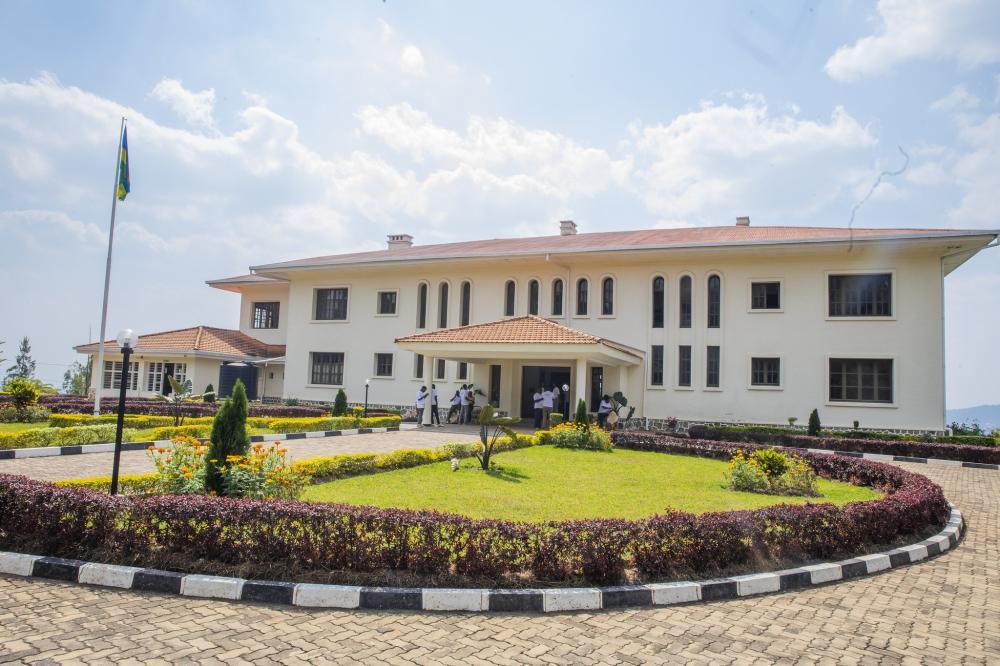
Visitors during a guided tour of Rwesero Art Museum. Photo by Craish BAHIZI
In addition to the newly classified sites, more than 536 others are under assessment for their cultural, historical, and economic significance. The sites were approved under a 2024 ministerial order that also defines how they can be used for education, tourism, and income generation.
Below is a look at the 20 sites:
1. Kigali Genocide Memorial
Established in 2004, this is one of the country’s most prominent remembrance sites and the final resting place of more than 250,000 victims from across Kigali.
It features exhibitions on the history of genocide, with a focus on the 1994 Genocide against the Tutsi, as well as archives, lecture spaces, gardens of remembrance, and mass graves.
2. Nyamata Genocide Memorial
Originally a Catholic church, Nyamata became a massacre site where more than 45,000 people were killed in April 1994. It stands as a testament to both earlier displacement of Tutsi and the atrocities of the genocide.
3. Ntarama Genocide Memorial
Located in a former church, Ntarama commemorates over 5,000 victims. Classrooms, gardens, and other structures bear witness to the killings that took place there.
4. Murambi Genocide Memorial
One of the largest memorials, Murambi holds over 50,000 victims. It includes preserved remains, a museum, and classrooms where many were killed, while also reflecting earlier violence against Tutsi dating back to 1959.
5. Nyarubuye Genocide Memorial
Site of massacres between April 15 and 17, 1994, Nyarubuye preserves evidence of the violence, including weapons used by perpetrators.
6. Bisesero Genocide Memorial
Often referred to as a “Heroes’ Memorial,” Bisesero symbolises resistance, where Tutsi defended themselves for weeks. Today, it contains mass graves holding more than 50,000 victims.
7. Rebero Genocide Memorial
This site is the burial place of politicians and early victims targeted for opposing extremist leadership, highlighting the silencing of dissenting voices.
8. Nyange Memorial Site
Nyange reflects both the genocide and post-genocide justice efforts, as one of the first locations where Gacaca courts were introduced in 2002.
9. Nyanza-Kicukiro Memorial Site
Situated on a hill overlooking Kigali, this site offers a शांत space for reflection and remembrance.
10. Mulindi Museum
Mulindi served as the headquarters of the Rwanda Patriotic Front (RPF-Inkotanyi) during the liberation struggle, with preserved command posts, trenches, and other structures.
11. Rwanda National Heroes’ Mausoleum
This site honours individuals recognised for exceptional service and sacrifice, promoting patriotism and national values.
12. King’s Palace Museum, Nyanza
Associated with King Mutara III Rudahigwa, the palace reflects traditional and modern architecture and remains a key symbol of Rwanda’s monarchy.
13. Rwesero Art Museum
Originally intended as a royal residence for King Mutara III Rudahigwa, it now preserves royal history and showcases artistic heritage.
14. Kandt House Museum
Built between 1908 and 1910 and named after German colonial administrator Richard Kandt, the museum provides insight into Rwanda’s early colonial history.
15. King’s Base in Rubengera
This site served as a strategic base for King Kigeli IV Rwabugiri during military campaigns and royal ceremonies, including Umuganura.
16. Rwabugiri City Sites
King Kigeli IV Rwabugiri established several cities, some at national borders for military purposes. One such site in Kinyaga (Nyamasheke) was used in campaigns against neighbouring regions. He was later buried in Rutare, Gicumbi.
17. Rwabugiri Base in Kageyo
Located in former Cyingogo, this site was one of King Rwabugiri’s royal bases, known as “Ku Mukore wa Rwabugiri,” named after a prominent tree and palace once located there.
18. Nyange Secondary School
A symbol of unity, the school gained national recognition in March 1997 when students refused to separate along ethnic lines during an attack by insurgents, with some losing their lives.
19. Buhanga Sacred Forest
Located in Musanze District, Buhanga is linked to Gihanga, Rwanda’s legendary founder. The 30-hectare forest hosts historical sites, including coronation ritual grounds, ancient trees, caves, and a sacred water source.
20. Rubona Pots Site
Linked to King Ruganzu II Ndori, this site reflects oral traditions. According to legend, he created pot-shaped water sources by striking the ground with his spear.
For More News And Analysis About Rwanda Follow Africa-Press