Michel Nkurunziza
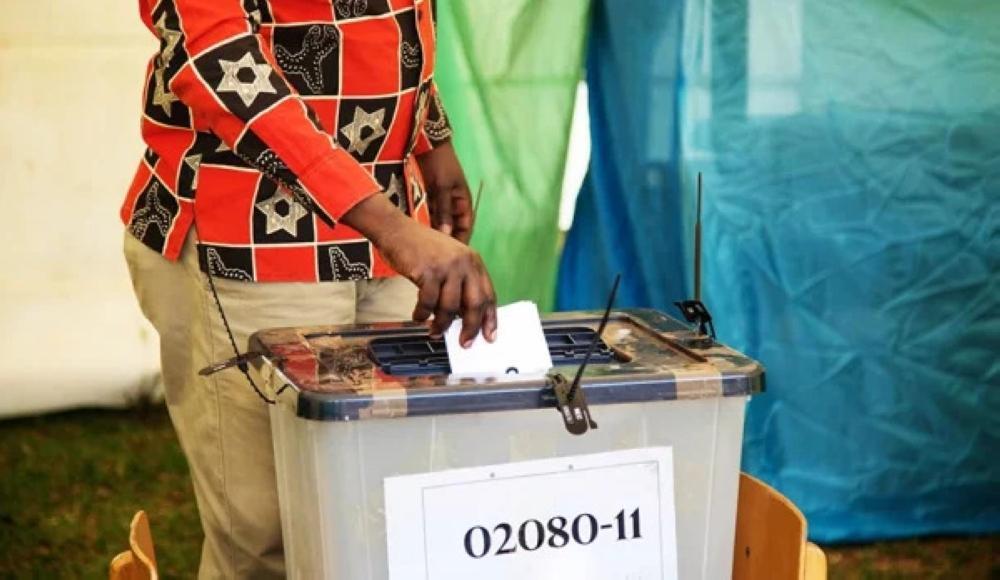
Africa-Press – Rwanda. The country is gearing up for the next round of district mayoral elections, expected after the current five-year terms expire in October 2026. However, the timeline and modalities will depend on pending legal reforms and Cabinet approval of the election roadmap.
The National Electoral Commission (NEC) says preparations are underway, but the process cannot proceed before key decisions are finalised.
Moise Bukasa, NEC communications officer, told The New Times that the Commission is awaiting Cabinet approval of the proposed election agenda submitted by the Ministry of Local Government. At the same time, Parliament is considering amendments to the Organic Law governing elections.
“We cannot embark on elections before such a law is amended,” Bukasa said, noting that the draft legislation must pass through parliamentary committee review before returning to plenary.
Proposed changes to the system
The planned reforms mainly target how local leaders, particularly district councillors, are elected, a shift that could reshape the entire electoral process for mayors.
Under the draft Organic Law, district councillors would be elected through indirect elections, moving away from the current arrangement that allows direct voting. The change is intended to streamline elections and reduce the frequency with which citizens are called to vote.
Previously, Rwanda used a tiered electoral college system. Citizens voted at village and cell levels, with those elected forming electoral colleges that chose leaders at higher levels, culminating in the election of district councillors and, ultimately, mayors.
While electoral colleges will still exist under the proposed reforms, they will no longer be explicitly defined in law. Instead, their composition and functioning will be determined through a Presidential Order, allowing adjustments without repeated amendments to the Organic Law.
The draft law also proposes extending the minimum remaining term required to organise by-elections from six months to one year. Authorities argue that six months is often too short to organise credible elections, especially when preparations overlap with broader electoral cycles.
However, exceptions will apply. If multiple officials vacate office and decision-making becomes impossible, elections will be organised regardless of the remaining term.
Background to the reforms
The proposed changes build on earlier adjustments to local governance structures. In 2021, the composition of District Councils was revised, replacing sector-based representation with eight councillors elected at district level.
Although the law provides for direct elections of these councillors, the 2021 polls were conducted through indirect voting due to COVID-19 restrictions. Authorities later assessed that the approach was effective in reducing logistical complexity and voter fatigue.
Following the 2024 general elections which included presidential, parliamentary, and local polls, the NEC conducted a comprehensive review of the electoral process. Among its recommendations was the need to refine legal provisions governing local elections, prompting the current amendments.
Eligibility and political dynamics
District mayors serve five-year terms, renewable once. This means some incumbents who were re-elected in 2021 will not be eligible to run again in 2026.
Others currently serving their first term will be eligible for renewal, though re-election is far from guaranteed.
Governance analysts say performance will be a key determinant of who remains in office.
“No local government leader can serve more than two terms. However, even those eligible for renewal may be replaced depending on performance,” said veteran journalist and local governance analyst Rene Anthere Rwanyange.
He pointed to several factors likely to influence decisions, including how effectively mayors implement district council resolutions, collaborate with stakeholders, and contribute to national development priorities.
Performance and accountability
Districts are evaluated through performance contracts known as Imihigo, a system widely used to measure delivery across public institutions.
Officials say leaders whose districts score below 60 per cent are unlikely to retain their positions, regardless of eligibility.
Recent Imihigo results show a national average performance of 69 per cent, suggesting moderate progress but leaving room for improvement in several districts.
President Paul Kagame has also weighed in, urging local leaders seeking another term to critically assess their own performance before presenting themselves to voters.
His remarks underscore a broader emphasis on accountability, results, and alignment with national development goals as key considerations in leadership continuity.
What lies ahead
With legal reforms still under consideration and the election timetable pending Cabinet approval, uncertainty remains over the exact format and timing of the 2026 local elections.
However, the direction is becoming clearer: a streamlined electoral process, fewer direct voting exercises, and a stronger emphasis on performance as the ultimate test for incumbents.
Source: The New Times
For More News And Analysis About Rwanda Follow Africa-Press