Africa-Press – Rwanda. In the aftermath of the 1994 Genocide against the Tutsi, perpetrators and their sympathisers launched sustained campaigns of denial, many of which continue to fuel genocide ideology today.
These narratives, often amplified through various platforms, seek to distort, trivialise, or obscure the truth.
As a result, several misconceptions persist among audiences outside Rwanda, particularly in the diaspora and parts of the international community.
Below are some of the most common and inaccurate beliefs.
1. “800,000 people were killed”
Many media outlets, governments, and scholars cite a death toll of around 800,000 Tutsi and moderate Hutu. However, the verified figure exceeds one million lives lost in just 100 days.
A 2002 study, published in 2004, documented 1,074,017 victims, individuals whose identities, including names, parents, ages, and places of residence, were recorded by their families.
2. The “double genocide” theory
Some deniers promote the so-called “double genocide” theory, claiming that there was also a genocide against Hutu. This narrative has been widely discredited.
“There was no point during the Genocide against the Tutsi when Hutu were hunted for being Hutu,” says Emma-Claudine Ntirenganya, the Director General, Communication and Education, City of Kigali.
“Tutsi were hunted—systematically and ruthlessly. Yes, some Hutu were killed, but often because they were mistaken for Tutsi or because they refused to participate in the killings or chose to protect Tutsi.”
She added: “Many Hutu died in exile, often due to disease, but they were never targeted for extermination as Hutu.”
3. Calling it the “Rwandan genocide”
Internationally, the 1994 genocide is recognised as the Genocide against the Tutsi, reflecting both intent and target.
However, some still refer to it as the “Rwandan genocide,” a term that introduces ambiguity.
Former Ambassador Joseph Mutaboba warns that genocide denial often begins with such ambiguity.
“Reluctance to use precise terminology creates space for those who seek to distort the historical record,” he said.
He emphasised that using the correct term does not diminish the suffering of others who were killed.
Dr James Smith, founder of Aegis Trust, says that naming the genocide accurately is essential to understanding its roots and preventing future atrocities.
For years, the United States avoided the correct terminology, but in 2026, it officially adopted “Genocide against the Tutsi” during the 32nd commemoration.
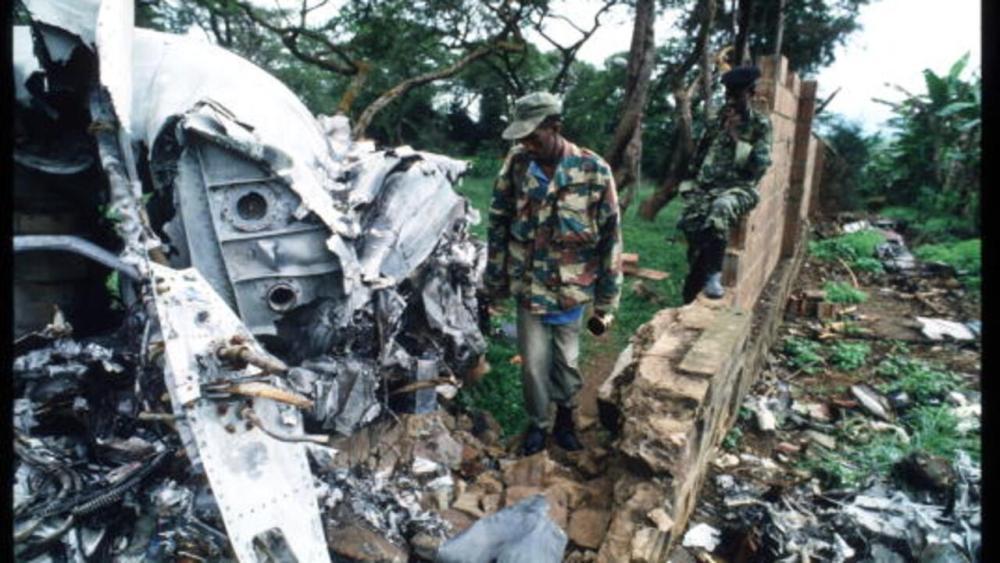
4. The genocide was caused by Habyarimana’s plane crash
While the assassination of President Juvénal Habyarimana triggered the rapid escalation of killings, it did not cause the genocide.
The extermination campaign had been carefully planned by extremist leaders well in advance.
Preparations included compiling lists of targets, stockpiling weapons, and using media such as RTLM to incite violence.
Historical patterns of persecution date back decades.
Mass killings of Tutsi were recorded as early as 1963 and 1973, including in Gikongoro.
UNAMIR veteran General Babacar Faye recalled that by 1993, lists of Tutsi to be killed already existed and militias were being trained.
5. A “tribal conflict”
Some observers have wrongly described the genocide as a tribal conflict, suggesting it was spontaneous or inevitable.
In reality, Rwanda’s Hutu, Tutsi, and Twa identities were historically social categories, not rigid tribes. The genocide was a deliberate, state-led project to eliminate the Tutsi population.
Describing it as a tribal conflict obscures its organised and ideological nature.
6. The international community had no warning
Contrary to some claims, the international community had prior warning. UNAMIR personnel reported clear signs, including militia training and lists of intended victims.
General Faye confirmed that alerts were issued, including communications from General Roméo Dallaire, but they were not acted upon effectively.
7. All Hutu participated
Another misconception is that all Hutu took part in the killings. In fact, many risked their lives to protect Tutsi. Some have since been recognised under the “Abarinzi b’Igihango” (Protectors of Friendship) initiative.
One example is Siras Ntamfurayishyari, a former FAR soldier who helped rescue Tutsi to safety in Burundi.
8. Genocide denial is free speech
Genocide deniers abroad often frame their rhetoric as political dissent or freedom of expression.
However, experts argue that denial is not merely opinion but a distortion of truth and an attack on memory.
Author David Gakunzi emphasises that combating denial requires global responsibility, as such narratives perpetuate harm and undermine efforts to prevent future atrocities.
For More News And Analysis About Rwanda Follow Africa-Press