Africa-Press – Rwanda. Through poetry, music, and theatre, Rwandan creatives who performed during the 15th edition of Our Past event showcased the country’s history and called on the youth to be the shield against genocide denial and carry memory forward.
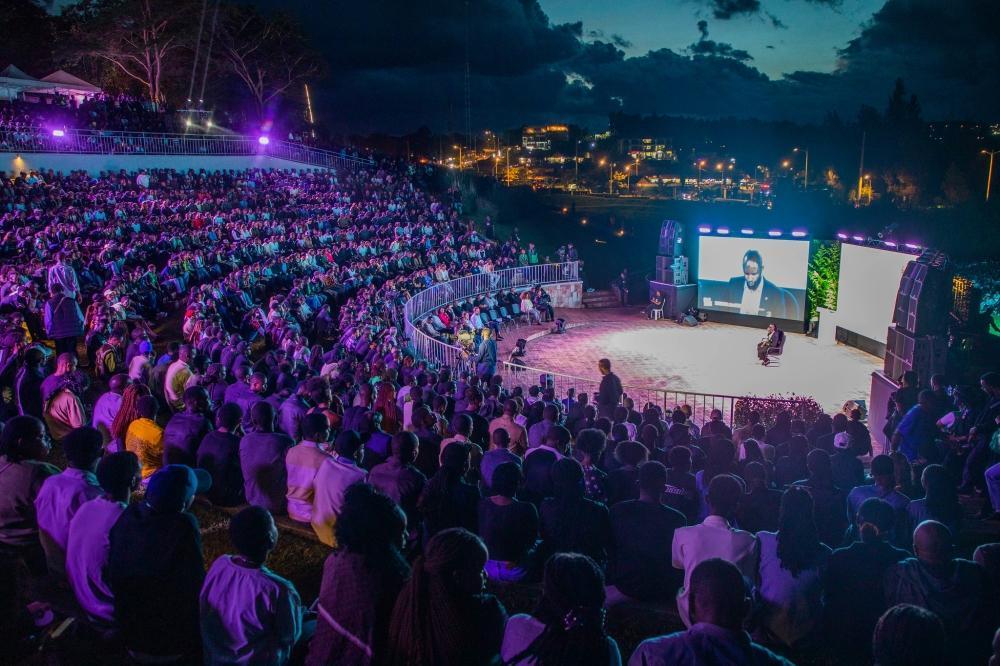
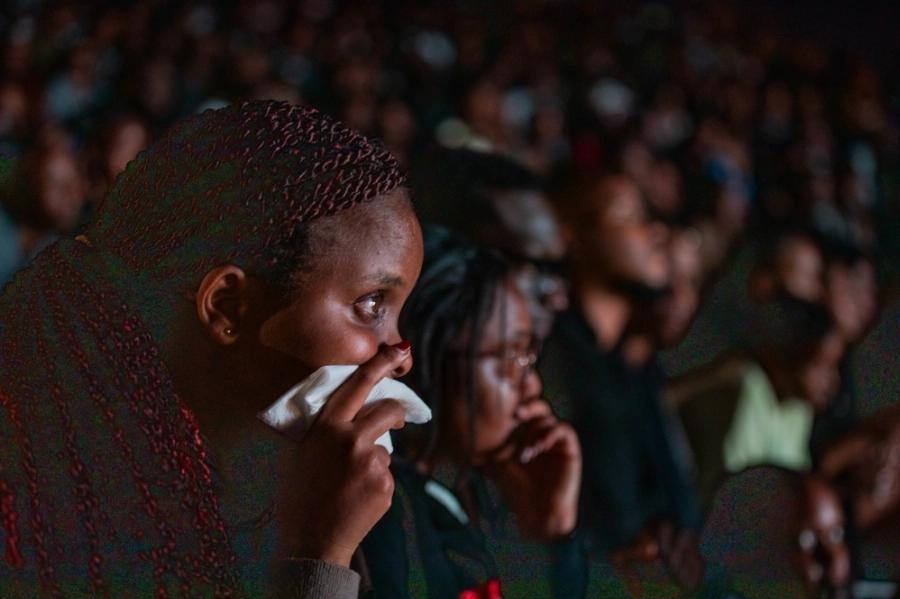
Held on Thursday, April 9 at Nyanza Genocide Memorial and largely attended by thousands of youths, the night, which is part of the 32nd commemoration of the 1994 Genocide against the Tutsi, unfolded as a powerful blend of remembrance and reflection.
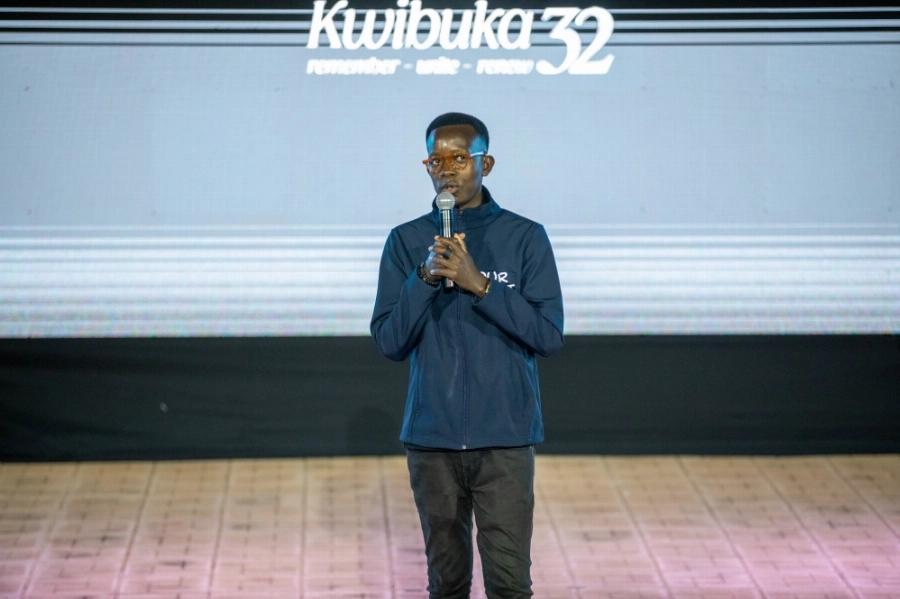
Christian Intwari, the brains behind Our Past Initiative.
From emerging student performers to established artistes, each act carried a shared message that memory must be preserved, and the responsibility now rests with a new generation.
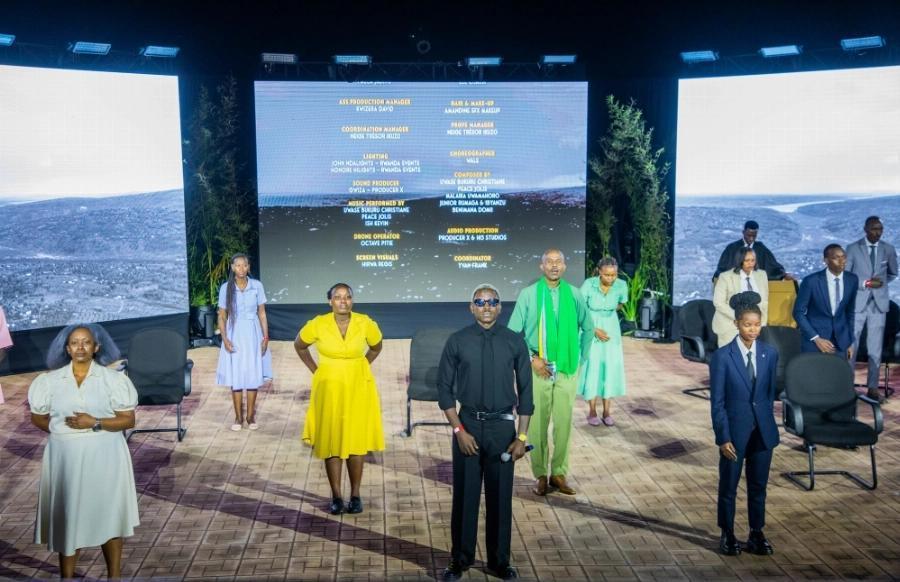
At the heart of the evening was Inzibutso, which translates to “Memories,” a theatrical play written and directed by renowned poet Junior Rumaga in collaboration with Ibyanzu, Ben Benimana, and Malaika Uwamahoro.
A group of creatives on stage performing at Our Past event on Thursday, April 9.
The play traced the journey of different characters, including genocide survivors, before, during, and after the horrors of 1994. It opened on fragments of a life once whole, filled with warmth and familiarity, before descending into the trauma of loss.
The play also showcased how memories of loved ones became both comfort and torment, as survivors grappled with grief, loneliness, and the painful absence of closure.
Performing artistes showcase a play during Our Past event on Thursday, April 9, at Nyanza Memorial Garden. Photos by Craish Bahizi
One of the genocide survivors in the play, who searches for truth, for the whereabouts of her family, for a place to mourn, became central. It led her to confront a genocide perpetrator who had never confessed, never asked for forgiveness.
Inside a prison cell, the perpetrator is portrayed as a man haunted by the weight of his actions. His silence, once protective, turns into a burden.
Through the influence of another inmate who had confessed and sought forgiveness, he finally breaks, revealing the truth about the survivor’s family.
The survivor chooses forgiveness, but not without acknowledging the depth of the wound.
“It is such a huge wound,” she says, reflecting the importance of commemorating and preserving the memory of those lost.
In that moment, the play does not simplify healing. Instead, it presents forgiveness as a process, one rooted in truth, memory, and the refusal to forget.
The narrative reflected Rwanda’s journey, where many survivors have chosen to forgive while continuing to rebuild lives grounded in unity and justice. It echoed the spirit of Ndi Umunyarwanda, calling for a shared identity beyond division.
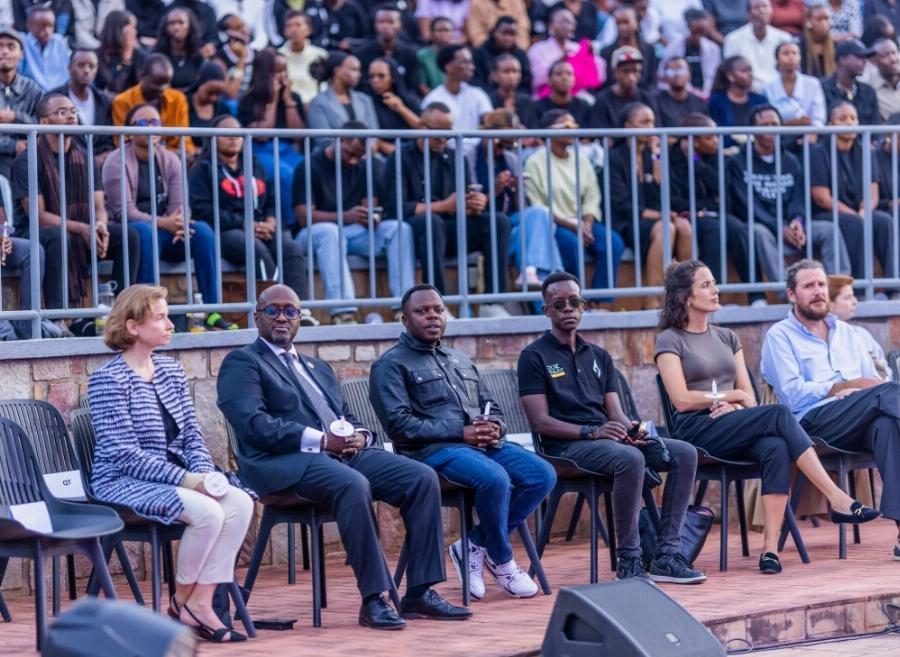
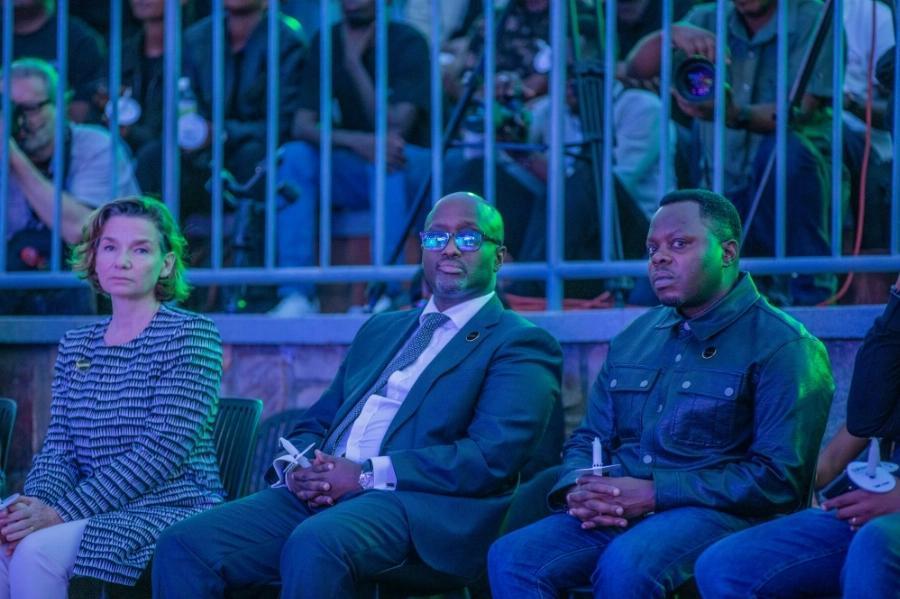
French Ambassador to Rwanda , Aurélie Royet-Gounin, Minister of Foreign Affairs Olivier Nduhungirehe, Minister of youth Abdallah Utumatwwishimana at the event.
The play also wrestled with faith, raising painful questions about God’s presence during the genocide, while ultimately calling for healing, hope, and renewed belief.
As the story transitions into the post-genocide era, it acknowledges the role of the Rwandan Patriotic Front (RPF Inkotanyi) in stopping the genocide and laying the foundation for a nation striving toward peace and reconciliation.
“At the end of the day, I don’t blame God. He had his servants who did not work for him and denied us a hideout, and killed us. Those did not work for God,” one character claimed.
“God and RPF Inkotanyi revived Rwanda. Rwanda grew and prospered. Rwanda, thank God.”
The play also echoed Rwanda’s resilience in 32 years, emphasizing the peace internally and helping in bringing peace across the board.
The play closed on a note of collective healing, blending music and performance, featuring artisteincluding renowned rapper Ish Kevin, capturing themes of remembrance, unity, development, and renewal.
In his piece, “Harabaye Ntihakabe,” which translates to “what happened should not happen again,” young poet Ben Nkotanyi challenged the youth to actively reject division and hatred, the very forces that once led Rwanda into darkness.
“Let us not put first what separates us. Let’s sustain what unites us.”
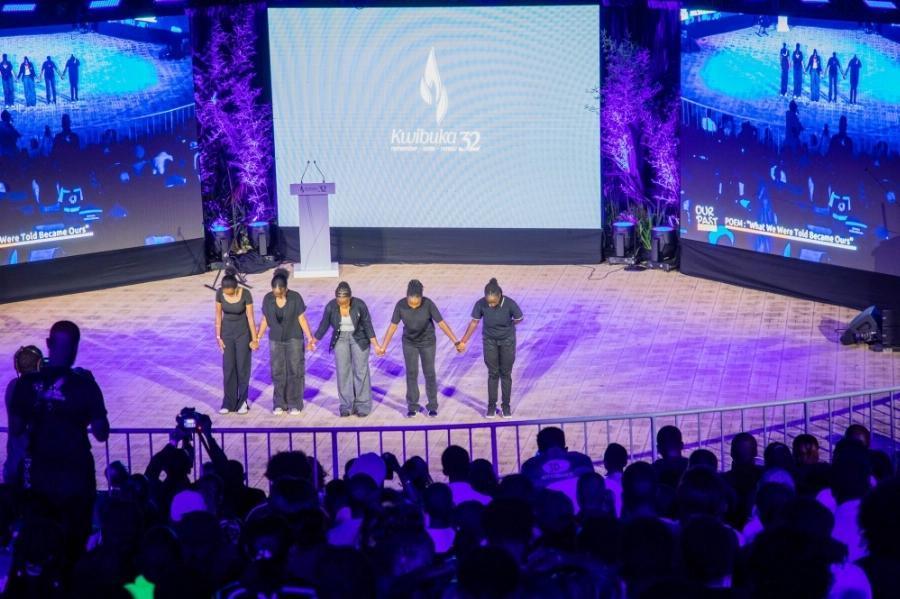
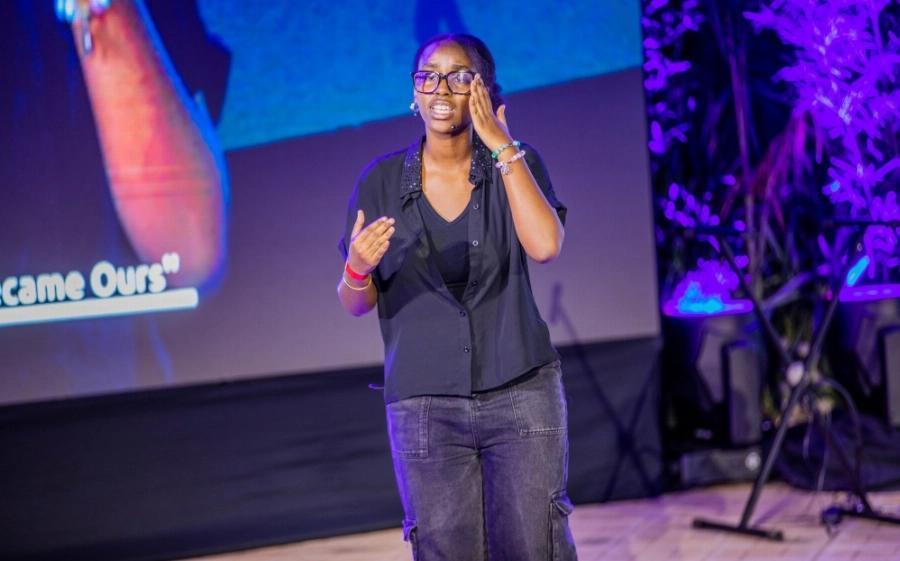
Another powerful performance, “What We Were Told Became Ours” by the Gashora Girls Academy poetry club, brought forward the voice of survivors through a symbolic letter to the younger generation as a call to responsibility.
“It is in your hands to fight against any hatred, discrimination, and dehumanization,” the poem reads.
“It is in your hands to call out any denial or division of this bitter but enduring truth, which is part of our history because our brothers and sisters may have died and lost their lives, but they should never fade from memory.”
The five poets reminded the audience that remembrance must go beyond ritual, beyond the 100 days, and live within everyday choices.
In their piece, they spoke of a future that must not be confused and a memory that must not fade.
“We refuse to have a confused future Rwanda, where the Kwibuka light has been deemed. We choose to safeguard our history, we choose to honor our loved ones in all the respect and value they are worth,” poets recited.
“We choose to care enough to learn from those who were there. We choose to keep the Kwibuka fire burning, burning brighter than before. We the youth choose to be the keepers of the future Rwanda that we want.”
The night’s commemorative performances carried a message of remembrance that teaches from the past to carry forward while firmly holding the memories and sustaining the country’s development.
For More News And Analysis About Rwanda Follow Africa-Press