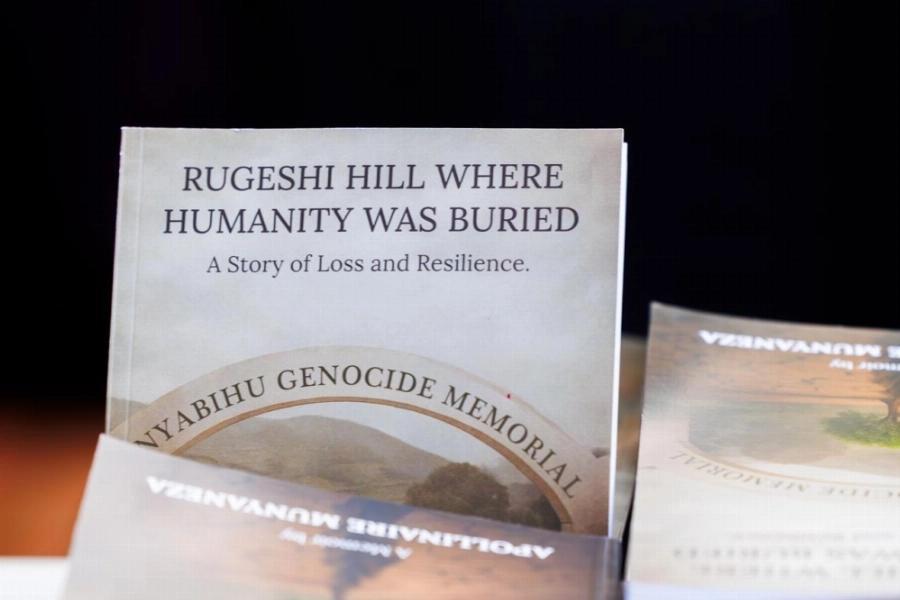
Africa-Press – Rwanda. Some stories exist not only to be told, but to be preserved. In Rugeshi Hill, Apollinaire Munyaneza documents his personal journey of family, loss, and survival during the 1994 Genocide against the Tutsi, ensuring that his testimony remains intact in his own words.
The book stands as his personal record of family, loss, and survival during the 1994 Genocide against the Tutsi. It is a testimony that must remain in his own words, before time passes or others reshape it.
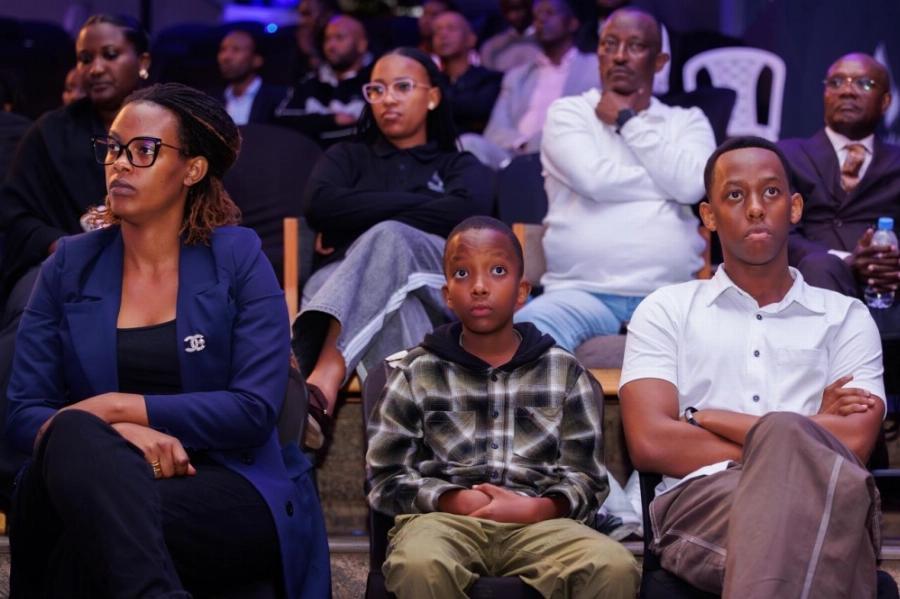
Launched at Kigali Genocide Memorial, on April 16, the memoir traces Munyaneza’s personal journey through loss during the 1994 Genocide against the Tutsi and the long path of rebuilding that followed.
“There are two things I wanted to capture in this book. One is the suffering of innocent people who were persecuted for no reason, simply because of how they were born. The other is resilience—how survivors of the genocide rebuilt their lives, how they rose again, and how they continued living even after losing everything,” he said.
Happening now at the Kigali Genocide Memorial: a café littéraire dedicated to the book “Rugeshi Hill Where Humanity Was Buried, A Story of Loss and Resilience” by Apollinaire Munyaneza, a survivor of the 1994 Genocide against the Tutsi.
The Genocide claimed most of his immediate… pic.twitter.com/KTzgYvL4V7
— Ministry of National Unity and Civic Engagement (@Unity_MemoryRw) April 16, 2026
“In our country, there is a saying: ‘He who does not know where he comes from does not know where he is going.’ That is very true. A person grows within a family, and it is the family that shapes you, gives you identity, and teaches you values that guide your life.”
Rugeshi Hill is where he was born, in the former Nkuli Commune, now part of Nyabihu District.
He describes how family and upbringing formed his foundation, but also how early systems and experiences shaped the inequalities and divisionism he later witnessed in education.
“I remember when I was in boarding school at Nkumba Seminary in 1988, a Burundian teacher entered the classroom. After looking at us, she asked, ‘Do you know the Tutsi?’ Nobody answered. Then she said, ‘Those people, even if there are only two here, they will disturb you and you will not be able to study.’”
Such messages planted fear and division at a young age.
“When you tell children such things, you are planting hatred in them. That is how division starts, and that is how ideology grows.”
He warned that such ideas did not remain confined to the past, noting that divisive ideologies have at times crossed borders in the region and re-emerged in different forms.
He said Rugeshi Hill stands as a silent witness to history, and that writing the memoir was both a personal duty and a moral responsibility.
Speaking at the event, Diogene Bideri, a national prosecutor and expert in international criminal law, said genocide ideology is still present in parts of the region and is often transmitted through language and early socialisation.
Bideri explained that divisive labels such as Inyenzi [cockroaches] were used to shape perceptions from childhood, reinforcing hatred over time and contributing to the environment that led to the genocide.
“Understanding these roots is essential to preventing repetition,” he said, warning that such ideologies have at times crossed borders and evolved into wider regional tensions.

For More News And Analysis About Rwanda Follow Africa-Press