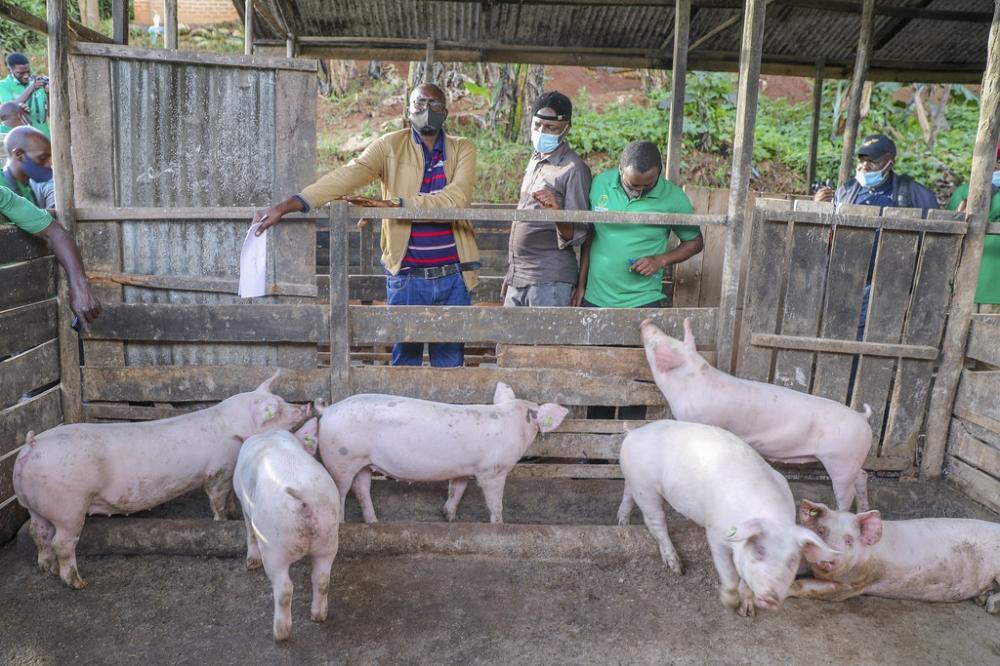
Africa-Press – Rwanda. Authorities have banned pig trading and movement in Bugesera and Rusizi districts following an outbreak of African swine fever (ASF), a highly contagious viral disease that affects pigs.
ASF does not infect humans, but it can be spread indirectly through contaminated clothing, equipment, and transport. The disease is known for its rapid transmission, high mortality rate, and lack of treatment or vaccine.
Dr Fabrice Ndayisenga, Head of Department for Animal Resources Research and Technology Transfer at the Rwanda Agriculture and Animal Resources Development Board (RAB), said the ban took effect on April 10, stressing that “the disease has neither vaccine nor treatment.”
So far, the outbreak has killed 60 pigs, 53 in Rusizi and seven in Bugesera. At least five deaths are being reported daily.
As of April 13, 2026, the disease had affected seven sectors: Nyakabuye, Muganza, Gitambi, Bugarama, Nzahaha, and Gashonga in Rusizi, and Ngeruka in Bugesera. Nine farms have been impacted, with Rusizi accounting for the majority of cases and serving as the epicentre.
Clinical signs of ASF include high fever, loss of appetite, diarrhoea, vomiting blood, breathing difficulties, and skin discoloration around the ears, snout, and feet. Infected pigs often die quickly.
Authorities have urged farmers to enforce strict biosecurity measures, including avoiding the use of swill (food waste), which can accelerate transmission. Farmers are also advised to report unusual illnesses or deaths immediately and comply with movement restrictions.
The ban will remain in force until the outbreak is contained, as officials intensify surveillance and control measures.
Peace Niyoyita, CEO of Ntarama Pig Farms in Bugesera, said the farm has restricted access to contain the disease.
“At least 30 customers book inseminated pigs every month. We encountered the outbreak when 112 buyers had not yet collected their pigs,” she said.
The farm, which keeps over 600 pigs, has barred visitors and strengthened internal safety protocols.
“When pigs remain in one place, the spread is reduced. Currently, no visitors are allowed, and workers are well prepared,” she said, noting that farmers in Ngeruka, Nyarugenge, and Ruhuha have been affected.
Despite the disruption, the company continues supplying pork by sourcing healthy pigs from unaffected districts.
“We only buy pigs with traceability from trusted farmers where animals are well managed,” she said.
The farm also operates a processing unit supplying 30 to 40 tonnes of pork to Kigali each month, and about 300 tonnes annually. It works with an expert from the Rwanda Inspectorate, Competition and Consumer Protection Authority (RICA) to test pigs before slaughter and inspect pork before it reaches markets.
ASF has previously affected Rusizi. In April 2024 alone, the disease killed 82 pigs after being detected in the district the previous month.
RAB has since set up a command post to coordinate response efforts and monitor containment.
Farmers are encouraged to maintain hygiene, use quality feed, avoid food waste, and insure their livestock against losses.
“It is not allowed to slaughter a diseased pig or one that has died from any illness,” RAB warned.
For More News And Analysis About Rwanda Follow Africa-Press