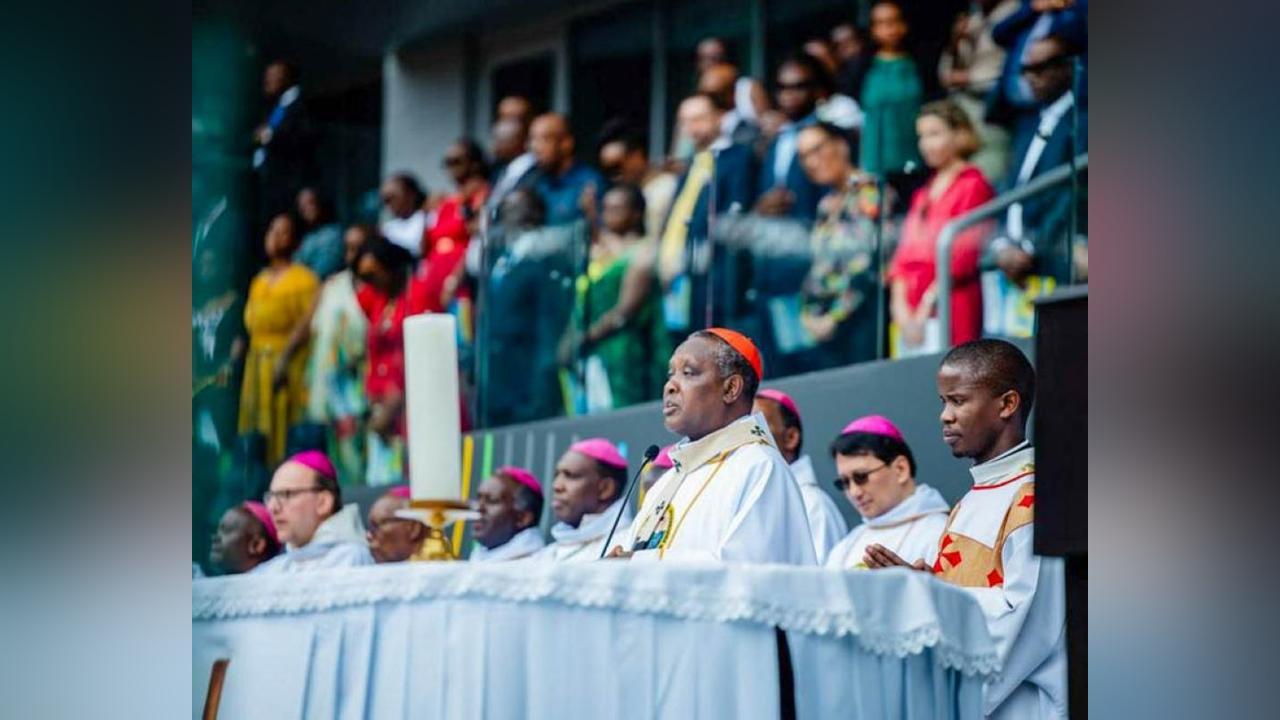
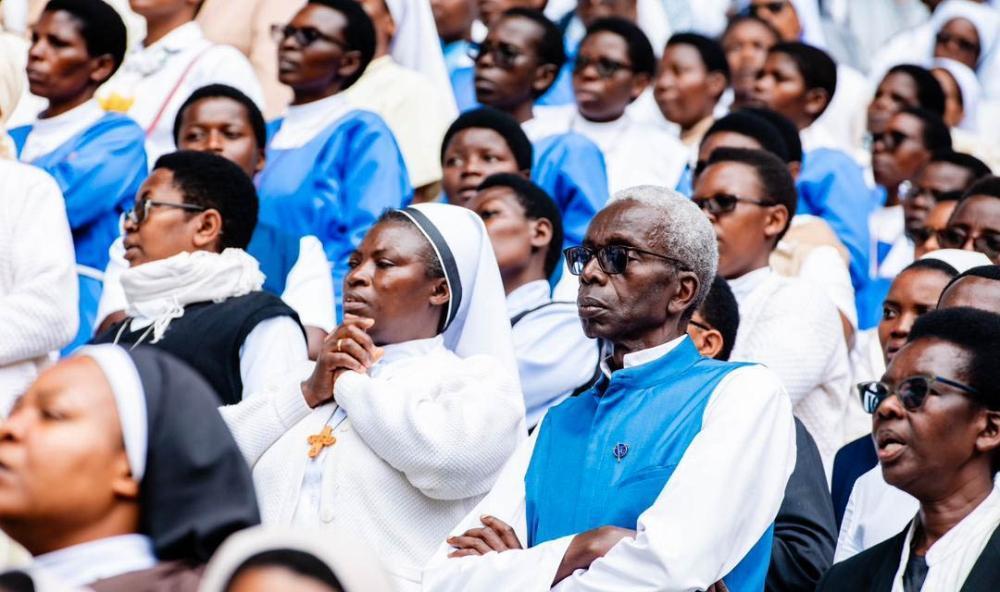
Africa-Press – Rwanda. The Catholic Church in Rwanda on Saturday, December 6, celebrated the 125th anniversary of its presence in the country, an event that also coincides with the global 2025 Christianity Jubilee.
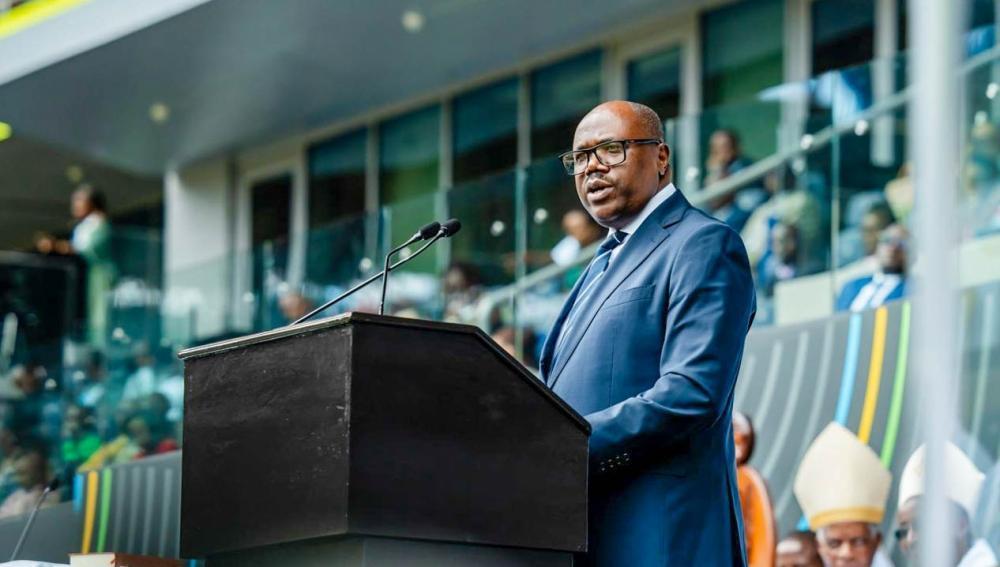
The national celebration, held at Amahoro Stadium, was graced by Prime Minister Justin Nsengiyumva, senior government officials, and delegations of Catholic Church leaders from neighbouring countries and beyond.
Prime Minister Justin Nsengiyumva speaks during the celebration of the 125th anniversary of the Catholic Church’s presence in Rwanda on Saturday, December 6. Courtesy.
A total of 20 representatives from five neighbouring countries—Burundi (13), Uganda (2), Tanzania (3), DR Congo (2), and Kenya—attended the event. Four other delegates from Austria and Germany also took part.
Delivering Pope Leo XIV’s message, Alnaldo Sanchez Catalan, the Apostolic Nuncio to Rwanda, said the Holy Father “joins the Church in Rwanda in giving thanks to God for the 125th anniversary of the arrival of Christianity”.
The Pope, he said, remembers “with gratitude the first missionaries who proclaimed the Gospel and all those who, through their faith and generosity, helped it take deep root among the people of Rwanda”.
The Pope encouraged Christians in Rwanda to remain steadfast in “the spirit of reconciliation, peace, and mutual respect”, adding that Christian communities should continue to be “a sign of hope, especially for the young and for all who long for healing and renewed unity”.
A total of 20 representatives from five neighbouring countries, Burundi, Uganda, Tanzania, DR Congo, and Kenya, attended the event.
Salvator Niciteretse, the Bishop of Bururi Diocese, in Burundi, described the occasion as a “happy coincided jubilee”, thanking the Church for its contribution to social development, including education and care for orphans.
Cardinal Antoine Kambanda, the Archbishop of Kigali, reminded the faithful that Christianity has been present for over 2,000 years since the time of Jesus Christ, “the foundation of our faith”. He said the Gospel was meant to unite people and that “if its message had truly been followed, the 1994 Genocide against the Tutsi in Rwanda would not have happened”.
He highlighted the role of early missionaries in research, charity and service delivery, noting their contribution to the establishment of schools, health facilities and charitable works such as Caritas.
However, he also acknowledged the Church’s painful history, saying some members took part in killings during the 1994 Genocide. He urged them to repent, adding that “even if that challenge happened, there were those who stood firm and became heroes”.
Cardinal Kambanda said the Church’s achievements today include 236 parishes across nine dioceses, around five million Catholics, 1,160 diocesan priests, 3,884 sisters, 445 brothers, and a vast network of institutions: 1,758 primary schools, 1,052 secondary schools, six universities, 107 health centres, 10 hospitals, and 263 Early Childhood Development centres.
He cautioned that development without humanity “ends up in conflict and destruction”, stressing that Rwanda’s progress must be anchored in moral values. Strengthening education and the family, he said, remains a priority.

For More News And Analysis About Rwanda Follow Africa-Press