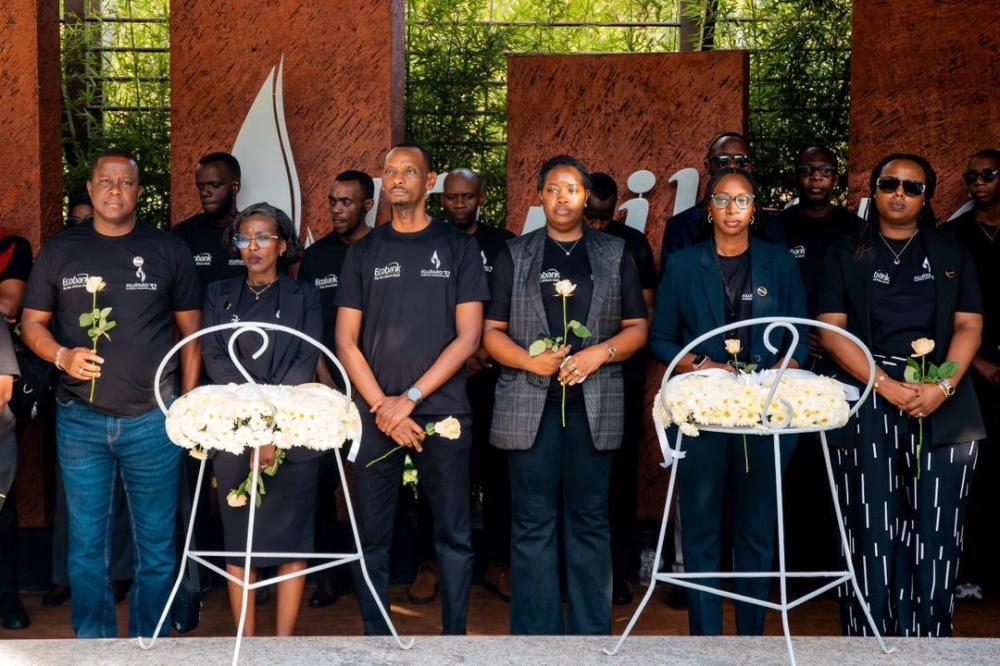
Africa-Press – Rwanda. Ecobank Rwanda Plc staff on Wednesday, April 15, gathered at the Kigali Genocide Memorial in Gisozi to honour victims of the 1994 Genocide against the Tutsi and reflect on the importance of defending truth and confronting distortion.
The event was in line with Kwibuka 32 remembrance period and brought together staff for a guided reflection on Rwanda’s history, including the events leading up to the Genocide, how it was carried out, and the country’s recovery journey.
Participants were taken through detailed historical sessions that examined the roots of division, the role of ideology in inciting violence, and the long-term consequences of misinformation. The programme also included testimonies from survivors, following the laying of wreaths at the memorial, where more than 250,000 victims are laid to rest.
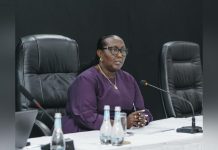
Carine Umutoni, the Managing Director of Ecobank Rwanda Plc, said the commemoration provides an opportunity to honour victims while reflecting on the country’s history and the responsibility to preserve unity.
“It is a moment to give dignity to the victims and reflect on the cruelty that characterised that period,” she said.
“It also reminds us of the values of humanity and the responsibility to protect the unity of Rwandans and ensure that such a tragedy never happens again.”
She paid tribute to survivors, recognising their resilience in rebuilding their lives.
“To you who survived the Genocide, we think about you every day. We are with you and we respect you. Your courage and ability to rebuild your lives is a lesson to all of us,” she said.
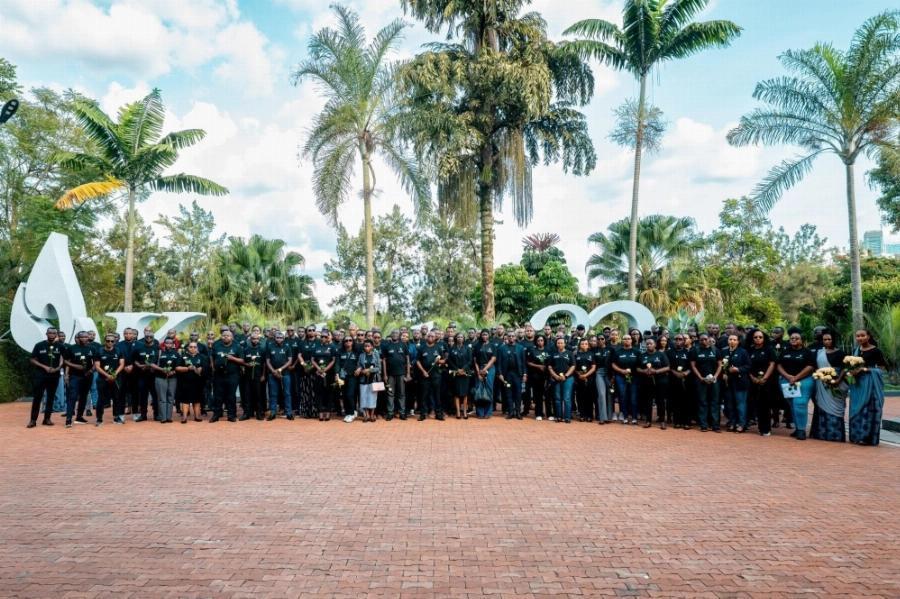
Ecobank Rwanda staff pose for a group photo at Kigali Genocide Memorial.
Umutoni added that commemoration should go beyond recalling the past to shape how people think and act.
“It is about nurturing a mindset grounded in unity, truth and resilience, and continuing to build a future that reflects these values,” she said, noting that the bank remains committed to supporting survivors, including through development initiatives.
A personal account and warning against denial
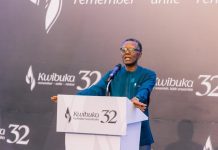
Lt Col Simon Kabera, the Deputy Spokesperson of Rwanda Defence Force (RDF), delivering remarks as the guest speaker, outlined how the 1994 Genocide against the Tutsi was planned and executed by the regime of the time, stressing that such crimes are never spontaneous. He also pointed to the role of the Rwanda Patriotic Army in stopping the killings.
He warned that while the country has made significant progress, challenges persist in the form of Genocide denial, distortion, and ideology.
“The existing war today is more about Genocide denial, ideology and distortion,” he said. “It is mostly carried out by perpetrators outside the country who try to distance themselves from their actions.”
He urged participants to take an active role in countering such narratives by engaging with verified history, challenging misleading information, and continuing to visit memorial sites to deepen understanding.
Survivor testimony and call for values
Assumpta Numukobwa, an employee at the bank and a survivor of the Genocide at the former National University of Rwanda, shared her distressing experience and called for continued efforts to promote values that shun division.
“For those who survived the Genocide and those who did not experience it, we all have a role in shaping the next generation,” she said.
“We must promote values that strengthen families and communities, based on love, peace and unity.”
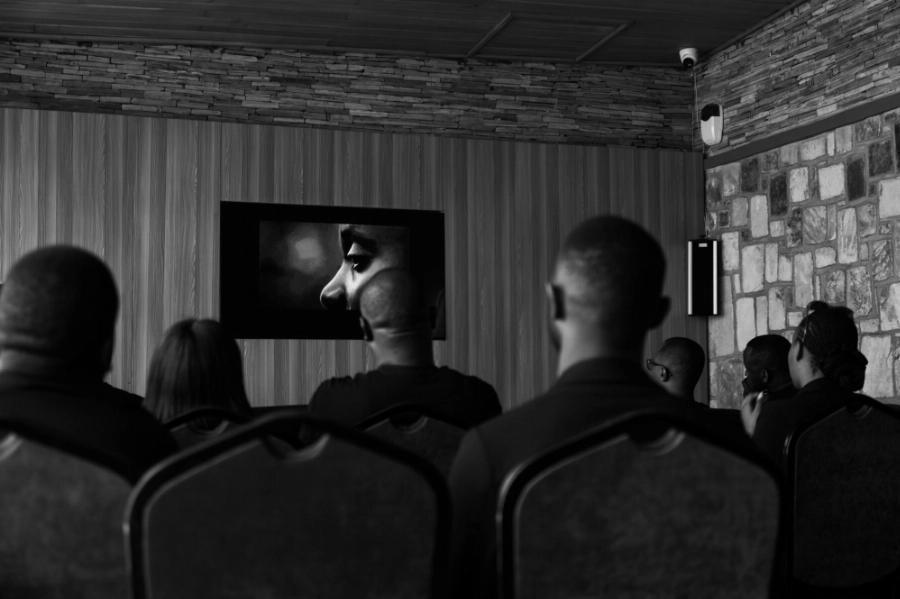
Mourners observing a moment of silence at Kigali Genocide Memorial.
Numukobwa is also the author of “L’UNIVERSITÉ M’A TRAHIE’’ — loosely translated to the university betrayed me — the book she recently launched, in which she recounts her personal experience during the Genocide and reflects on memory, responsibility, and the importance of preserving truth for future generations.
Building shared understanding among staff
Staff members who attended the event said such engagements are essential, particularly in institutions that bring together people from different backgrounds.
Steve Butera, a senior procurement officer at the bank, pointed out that as a pan-African institution, Ecobank brings together employees with diverse backgrounds and varying levels of awareness of Rwanda’s history. According to him, this makes structured commemoration activities critical in ensuring staff gain accurate knowledge and a shared perspective.
“It is important that organisations create time to remember, reflect and learn,” he said. “Some people may not know the history of the country, so visiting places like this helps build that understanding.”
He said one of his key takeaways was the structured nature of genocide.
“You cannot kill over a million people in 100 days without preparation,” he said. “There are stages, including division and identification, which show how such crimes develop over time.”
The event was in line with Kwibuka32 remembrance period.
Butera also underscored the need to address denial and misinformation, particularly on social media platforms.
“We need to keep talking about the truth, especially where distortion is spreading,” he said.
For young people, a means for clarity amid misinformation
Dinah Umwiza, a customer service staff member at the bank, said the sessions provided clarity, especially for young people exposed to conflicting information from different sources.
“We get information from many places, including those that distort history,” she said. “Opportunities like this, where you learn from documented history and testimonies, help you understand what is true and give you confidence to respond when misinformation arises.”

For More News And Analysis About Rwanda Follow Africa-Press